For Small Creatures Such as We ( Sasha Sagan )

As I set out the kanu leaves in the backyard on a bitingly cold morning , the rain drops from the trees above dripped onto my back. When one refers to shivers down the spine, I suppose that is a literal enough description. I charged back into the warmth of the kitchen multiple times as I drew out the squiggly lines with rice flour – quick kolams to appease whom or what I did not know. I am not one for following rituals every much, but some how I like this one.

Kanu Pongal – Celebrated during Makara Sankranthi

Rains are lashing the Earth, and I am grateful. Last week, we celebrated the Indian version of Thanksgiving, Makara Sankranthi – the beautiful festival thanking Mother Earth for providing us with plentiful food, a nourishing environment, and so much more.

Kanu is typically celebrated by having the daughters in the family set the morning kanu for two reasons: (1) our forbears supposedly come and eat the offerings as crows, (2) the girls pray for the well-being of their brothers, who then give them gifts for their prayers and wishes.

In our feminist household of course, we have long since modified the ritual. It isn’t just the women who set out the kanu for the brothers – we all set the kanu and pray for our siblings’ well-being. We celebrate not just gratitude to Mother Earth for feeding our rather populous brood of humanity with her harvests, but also for the gift of sibling love in this large world.

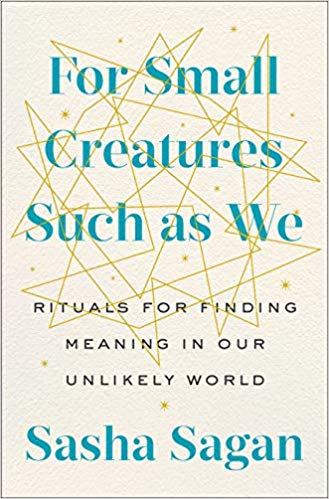
Coincidentally, I picked up the book, For Small Creatures Such as We, By Sasha Sagan. (The daughter of Carl Sagan and Ann Druyan). After all, her father’s Cosmos book and her parents’ TV show, Cosmos, still has me ringing with the Joy of Existence every time I dip my feet into the “shores of the cosmic ocean“.

Sasha Sagan’s book does not disappoint. She says, and I quote:
Beneath the specifics of all our beliefs, sacred texts, origin stories, and dogmas, we humans have been celebrating the same two things since the dawn of time: astronomy and biology.

I sat there savoring that sentence for its simple truth, and elegant choice of words. Festivals and rituals are our ways of making sense of ourselves with respect to the larger cosmos – and her book marvelously outlined rituals and festivals in various parts of the world in different cultures and religions.

Discerning the sentiments behind the rituals is a particularly savory task, partly because I have a healthy skepticism about the Gods, and oscillate between being a secular agnostic and a believer. For those who are Secular in outlook, Sasha Sagan’s book is a marvelous read. It encourages us to come up with our own models for celebrating life in this cosmos.
sasha_sagan

That cold morning as I set out the kanu, I wondered, not for the first time, why we set out cooked rice pongal for the crows. Is it to acknowledge our evolution as mankind to be where we are? Using fire to cook, was probably the single biggest leap in our journey, followed by becoming agriculturists from the hunter/gatherer mode. How different would everything have been if these two had not happened?

I especially thought of the brilliant poem she had referenced in the book by Vietnamese Zen Master, Thích Nhất Hạnh :
In this plate of food,
I see clearly
the presence of the entire universe
supporting my existence.

I also read a poem by Mary Oliver on Rice in the book. Blue Iris, and together with the books For Small Creatures Such as We, and Cosmos, it makes for a marvelous way to start the decade.

Rice – A Poem by Mary Oliver

It grew in the black mud.
It grew under the tiger’s orange paws.
Its stems thicker than candles, and as straight.
Its leaves like the feathers of egrets, but green.
The grains cresting, wanting to burst.
Oh, blood of the tiger.

I don’t want you to just sit at the table.
I don’t want you just to eat, and be content.
I want you to walk into the fields
Where the water is shining, and the rice has risen.
I want you to stand there, far from the white tablecloth.
I want you to fill your hands with mud, like a blessing.

As more and more of us move towards urban hubs for living, the less we realize all that happens to make food available for us to consume. How many of us have seen rice plants, or coffee plants or pepper vines – actually even if we have, how many of us consciously think of the journey from farm to table in its cooked form?

It is truly an enterprise of staggering proportions to realize how much has to happen for smooth functioning of Society, and it is lovely to read a book that is so full of joie-de-vivre

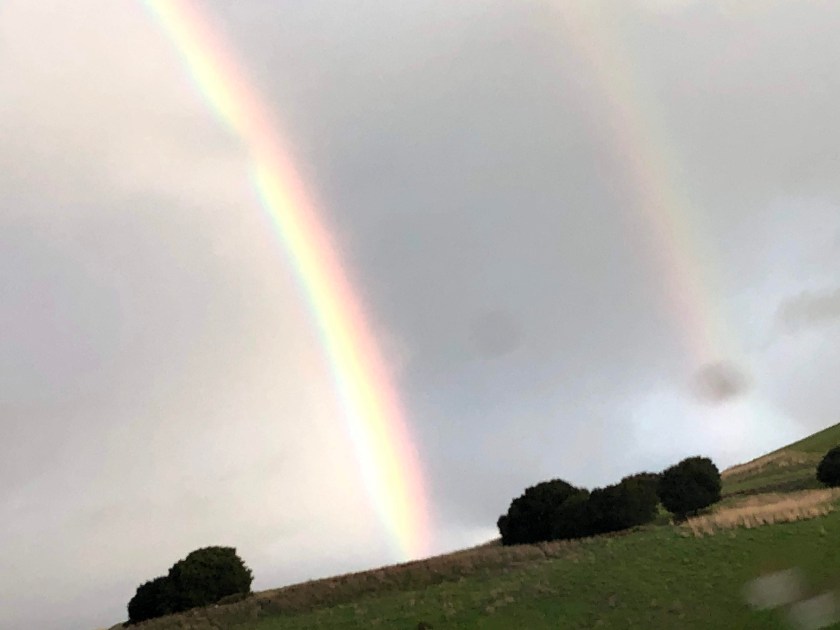
I like the concept of  thanking Mother Earth for her bountiful gifts to life (Did I mention this already?). When it starts off with fierce winds ripping branches from your backyard trees, followed by glimpses of sunlight illuminating the clouds during the sunrise, followed by mild rain, and then seeing a glorious double rainbow; what is not there to feel thankful about?
img_6569

Books:

Love in a …

One of the best things in the world is to wash up at the sister’s house after a long and tiring journey across the fertile and populous plains of the Indian subcontinent. Her welcoming abode is en-route to our own home in the United States, and I was glad to get a spot of space to recover before heading on towards our own home.

While the sister herself has expressed a wish that we stir ourselves to sight-see the beautiful city she lives in, her marvelous husband takes our side, and says that during the best vacations, anything we do at all is a bonus and is quite happy to see us lounge around on the sofa reading and chatting.

Knowing this unfortunate tendency of ours to behave like sofa cushions when we visit, she nevertheless does her bit and lays out books to read, and in periodic intervals supplies us with food and drink. One of her favorite authors is Jean Sasson, who writes about the Middle Eastern life, having worked there as a nurse for over two decades. Jean Sasson’s books deal with real-life stories based on the lives of people who have reached out to her to have their story told. Their biographies are sketched out giving us a sense of life in the regions she deals with.

Would we otherwise hear of the life of a Saud princess, or the son and wife of Osama Bin Laden?

The book this time dealt with the harsh conditions existing in the regime of Iraqi leader, Saddam Hussein; and how a young Arab-Kurdish bride, Joanna, summoned the courage to flee the persecution of Kurds in Iraq. Written in 1st person, it is as though Joanna wrote it herself. It was gaunt reading.

Like billions of people, I watch with alarm the rise of dictatorship world-over including in previously democratic strong holds such as the United States. My nerves are on edge reading about the atrocities these crazed despicable dictators are capable of doing. Midway through the book, I set it down on the sofa and declared that I cannot take it anymore. “This is so sad, and brutal, and my imagination is not helping! ” I said somewhat ruefully.

The sister said in a brisk return to her elder sister mode, “I know about you – read the whole book and then talk. If you leave it midway you will feel terrible. This book has a happy ending. In fact, you will be pleased to know that I have met Joanna in person. She is well and happy, and is an inspiration, so read!”

I meekly plodded on.

I had no idea about Kurds and their persecution by multiple regimes. The Western press had caught on about the Sunni Vs Shia conflicts, but to read about the Kurds also being persecuted by chemical weapons, torture and execution on such a massive scale is heart-rending. The peshmerga life is a hard one, and it was written well.

There are millions of people with similar fates similar the world over. Syria, China, Somalia, Nigeria, Venezuela, Mexico, Afghanistan, Burma, and many more.

The behaviors behind these are as old as humanity itself. In fact, older, as I was reminded of Jane Goodall’s interview, that somewhere along the evolutionary chain we developed the genes to be territorial and to persecute one another. (Apes have been observed having territorial wars, and trying to follow imposed social orders.)

How in spite of all this, human beings as a species have the rare combination of love, compassion, and sacrifice on the one hand balancing out the cruelty, lust, and every other form of despicable behavior on the other, is a miracle in itself.

“Only when our clever brain and our human heart work together in harmony can we achieve our true potential.”  – Jane Goodall

Classical Whale Symphony

Soft instrumental music was lilting in the background, and the sun’s watery rays were streaking in through the recently rain-washed window-panes. It was a beautiful week-end morning, and the kitchen was bursting with activity. The children were helping by putting away the dishes as noisily as possible. I was making a mess of things by changing the menu nimbly depending on what my refrigerator had. (Grocery shopping had taken a backseat the past few days and rations were thin on the ground)

The children were giggling about something when the teenage daughter said to hearty nods from her little brother. “By the way, what is this blasted toing-toing music you are listening to?”

“Melodious and uplifting for the soul, my dears. Classical Instrumental Music. Changes the way neurons interact.”

She shook her head, “Changes the way my nerves react!”and changed it to something that made my eardrums pick up the dishes and bang them viciously inside my head, while she chatted. Teenagers, I tell you!

“Whales like Classical Music.” , I said weakly.

“Well, I’m not a whale am I?” said she giving me a fish-like look- not the fishy look, the glassy gleam. I saw the piscean divergence in the gene and agreed. Though she could be, given her favorite doodles are themes under the sea

Art work by the Daughter:

Ever since I read in Carl Sagan’s Cosmos about Whale Songs, I have been enamored with the language of music, and the myths of the whales.

Quote from Cosmos by Carl Sagan on the Humpback Whale songs:
These vocalizations are complex. If the songs of the humpback whale are enunciated as a tonal language, the total information content, the number of bits of information in such songs, is some 10 to the power of 6 bits, about the same as the information content of the Iliad or the Odyssey.

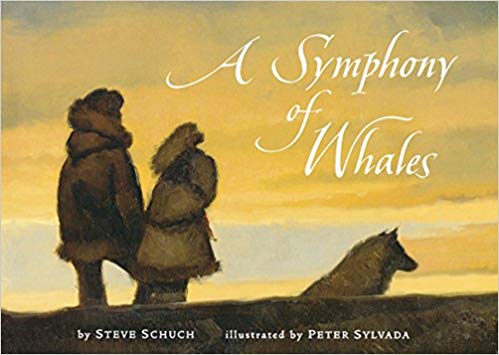
I was naturally was attracted to the book, The Symphony of Whales by Steve Shuch. It is based on a true story in a village near the Arctic circle. The onset of Winter had been swift, and a pod of whales found themselves iced in near Siberia. Unable to get out in time, the whole pod faced death in the iced-in waters.

symphony_of_whales

According to the book, a child, Glashka, who had always been blessed with the ability to hear Whale song heard them over the sound of the snowy storm. That night, they came to her in her dreams, and she knew they must be in trouble.

The next morning her father gathered the villagers and off they went to a sound over 30 miles away by dog sleigh looking for the pod of whales. It was true. The whales were in trouble. The pod had not anticipated the icing in of the waters so quickly, and were facing death. The villagers from all the neighboring villages started chipping at the ice to cut through the blocks of ice, so that the whales could surface and breathe.

“Look!”, said Glashka’s grandmother. “See how the whales are taking turns, how they give the younger ones extra time for air.”

The village elders had also radioed for help. A ship, an icebreaker, Moskva, was on its way to help.

The story, is based on a real incident that happened in the narrow Senyavina Straits of Siberia. Over 3000 beluga whales had been trapped by the rapidly freezing waters in 1984-1985. For seven weeks, the people of the Chukchi peninsula, and the crew of the Moskva risked their lives to save the whales.

The story does not end there. Once Moskva had cleared the way, the whales had to follow the ship out into the open seas, but they were reluctant to do so. The crew tried playing whale song to lure them. While they reacted to the music, they were not assured of human intent, and were still scared of the engine sound. They lurked in the waters.  Then they tried Classical Instrumental Music.

“The crew found some classical music. First, the sweet sounds of violin and violas, next the deeper notes of the cellos and, deepest of all, the string basses…and way up high, a solo violin…
Everyone fell silent as the music carried over the waters.”

That had done the trick. The ship’s engines started and the whales slowly followed the icebreaker out into the open ocean.

Would this heartwarming episode make it into Whale Song? That humans can be helpful too? I don’t know, but I do hope it makes it into our myths – maybe as one embracing a humane side to humans.

Dum inter homines sumus, colamus humanitatem – Seneca

As long as we are human, let us be humane

Read also:

Cosmic Nature of Living

Weaving The Sequins of Time

New York Times Archived Article on the Incident

Philosophers & Tinkerers

I picked up the book Black Hole Blues by Janna Levin partly because I was intrigued by the poetic title, and partly because I like reading about our dear Cosmos, and its many mysteries. The skies have given me endless joy, peace and continue to do so, even though light pollution in our suburban areas mean that we cannot see the stars, planets and stars as clearly.

black_hole_blues

Excuse me for a while, while I meander to a black hole of my own for a moment: I was appalled to note that a Russian startup intends to sell advertisements that can only be visible in the night sky. Are our products so important that we have to dwarf the shows the Cosmos puts up every night to sell toothpaste and whatever gawd-awful thing we contrive in our numerous factories? (I have a post clamoring and rattling in the brain waiting to get out on the number of contraptions that folks felt I must have, or I myself felt I must have, and now occupy valuable shelf-space in the home somewhere.)

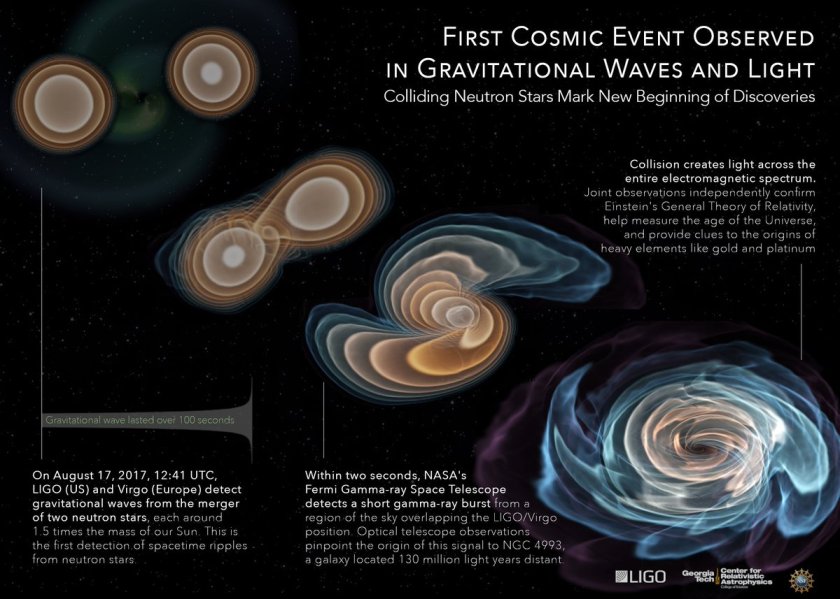
Climbing out of the black hole then, the cosmos has given me endless joy and I indulge in dipping into its mysteries every now and then. What surprised me about detecting gravitational waves is the immensity of human endeavors. Theorizing and coming up with the supporting Mathematics to validate the concept is in itself a phenomenal achievement, but conceptualizing an experiment of such magnitude as to detect a stirring as faint as gravitational waves emanating when two black holes collide millions of light years away is astonishing.

As Janna Levin says, it is a project to fulfill a fool’s ambition.

“An idea sparked in the 1960s, a thought experiment, an amusing haiku, is now a thing of metal and glass.”
― Janna Levin, Black Hole Blues and Other Songs from Outer Space

The LIGO (Laser Interferometer Gravitational-Wave Observatory ) is astronomical in scope and dimensions. Janna Levin’s book takes us into the human dramas and the corridors of Caltech and MIT where much of this played out. While I did feel the flow and structure of the book could have been more crisp, and less about the human politics that plague undertakings such as these, it was nevertheless interesting.

As I read, I was amused at how humans unfailingly bring drama into our existence. At the altar of Science, many have sacrificed their egos, had their egos bruised, and have propelled or obstructed the flow of Science, but like a river it flows on and hopefully propels our understanding forward, not always cognizant of the applications of Science (One of my favorite sayings of Ursula K Le Guin:

When you light a candle, you also cast a shadow).

After the monumental setbacks and roadblocks along the way, it is a satisfying end to the book that the experiment finally paid off. Twice, it detected Gravitational waves as they passed through the Earth from the collision of two massive black holes millions of light years away.

ligo.jpeg
(Image tweeted by @LIGO)

We do not yet know how this will change our understanding of the Universe, and its applications, but we can be rest assured that both are underway. We have come a long way from the Sun God riding the sky every morning on his chariot, though I am reading a fascinating book on this very myth at the moment.

Human-beings are philosophers and tinkerers at the very core, are we not?

Also read: Cranes of Hope (Essay of the Value of Science by Richard Feynman with A Thousand Paper Cranes by Eleanor Coerr).

The Queen of Espirit d’escalier

One cold January morning, I clutched at my tea for life giving support. I was sitting through the kind of gathering that happens across Corporate America when a calendar year rolls over. Executives suddenly pep up, and sit up looking important, and feeling purposeful. Like a pup in spring, who thinks he can play with the ball if only folks would toss it instead of gadding about.

aging

I sometimes like to watch these events. The actors change every so often, and the ones who remain have subtle changes in their motivations and ambitions too. The varieties of personalities we surround ourselves with is an ever fascinating experience, and we only really have the luxury of sitting back and watching occasionally. I suppose that is why the Dalai Lama is full of the milk of human kindness – he meditates, and observes.

Anyway, the gathering reached a place where credits were rolled and I noticed happily how people brightened when they were given credit for their work. It is true one should do the work without expectation of the reward, but how nice it was to see people get the credit where it is due. The meadow suddenly seemed spotted with frisking happy pups.

There was an amusing interjection when one team was accidentally left out of the credits, and claimed what was their due.

I smiled to myself thinking of this normal human tendency to crave recognition. We all do it. Just the other day, I bragged about how clean the kitchen floor looked: ‘gleaming like glass’ as I said, till I was reminded by the family almost gleefully that I had better stump it given that I had to clean up the glass I had broken, and therefore ‘gleaming like glass’ doesn’t really count.
“I am neither Jocelyn Bell Burner nor Alfred Russell Wallace. When I clean the floor, I want credit! “ is the quip that I would have liked to come up with.

But I didn’t.

I came up with the inelegant, “Well…I am eating the potato fry then!”, and stuck my tongue out at the children.

I am a queen of that phenomenon where you think of the perfect verbal comeback too late. I was delighted to note there is a word for that: Espirit d’escalier.(Wiki Link for the word, Esprit De Escalier) The link writes about the amusing origins of the word, please read it.

Where am I going with all this spirited Espirit d’espalier, potato fry stuff? One moment. Yes, Credit and Work and Meaning and all that.

Sitting there at the corporate meeting, and watching the team claim credit for their small part in the puzzle, I was reminded of Jocelyn Bell Burner and Alfred Russell Wallace.

Wallace, independently arrived at natural selection for the mechanism for evolution before Darwin did, but he jointly published the paper with Darwin. Darwin’s Origin of Species is vastly credited with the theory though. Did that make Wallace spout and keep the potatoes? No, he continued to travel the world, writing about injustice and social causes. He never stopped exploring or lost the joy of wonder or ceased writing on the causes that deeply appealed to him.

Jocelyn Bell Burner is another scientist whom I find admirable for this very reason. She was passed over for the Nobel Prize. Credited with detecting the first Pulsars in the universe ( she should have been a Nobel Prize recipient for Astrophysics in 1974). When asked how she felt that her Professor got the prize, and did not adequately exert himself to get her name on the nomination, she shrugged and said, “If you get a prize, it’s not your job to explain why you got the prize. ”

I read about these two stalwart scientists in the books, Lands of Lost Borders by Kate Harris and Black Hole Blues by Janna Levin. Every book teaches us different things. Even queens of Espirit d’escaliers can find a way to come back with Jocelyn Bell Burner & Alfred Russell Wallace and their phenomenal attitude towards recognition as it related to their work.


It makes me realize now what my stellar teachers were saying on those cold Assembly mornings when they dangled tantalizing pieces of wisdom in their morning speeches.

Bhagawad Gita on work without reward

Karmanye Vadhikaraste, Ma phaleshou kada chana,

Ma Karma Phala Hetur Bhurmatey Sangostva Akarmani

कर्मण्- ेवाधिकारस- ते मा फलेषु कदाचन।

मा कर्मफलहेतु- र्भूर्मा ते सङ्गोऽस्त्- वकर्मणि॥

Loosely meaning: Do not anticipate fruits while doing the labor, this was oft quoted by teachers trying to inculcate the importance of work.

Blooming Time?

A version of this post was published in the Nature Writing magazine: When The Kurinji Blooms

In a small corner tucked away from the hectic panting of the world lives a small ecosystem,  nestled in a range of hills that is fast losing its unique beauty to ‘progress’. It is the place I was lucky enough to call home when I was growing up.

Jasminum_mesnyi.jpg
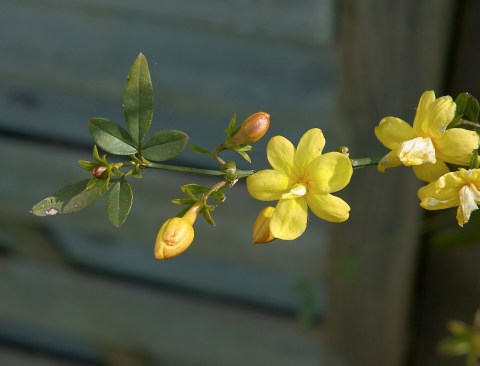
Primrose jasmines – Image by Wouter Hagens[Public domain], from Wikimedia Commons
The thought of flowering lupines takes me to Iceland; lotuses to a temple tank surrounded by trees with the breeze rippling the tank waters; primrose jasmines and Kurinji flowers back to the Nilgiris.

One of the marvels that is highly unique to the Nilgiris is the flowering of the Kurinji.

These flowers only bloom once in 12 years, and when they do, they are a joy to behold. I have only seen them once, and I remember thinking that for all this drama of blooming once in a dozen years, they should be, more grandiose, more robust, a trifle less ephemeral. But that is the thinking of an ignoramus, and I sensed the idiocy of the sentiment even then.

The flowers were beautiful, and the fact that there is a plant that knows the time to bloom when the rest of the world needs alarms and clocks to rise and shine is nothing short of marvelous. We need apps, calendars, schedulers, reminders and alarms to go about our daily business of living, and yet these unassuming flowers go about their act of procreation, maturing and enthralling the world without any such aids. What is more beautiful than that?

The kurinji flowers were in bloom last month, and I lived vicariously through a few friends of mine who live in the beautiful Nilgiris and posted the pictures. Entire hillsides clothed in royal robes of purple, swaying and billowing in rainy wind splattered skies, or waving and tossing their crowns to the blue skies with the scudding clouds.


The beauty of a functional model like a flower is a joy to behold. Imagine my joy then, when I opened the book, What Do You Care What Others Think – By Richard Feynman and the very opening of the book spoke straight to my kurinji-flower yearning heart.

I have a friend who’s an artist and has sometimes taken a view which I don’t agree with very well. He’ll hold up a flower and say “look how beautiful it is,” and I’ll agree. Then he says “I as an artist can see how beautiful this is but you as a scientist take this all apart and it becomes a dull thing,” and I think that he’s kind of nutty. First of all, the beauty that he sees is available to other people and to me too, I believe…

I can appreciate the beauty of a flower. At the same time, I see much more about the flower than he sees. I could imagine the cells in there, the complicated actions inside, which also have a beauty. I mean it’s not just beauty at this dimension, at one centimeter; there’s also beauty at smaller dimensions, the inner structure, also the processes. The fact that the colors in the flower evolved in order to attract insects to pollinate it is interesting; it means that insects can see the color. It adds a question: does this aesthetic sense also exist in the lower forms? Why is it aesthetic? All kinds of interesting questions which the science knowledge only adds to the excitement, the mystery and the awe of a flower. It only adds. I don’t understand how it subtracts.

Ode to a Flower – By Richard Feynman. This brain pickings article links to the beautiful animated video made by Fraser Davidson based on his ode to a flower.


I could not see the Kurinji flowers this time. I know many hillsides that were carpeted with these marvels have now become home to resorts and hotels. So, I wrote to the San Francisco Conservatory of Flowers requesting them to try and obtain a sample of this marvel: a tiny piece of magic tucked away for generations to behold. I hope they can.

To see a World in a Grain of Sand
And a Heaven in a Wild Flower
– William Blake


We Belong on Earth – Part 2

One sunny day, I felt a surge of happiness to find the latest book by Khaled Hosseini, Sea Prayer. I heard it was like none of his other books, but just as poignant. The moment of realization came a moment after the surge of happiness – how could I be happy to find the book that drove home the sad truth of refugees – of that child whose dead body floating in the sea inspired the book?

Child name: Alan Kurdi

sea_prayer

Was I really ready to have my heart wrung out as I am sure it will be when someone as competent as Khaled Hosseini wields their pen on the sad plight of refugees? I picked up the book late that night, long after the moonlight had transformed the late summer landscape into a luminous wondrous land.

I always hesitate to start a book of such deep issues, and for good reason. I was in a flight once, and delved into my book. I was about halfway in when tears started streaming down my face. A co-passenger asked me if everything was alright and I pointed to the book, feeling sheepish, but she replied that she had cried after reading that particular book too, and I felt like I had met a kindred spirit. Like P. G. Wodehouse said, “There is no surer foundation for a beautiful friendship than a mutual taste in literature. “ .

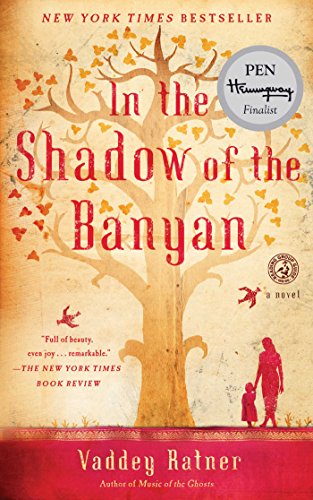
The book was In the Shadow of the Banyan, by Vaddey Ratner.

in_shadow_banyan

Vaddey Rattner writes of the child trapped in the horrendous events of the Khmer Rouge regime in Cambodia. I said it before and I shall say it again: There never is an upside to War. The worst affected are the children, and we have no excuse to maim their psyches thus. I read the book more than 5 years ago, and yet it stays in my mind. Vaddey Ratner draws you into the human experience through the suffering so beautifully that words fail me.

The book made me realize what it must have been like for an old colleague of mine.

I remember the shock with which I realized she was a refugee from Vietnam. We were both heavily pregnant with our first-borns and often traded tummy-tales. We were hallway buddies. I wished her a Happy Birthday, proud of myself to have remembered, and she gave me a rattling wholesome laugh in response. Then, with her characteristic good sense, she told me about how someone took a look at her and assigned her an age when she got off the boat. “They said I was 5 then. Looking back, I see I was given 3 years of my life to live again. “

I did not know what ‘got off the boat’ meant at the time. I looked at her quizzically for she said, “Oh, because I was pretty sure I was 8 then, but I did not know English, and I did not know that when they pointed at me, they were estimating my age and they gave me a birthday too. With the war I was malnourished, bones sticking out, and I am short too, so I suppose I could easily be mistaken for a 5 year old when I came here. I don’t really know my birthday, so I just celebrate this day that was given to me. “

Over the course of our pregnancies, she told me tidbits here and there about how she had escaped Vietnam as a refugee and came to the United States.

The fast flowing rivers of my consciousness, combined with the changing people-scapes around me, meant that I thought about her every now and then even though I lost touch. I am fairly sure that she must be enriching the world around her somewhere. For her, this life was too much of a gift to throw away and not live and contribute to the fullest.

Who was it who said, that we affect the world around us simply by being, or some such thing? Just thinking of her gave me the courage to read Sea Prayer. I opened the book and was transported to the town of Homs in Syria.

Sea Prayer is more of a poem in the form of a short letter written from father to son. A few words is all that is necessary for him to take you into a grandmother’s hut where the child played.
“We woke in the mornings
to the stirring of olive trees in the breeze,
to the bleating if your grandmothers goat,”

IMG_0456
A sample of the artwork by Dan Williams

A few strokes of the brush is all takes for the artist, Dan Williams to set the tone for ‘The skies spitting bombs. Starvation. Burials.”

It is a very short book, and not like Khaled Hosseini’s other works, but it is a book that reminds you to think of the human condition. The book finishes on this note.

”Sea Prayer was inspired by the story of Alan Kurdi, the three-year-old Syrian refugee who drowned in the Mediterranean Sea trying to reach safety in Europe in 2015.

“In the year after Alan’s death, 4,176 others died or went missing attempting that same journey.”

Where do we belong? To Earth surely.

Read also: Do We Belong On Earth?

Fiction Inspire Non-Fiction?

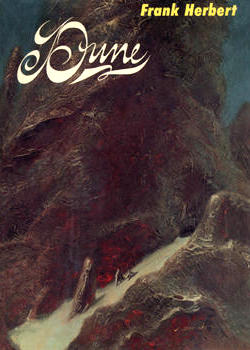
While reading a good piece of fiction, I often wonder about the inspiration behind the writing.  Dune, for example, is a book that immediately lets you know the author must be a personality of prodigious learning. The ecological angle, I was delighted to read in the note by his son, had its origins in Frank Herbert’s work for an an Op-Ed on the Shifting Sands in Oregon. The government was toying with the idea of planting grasses that could help with stopping the sands from shifting and collapsing onto roads and rivers. 

Dune-Frank_Herbert_(1965)_First_edition

Quote: 

In 1957, Dad flew to the Oregon coast to write a magazine article about a US department and Agriculture project there, in which the government had successfully planted poverty grasses on the crests of sand dunes, to keep them from inundating highways. He intended to call the article “They stopped the Moving Sands” but soon realized that he had much bigger story on his hands

Dune is a modern-day conglomeration of familiar myths, a tale in which great sandworts guard a precious treasure of melange, the geriatric spice that represent, among other things, the finite resource of oil. The planet Arrakis features immense, ferocious worms that are like dragons of lore, with “great teeth” and a “bellows breath of cinnamon”.

Planetology is a marvelous word for taking in the intricacies of a life sustaining planet (Dune makes reference to planetologists for figuring out survival strategies),  and the effects of our consumption of finite resources. 

I would love to study Planetology.We know that we are stretching the Earth’s resources – National Geographic came up with a simple number: we are currently using 1.71 times Earth’s resources every year and it is increasing. The effects are everywhere.

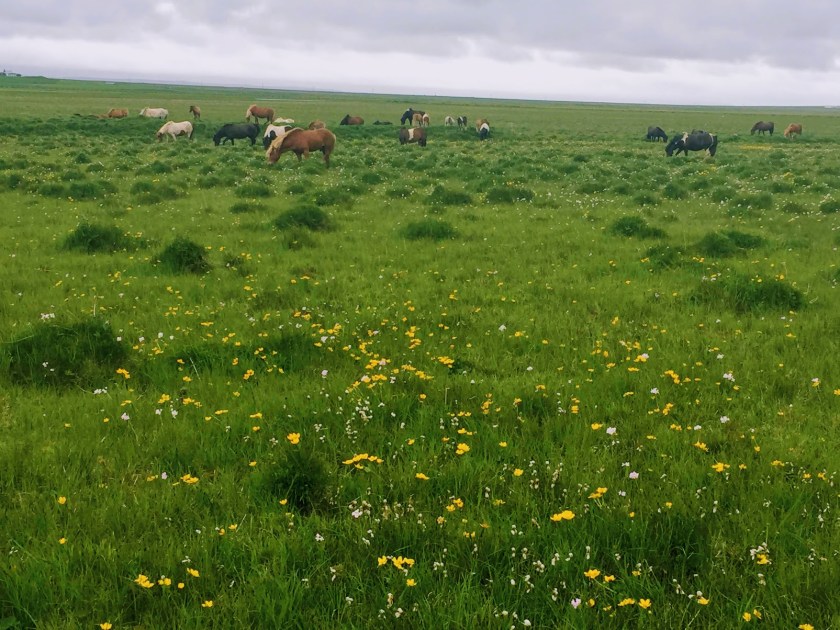
A friend and I were discussing the lack of tree cover in a country like Iceland for instance. Blessed with enormous natural beauty, the lack of tree cover is quite unnerving. Everywhere you turn is green because it rains a lot, but there are no trees. Apparently, excessive logging first got rid of them, and replanting did not take root as intended for sheep grazing ate away the saplings and the seedlings before they had a chance to sprout. 

horse

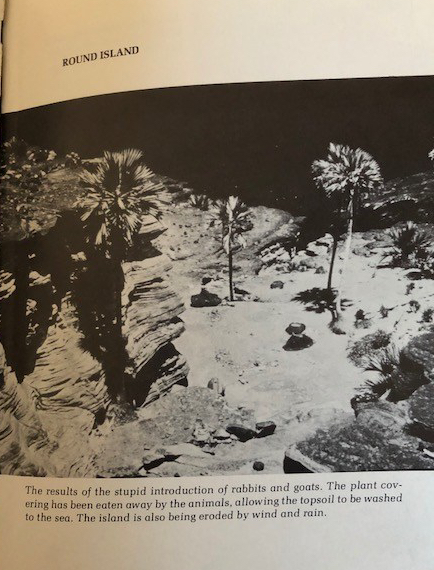
This too is not a new phenomenon. World over there are examples of over-grazing that edged out forest cover( Ireland, England, Mauritius are all examples of how our lifestyles has altered the ecosystem drastically). In the book Golden Bats & Pink Pigeons by Gerald Durrell, the author is on a mission to collect endangered species from Mauritius so he can bring them back to the Conservation Center for breeding and releasing into the wild. He writes about Round Island and how the simple act of introducing goats, sheep and rabbits into the ecosystem by humans has eroded the tree cover irreparably. 

IMG_0210
From Golden Bats & Pink Pigeons by Gerald Durrell – Round Island

While reading this book, I realized the inspiration behind his fiction book, Mockery Bird. This hilarious fiction book, Mockery Bird – was based on a story doing the rounds in Mauritius surrounding the Dodo bird and the loss of certain trees. The knowledge gave me immense pleasure. How lovely to see the inspirations behind good fiction.


Just as fiction draws its inspiration from reality, reality too can draw its inspiration from fiction.

In the Dune universe, the planetologist, Kynes, shares the visionary dreams for the planet Arrakis – a vision outlining a glorious self sustaining future for the planet that will take three or maybe four generations to come to fruition. We can derive our inspiration from fiction and set ourselves on a similar path working towards setting aside half the planet for forest cover to reverse global warming, sustenance etc. (News item : here)


A Planet of Wizards & Prophets

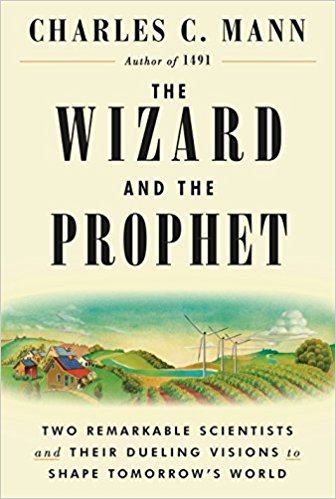
I was reading The Wizard & The Prophet by Charles E Mann on a crowded train one evening, and a pair of young girls shared the seat with me. The name of the book is a highly appealing one especially to little girls, and it piqued their interest too.

One of them was probably in the 1st or 2nd grade, and showed a precocious interest in my reading material. Her curly hair was made into numerous tiny plaits, and her eyes shone with a curiosity that would make her teacher’s heart sing. Her mother’s heart though, quailed. She said, “Now…now don’t bother the nice lady there, let her get on with it. “ I looked up at the mother, and told her that I love reading to children, and though this particular book sounds pedantic when read to children, I did it anyway. It taught me never to under-estimate children – the child soaked in everything, and asked the most engaging questions.

wiz_prop

I saw a certain amount of editing would need to be done if I were to sustain the interest of a 6 year old. The book is a non-fiction tome going strong at 678 pages – pages richly adorned with facts and figures, and life histories of all the people involved. I had already been through about 300 pages, so I knew the interesting bits, I knew the bits where a child’s wonder can be kindled. For the rest of the hour, I told her about wheat strains, water tables, and climate change.

The Wizard & The Prophet is a marvelous title because it encapsulates the polarity of our thinking so beautifully, and in this sense, they are both required for us to thrive. The Wizard in the book is Norman Borlaug, who is credited with leading the way for GMO strains of wheat production that along with stalwarts in the field such as Dr M.S. Swaminathan saved billions of people from hunger and starvation. 

William Vogt is the Prophet, who during his study in the Mexican coastal areas observed how we are stretching our natural resources and the effects it has on things as far-flung as bird migratory patterns and climate. In many ways, he is the one who set up the first bells of Global warming and Climate Change. He is the Prophet.

Do you believe in Climate Change? asked the girl wide-eyed.

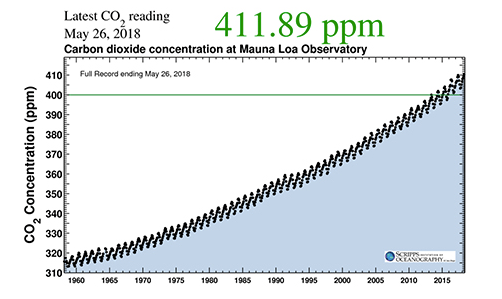
I told her I did not need to believe Climate Change at all, and the experiments were here to show me how we are changing the air around us, and I showed her the pages outlining the experiment where humanity managed to pin down Carbon Dioxide as the problem-maker in the first place. 

I cannot deny that global warming and climate change has always intrigued me. Carbon Dioxide only accounts for 0.03 % of the atmospheric gases, a remarkably small proportion for it to be causing global warming on such a scale as to change weather patters and cause severe climatic catastrophes, is it not? 

In The Wizard & The Prophet, the author outlines the experiments used in determining that it is indeed carbon dioxide that is the culprit and how our industries are directly contributing to its increase. The correlation between carbon-dioxide levels increasing and global warming followed. I found it a fascinating experiment and one that school laboratories can demonstrate I hope. 

Keeling_Curve
By Scrippsnews [CC BY-SA 4.0  (https://creativecommons.org/licenses/by-sa/4.0)%5D, from Wikimedia Commons
https://en.wikipedia.org/wiki/Keeling_Curve

(During the spring, there are dips because the Arctic tundra sprouts plant life and plants absorb Carbon Dioxide from the atmosphere. )

Looking at the worried expression in the child’s face, I asked her, Did she know what we can do to reduce the carbon dioxide?

Trees? she said, and I nodded yes.

I went on to tell her about the excellent example set forth for us by the Kenyans in The Green Belt movement, and how a person called Dr Wangari Maathai helped the Kenyans plant millions of trees over the past 30 years.

Planting the Trees of Kenya, by Claire A Nivola, The Story of Wangari Maathai

Planting the trees of Kenya - Wangari Maathai
Planting the trees of Kenya – Wangari Maathai

She glowed at the simple solution thought of by Dr Wangari Maathai, but her stop had come, and she stepped off the train with her mother who was now listening to her daughter talk to her about The Wizard & The Prophet.

As I reflected on the chat with her, I realized that the narrative around Climate change and Global warming is quite confusing.  It is no wonder that the child framed her question as – “Do you believe in Climate Change?” The prophets in this case are doing their job, but the question of : “How does one realize when an extreme storm or flood is part of a natural occurrence and when it is a direct result of our tampering with the delicate balance of the climate?” is a vexing one.  

The Prophets have sounded the alarm bell often enough, and the Wizards have yet to think of a sustainable solution to it. But there is hope: I am glad to read that China proposes to plant and nurture a forest the size of Ireland to reduce carbon emissions and improve air quality. 

China to create new forests covering area size of Ireland

cropped-shasta_forest.jpg

Hero-Worship, Nicomacean Ethics & Baloney Detection Kits

I have heard friends rave about Dune by Frank Herbert many times over the past few years. I finally got to read the book, and I feel richer in mind and thought for it. The book was long and at times hard to keep track of (especially in the beginning). This is one of those times when I realize how my mind flutters with attention spans that drive calm butterflies to frenzy. But slowly, steadily, I settled into the book, and there were multiple moments when I felt like I must grab a pen and start writing (but that stern butterfly gave me a look, and kept me at my the task of reading). This, is probably the reason I have forgotten half the things I wanted to write about (This is where I glare back at the butterfly guardian who kept me reading)

Dune-Frank_Herbert_(1965)_First_edition
First Edition Cover – Image from Wikipedia

One of the many things that appealed to me in the Dune was the fact though there were vague references made to technology and the number of technological devices used by those living at the time, it is not a mainstay.

The book is a multi-layered piece of literature with over-arching themes of ecology, the art of war, religion, philosophy and politics. There is a particular quote that stuck with me in the Prologue written by Brian Herbert, Frank Herbert’s son, about the dangers of hero worship.

Quote:

As Liet Kynes lay dying in the desert, he remembered the long ago words of his own father: “No more terrible disaster could befall your people than for them to fall into the hands of a Hero.”

Having studied politics carefully, my father believed that heroes made mistakes…mistakes that were simplified by the number of people who followed such leaders slavishly.

In many ways, hero worship is what leads people to choose leaders who then turn into despots and dictators. Adulation affects everyone, and those with fragile egos are the most prone to its lure.

Towards the end of the book, Paul Atreides recognizes that he is being hailed as the Messiah and regardless of his acceptance of the title, there is a holy jihad in his future. He can either lead to the best of his abilities like his able and excellent father, Duke Leto or simply be the mascot of a movement that has already gathered momentum – a force that is much larger than him. This sort of trusting faith in one human being is never a good sign, and is a malady that has affected us for centuries. 

I quite agree with how Aristotle describes the nobility required of politicians: he opines that politicians should take an oath, almost as sacred as a Hippocratic oath, to remain fair and mete out justice. From the Nicomachean Ethics – By Aristotle. 

The lecture on Aristotle and Socrates on How Does One Live The Good Life? From 36 Books That Changed The World (Chapter 8) is an excellent listen.


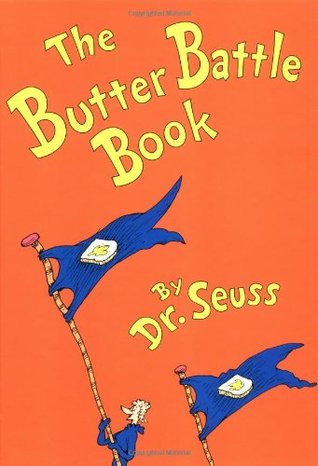
There are no initiation courses for politicians. No training. Though, I have a suggestion to have every politician complete the Butter Battle Course, it is unheeded. (The Butter Battle Course is an excellent course consisting of childrens’ books not more than a few pages each, and should only take a few moments of every leader’s time):

butter_battle

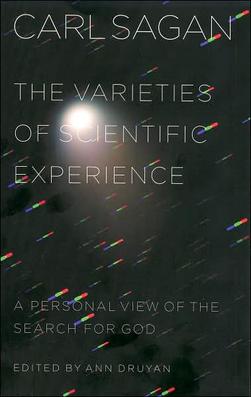
However, till politicians start taking their careers to truly be in service of humanity, we need to equip ourselves with Carl Sagan’s excellent Baloney Detection Kit from the book: The varieties of scientific experience : a personal view of the search for God / Carl Sagan ; edited by Ann Druyan. This book contains the Gifford lectures given by Carl Sagan in 1985.

The_Varieties_of_Scientific_Experience
By Source, Fair use, https://en.wikipedia.org/w/index.php?curid=28513011

When someone asked Carl Sagan after his lecture what we can do when the governments do not act in our best interests, he advised us to have Baloney Detection Kits handy.

Quote:

“I would say that the first thing to do is realize that governments, all governments, at least on occasion, lie. And some of them do it all the time – some of them do it only every second statement-but, by and large, governments distort the facts in order to remain in office.

And if we are ignorant of what the issues are and can’t even ask the critical questions, then we’re not going to make much of a difference. If we can understand the issues, if we can pose the right questions, if we can point out the contradictions, then we can make some progress. There are many other things that can done, but it seems to me that those two, the baloney detection kit and use of the democratic process where available are at least two things to consider.”

This seems to be age old wisdom: our oldest myths write about flaws in heroes, what brings about the downfall of the most powerful tyrants  etc; and yet, the reminder for our own Baloney Detection Kits is a timely one.

Books:

  • Dune – Frank Herbert
  • Varieties of Scientific Evidence  – Carl Sagan 
  • Nicomachean Ethics – Aristotle
  • 36 Books That Changed The World – Lectures on Great Courses
  • Butter Battle Book – Dr Seuss