The Oldest Trick in the Book

Flittable Flipperbits

It was one of those days when I felt speed and productivity were playing a cruel joke on me. It bonked me from chore to meeting to event to missed messages, and by the end of it all, I had a vague sense of all the things that didn’t feel quite right because the important had been muddled in with the unending stream of the banal.

In all the melee of rushing about the day, I realized that I had missed an important piece of communication, which, had I picked up at the right time might have saved me about two hours of turmoil, but there you are. 

Later that night, I felt foggy. Nebulous clouds, misty and mysterious as they seemed, I knew I needed to sit and stew for a bit for them to take shape. But then, of course I was too stimulated to do that – flittable flipperbits!  I marveled yet again at the highly energetic, always-on-top-of-things folks we meet in our daily lives. They sparkle with busyness, and seem to be happy about it too. I felt that strange longing to be like them just for a day perhaps! 

By the end of the day, the world seemed to laugh at me, and I had no choice but to join in. So, I did. 

The husband gave me a curious look and said, “Well – you just did get a day like that, and you seemed to have managed pretty well – you were busier than you wanted to be – a day filled with things to do, and jobs to get done, buzzing about. You seem to have missed out on some important things, but you took care of them. And you seem to be laughing at the end of it, so what’s wrong?”

I gave the poor fellow a look that I usually reserved for poorly cooked cabbages, said he wouldn’t understand, and swished off to bed. I felt like a cooked cabbage myself, how was that any good? 

Dreamy Strawberries

It was all made clear to me the next morning when I awoke from what seemed to be one of the strangest dreams that even I have had in a while. It involved marriage halls with catchy music, social situations that I fervently hope and pray I shall never find myself in, and feeling like I was run over by a truck that had strawberries in them with flowing taps of chocolate (but not dark chocolate – for some reason, this seemed like an important thing for the brain to remember the next day) 

So I decided to meditate today – the diagnosis was clear: this was an over-wrought brain. Nothing else. I shall meditate and all shall be well. By the time things pick up in a few hours, I shall have the world in control again, I said, and sat down to it. The oldest trick in the book really, but the most effective.

How did we muddle it all up?

I thought of all my wonderful yoga and meditation teachers, and invoked their calming voices. They floated up, and did their job, and I spent the next few minutes thinking about a conversation I had with my friend – who is a poetic soul brimming with love, and we had chuckled about it. How the world of remuneration is all inverted. The ones who really should be the best compensated are the ones who teach us to spend time with ourselves, taking what is available and trying to help us shape ourselves into something far more beautiful – our teachers, coaches, mentors, yoga, art and meditation teachers – and yet, the world has somehow played a cruel joke by compensating those who make the very algorithms and enable the lifestyles requiring these things to dance to the bank, and not the other way around.

I thought, I’d share this video though – for it says a lot of what I’d like to say – only a lot more cogently:

Rory Sutherland – Are We Now Too Impatient to Be Intelligent? | Nudgestock 2024

“Let’s let go of all stray thoughts – acknowledge them, but tell them, you’ll come to it.” said my meditation teacher’s voice in my brain – forgiving yet insistent, and I chuckled. How did she know where I had gone off to – even when I was only bringing her up as a figment of my imagination?

Meditation done, I felt like I could begin the dance of a new day with fresh energy, and rather looked forward to seeing how I would muddle it all up again. Somehow, that felt right.
Stimulus🧘🏼‍♀️ 🪷 Pause 🧘🏼‍♀️ 🪷Response

“Life in India is so fast and hectic, isn’t it? “ . We were discussing the fast and furious pace of India with friends. We were each reminiscing our respective trips to India – both made under difficult circumstances, and we were both glad to be back home in the United States.

I nodded fervently, and said wistfully, “Yes – at least during the time I was there, the concept of solitude was rarely acknowledged.”

“Solitude?” And we all laughed. It was true – the populace, and the ways of life make slowing down much harder than usual. It isn’t made any easier with the speed of communications and transportation in cities. The very essence of vibrance that is a huge advantage and a beauty to the civilization was also a disadvantage.

There are times when I have marveled at how the Indian way of life came up with practices such as meditation and yoga, but then I also realize that it was there that it could have developed, for it was required to build still pockets of serene moments into one’s life. in fact, the concepts are nothing short of brilliant. The pause between breaths is essential to be mindful of, when it may be all you can get in terms of mindfulness. The breath becomes the prana in very significant ways. The pause, when rarely taken, becomes harder to practice, and yet the pause becomes that tiny moment of choice in our agency of life.

There are so many aspects to the Philosophy of Being (I am amused it has such a strictly medical sounding name: Ontology)

Keeping ontological explanations aside, if The Nature of Being comes down to simple techniques of breath, fluidity and movement, it makes the simplicity behind it all brilliant.

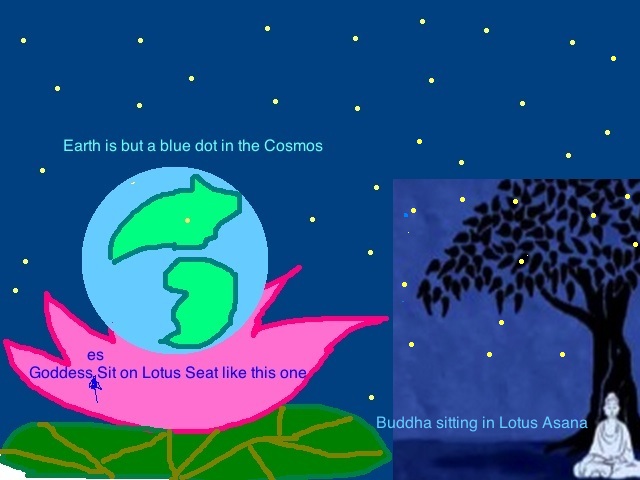
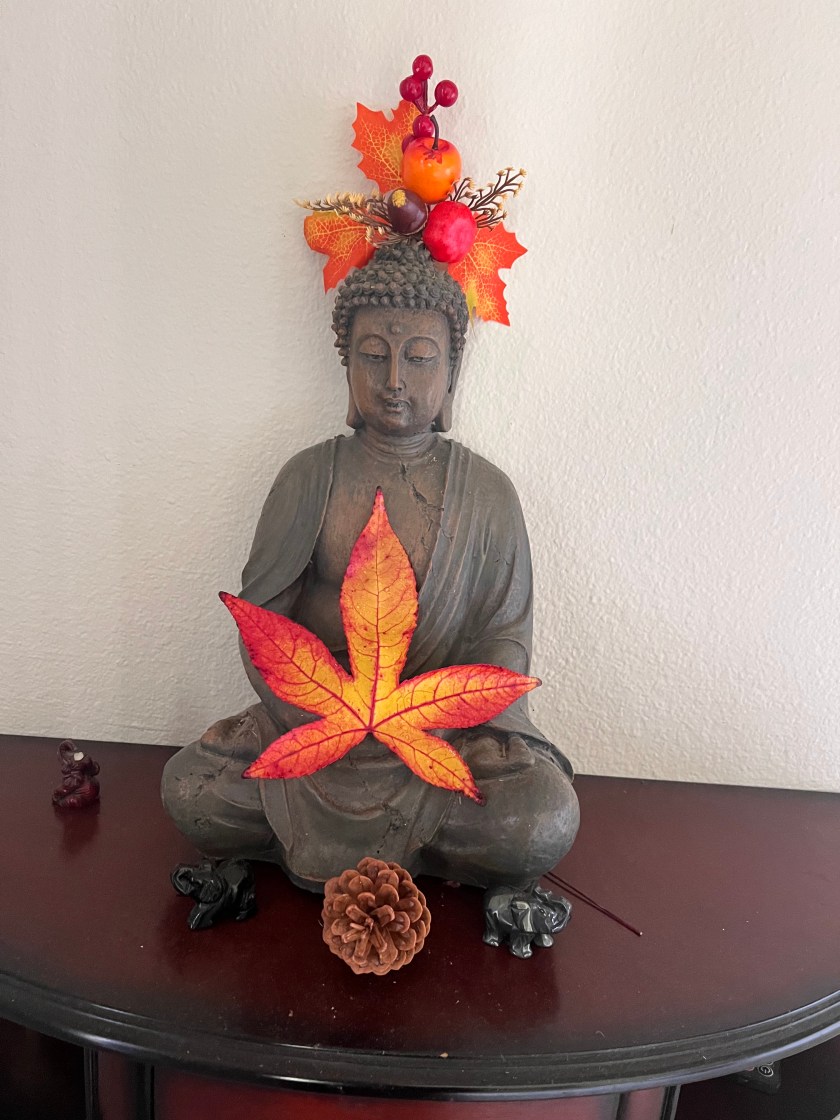
Buddha in Lotus?
Buddha in Lotus?

For many years I had thought of this quote, attributed to Victor Frankl in Man’s Search for Meaning:

“Between stimulus and response, there is a space. In that space lies our freedom and our power to choose our response. In our response lies our growth and our happiness.”

-Quote widely attributed to Viktor Frankl, Author of Man’s Search for Meaning, but not sure: Between Stimulus & Response

Back home, I savored the morning air, as I stepped out for a brisk walk embracing the nippy air. I felt like I could finally hear myself think, and I had a beautiful walk weighing and thinking of such topics as courage, resilience, choices, decision-making etc in the context of our work and personal lives. How one helps us evolve in another sphere, and how we are as human-beings are nothing more than the function of life’s ebbs and flows.

img_8958

Science as an Art

I caught sight of an artist one day, sitting in the garden and painting the profusion of life around her.  I stood there drinking the contentment of the scene in. Here was beauty, poetry, art and the science behind it all in one grand stroke. How marvelous it is to stop and observe someone paying attention to the world around them?

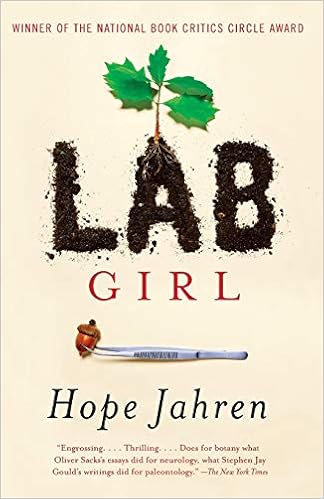
I remembered the piece in a book recommended to me by a writer friend, Lab Girl, by Hope Jahren. The book is an example to show how each one of our stories is different in its own way. This memoir is written by a dedicated scientist, and covers among other things a rare friendship, her bipolar disorder, and her journey of a life with trees. 

In the book, Dr Jahren writes about the science and its demands on its lovers. Her writing is lyrical, and when she writes of her research and her little moments of leap, it is nothing short of poetic. For instance, she writes of studying the structure of the seeds of  hackberry trees. It is the kind of research that is, as she says, ‘curiosity-driven research’.  Dr Hope Jahren is a paleobotanist, and she goes on to say that her research is the kind of work that “will never result in a marketable product, a useful machine, a prescribable pill, a formidable weapon, or any direct material gain – or if it does indirectly lead to one of those things, this would be figured out at some much later date by someone who is not me. “ 

I have always admired the tenacity and perseverance of endeavors such as these. In the world of instant gratification, working on fields where the gratification may not arrive in your lifetime is nothing short of phenomenal. It is the work of an artist: working on something solely for their interest, because they have the aptitude to understand life around them, and to persevere in the face of odds.

In the book, she captures some moments along the path of a scientist’s life that are magical. For instance, she writes of the time she was studying the structural makeup of the seeds of hackberry trees, and she unmistakably finds traces of Opal in the seeds:

“It was opal and this was something I could draw a circle around and testify to as being true. While looking at the graph, I thought about how I now knew something for certain that only an hour ago had been an absolute unknown, and I slowly began to appreciate how my life had just changed.

I was the only person in an infinite exploding universe who knew that this powder was made of opal. In a wide, wide world full of unimaginable numbers of people, I was – in addition to being small and insufficient—special. I was not only a quirky bundle of genes, but I was also unique existentially because of the tiny detail that I knew about Creation,…Until I phoned someone, the concrete knowledge that opal was the mineral that fortified each seed on each hackberry tree was mine alone.”

How could one not smile at this? How beautifully she marvels at understanding the ecstasy of life. Walking along a forest path, I’ve often wondered how, that of the millions of seeds dropped in there, a few decide to take the leap and sprout into sapling, clawing their way up towards the light, while digging deep and finding their roots. It turns out there may be no definitive answer to that. If you were a seed, what are the parameters you would use to sprout your wings and decide where to put down your roots, knowing fully well that from then on, movement is out of the question?

There is more to the miracle of our ecosystems than we can imagine. The ones who study this profundity – astrophysicists, anthropologists, scientists, ecologists, geologists – and then, go on to share their journey with us is marvelous. #Shoshin.

Who was it who said that – when you read a book you live a thousand lives, but if you don’t read, you only live once, yours?! 

“A reader lives a thousand lives before he dies. The man who never reads lives only one.” – George R R Martin in A Dance with Dragons

What would we do without the internet to give the answer right away?!

Complement with:

How to Master the Ancient Art of Walking Meditation in Modern Life: A Field Guide from the Pioneering Buddhist Teacher Sylvia Boorstein