Dear Lovely Kala Chitthi

I was in a tither, and petered out after the last meeting. 

“Why does it have to be this way? All supposedly smart people with Ivy League fancy degrees and all, and yet half of them don’t know how to utter a statement without ruffling feathers in the room!” I said.

The husband gave me an all-in-day’s-work look and I looked weary.

I could not help thinking of resumes, college degrees, achievements, patents, and all the grand things we give importance to in our society.  And I crumpled and said, “What can’t they be like Kala Chitthi?” (Chitthi means Aunt in Tamil – either mother’s younger sister or father’s younger brother’s wife).

My sister had called that morning with the news that Kala Chitthi had passed away. I said I did not believe her. And I did not. She was not even sixty. Most vacations in our childhood had that glow of warmth and love around it thanks to her.

We live strange lives of dichotomy. I had no time to process the news or make sense of my denial for my morning was filled with meetings. 

Kala Chitthi was the youngest in the large Kalyanam family. Of the brood of 9 children that Visalam Paati and Kalyanam Thaatha bore, Kala Chitthi was the 9th child’s wife. She entered a large family as the youngest member – a daunting task for anyone. Yet, she chose to put her best foot forward and was accepted and loved by 3, and at times 4, generations of people in the large brood. She was ever respectful, yet got her way. She neither ruffled feathers, nor shied away.

I remember one hot summer vacation when I was a teenager. We were visiting our dear uncle, aunt and grandmother in the village. The pater insisted on me wearing a half-saree. When pressed for a reason, he said something about Culture. Like my grandmother used to say with a wink: He left the village in his twenties, and he just remembers how his sisters dressed as children, that is all.

It was true. The father seemed to be stuck in a village scene of the 1940’s.

I know some people really like half-sarees. I suppose they looked nice enough on Tamil movie heroines, who knew how to sway their hips just so, while walking and dancing gracefully like the palm trees swaying in the breeze. Self? I detested them. I was not at all used to them in day-to-day life, and they made me feel like an ice cream in the sun. Would the slippery top slip off, would the long flowy skirt stay?

I liked to walk fast. The half sarees impeded my long manly stride with hands tied behind my back. No gentle sways of h. here. I suppose my gait was best suited to a sergeant major’s uniform, but I was willing to settle in for a salwar kameez with a dupatta. 

So, there I was arguing with the pater. Logically, I asked him, “What part of this dress is less decent than the half-saree? “. Seeing as there was no good answer to this, the pater was starting to huff and play the But-I-know-village-life card. 

Kala Chitthi was watching the unfolding drama as she went about her morning chores. Somehow she connected with everyone in the family – young and old.  She knew how much I hated the half-saree, and also how it was going to be difficult for the pater to slide down the palm tree he was climbing up with every sentence. 

She came along in that swift manner of hers, and hugged me about the midriff and said, “If you wear a half-saree, it will be so much easier to pinch you around here right? You should try it sometime!” And then smiling she said to her much older brother-in-law,  “Anna…you remember a village of long ago. These days, all girls wear a nightie or salwar kameez and stand outside. This looks beautiful!” She whisked us both on our way smiling all the way through. She had a morning full of duties to attend to and this matter was resolved with the attention it deserved. No more no less.

She loved all her nephews and nieces, brothers-in-law and sisters-in-law, parents-in-law. She made them all her sons and daughters, brothers and sisters, parents. She loved and was loved by all who knew her, with a generosity of spirit that was hard to comprehend. How could one soul have so much capacity to love? 

“There is not one big cosmic meaning for all; there is only the meaning we each give to our life, an individual meaning, an individual plot, like an individual novel, a book for each person.” ― Anaïs Nin, The Diary of Anaïs Nin, Vol. 1: 1931-1934

I had my next meeting to get to, but Kala Chitthi reminded me that life is not as prickly as we make it out to be. Human beings just need to be heard and understood is all. We have things to do, and one must be happy going about it.

Chitthi’s LinkedIn profile would not boast of any patents, for they do not give patents for unifying souls, who lavish their love and generosity upon everyone. But they should. It would make the world a better place.

The Laughing Life

The son tumbled out of his room with yet another joke. His teachers apparently tell them a joke every now and then, and he repeats them to me if he finds them really funny, or remembers to. One of the many gifts of the Covid lifestyle are little snippets like this.

I stood there waiting and wondering what today’s j would be about.

“Why did the skeleton not go to the party?”

“I don’t know – because it had too many bones to pick?”

“Ha! Good one. But no.”

“Umm…don’t know. Why didn’t the skeleton go to the party?” I said a little impatience in the tone. I had to get to that next meeting.

“Because it had nobody to go with. Get it? Get it? No Body to go with?!”

I moaned and laughed at the same time. A lovely feeling of warmth spread through the being as I headed off. 

Later that day, I sat musing about humor and how marvelous a gift it is to humankind.

My Family and Other Animals is a marvelous book by Gerald Durrell. This book has the distinction of being the first book that I read belonging to the Humor genre. I remember it as though it was yesterday. Sitting in class 8-B, the sun was shining outside, there was a butterfly in the lawns outside, but our English teacher seemed to prefer the miracle of the written word to the fluttering butterflies outside. She put on her glasses and whipped the book out of her handbag in one elegant motion and said we were going to read the book.

My Family And Other Animals: See how the author makes you laugh when you read the title itself? she said. We must have looked like Canadian geese being tickled for the first time, for she proceeded to explain the humor in the title. I don’t know whether you have tried tickling a Canadian Goose. I haven’t, but I think they would react the same way. Stern looking creatures Canadian Geese.

IMG_2223

Anyway, I hope for my teacher’s sake that we loosened up as the reading progressed. But, now that I look back, it was one of the first books that made me look for humor in daily situations. Mark Twain – especially the little story of Tom Sawyer painting the wicket gate was another. Swami and Friends by R K Narayan was equally memorable. I remember reading somewhere that R K Narayan when asked about his inspiration for Malgudi – that eternally inviting town that beckons you every now and then, said, he just watched life pass him by and that was all there was to Malgudi.

Pickwick Papers was slow going initially, but the humor in the book was unmistakable. These are the times I am thankful for growing up in a pre-Internet, pre-on-demand television era. I might not have stuck with Pickwick Papers otherwise. 

The ultimate guide was of course P G Wodehouse. When in high school, I changed upon P G Wodehouse, I did not immediately appreciate it. It took a few readings, but oh! What a gift?! What a gift! 

The father, of course, was and remains a constant reminder to find joy in every day life. His jokes were not always appreciated by the mater, but he could take a the rough with the smooth. Life was funny, curious, interesting and not always serious if only we stopped to admire the humor in them. The husband, the daughter and the son all joined the bandwagon too. My Family and Other Animals was taking shape in the Nourish-N-Cherish household.

Where am I going with all of this?! Oh yes! The blog itself. Nourish & Cherish started as an act of whimsy 16 years ago. It is a place that I regularly choose to don the sunny side up mentality in life.  As I started to write down this little skeleton joke, I mused on the thousands of little jokes that did not make it to the blog. For of course, I am guilty of thinking about writing and reading about writing far more than writing itself. But I am glad for the ones that did make it.

In over 900 posts over the past 16 years, life has taught me time and again, that you can choose the sunny side up.

To infinity and beyond!

Mother’s Day in the Jungle

It’s Friday! It’s It’s It’s Friday!

I heard the son singing his Friday song. An infernal song with lyrics that are straight out of an album I know, but the rendition usually has joy in it, and that salvages it somewhat. I am partial to Friday mornings myself, but last week, I was simply unable to get out of bed even though I had something marvelous to look forward to. I know some folks who get up like an LED light: Zap to glory as soon as the switch is on.  How I envy these marvelous folks?! They light up at the crack of dawn and seem to bustle on. 

Self? I need a dragging to the watering hole, and steady nourishment to get to functioning state in a span of 2 hours. The husband gave me an amused look, and tried reviving the drooping shoulder with some coffee, but it wasn’t enough.

An hour later, I buzzed into the kitchen dancing and flitting like a hummingbird in spring. You see, I was invited to read my story, Mother’s Day in the Jungle, to the son’s elementary school classroom. 

Mother’s Day in the JungleScreen Shot 2021-05-09 at 12.19.16 AM

I love this one – It is a heartwarming story about the little animals in the forest getting together to prepare a mother’s day feast for their mothers. But one of them gets caught trying to pilfer sweet potatoes from Farmer Hasalot’s farm. 

At the end of the story, the children asked me questions, and I am always blown away by how much thought they put into these questions. I told them about how some parts of the story at least are inspired by elephants in the South Indian plains. They were curious to learn about elephant mothers and calves. They wanted to know about animal practices and whether the elephants or farmers were right, taking us beautifully into discussions on animal rights. 

As I read the story out to the children, it got me thinking of the many beautiful lessons of parenting that the animal kingdom shows us. So, that evening, I took off on a walk by the creekside. Watching the ducklings, and goslings take to the waters with their parents on either side is beautiful in spring. The birds flying home to their nests with the little ones waiting in nests is charming.

It is time to read Robert McCloskey’s adorable book. Make Way for the Ducklings

make_way_ducklings

What would we do without Mothers? 

Happy Mother’s Day to all you wonderful mothers out there. There are days when getting up is a chore, but days like this one with unexpected gifts make up for it, don’t they?

The Young Wizard

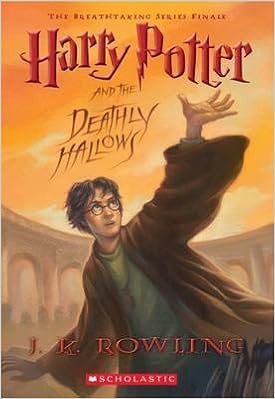
The son finished reading Harry Potter and the Deathly Hallows in a marathon reading of 5 school days. I found him reading in dim corners, under the quilt after lights-out, by the moonlight streaming into his window at night, and with the class streaming on over zoom – it seemed I bumped into the fellow looking happy and reading wherever I went for a few days. Then, just like that, he was done with the book, and the series itself. 

The house has been abuzz with magic ever since. The wand from Ollivander’s gift shop has been found, batteries replaced, and the lumos spell is very helpful while looking for one’s shoes in the closet with no lights. 

As anyone who has gone through the arc with the young wizards will attest, there isn’t enough magic to go around after an event like that. The epilogue is described variously described as ‘a let-down’, ‘sappy’, ‘unnecessary’ and all of that. But in my mind, it was required closure for the author who spent every waking moment with these characters.

We had an unwritten rule in the house, viz: we’d watch the movies after the books have been read wherever possible. So, we waited patiently. As he finished one book after the other, there was a mini celebration and the week-end movie nights would invariably be Harry Potter & The Completed Book.

As we were getting ready for the movie watching session, the children came clamoring for an instant 2 minute Maggi noodles dinner. They love the tangy soupy instant nature of it. I gave them a stern look and a familiar lecture on healthy eating. Seeing the drooping faces, I said, “Look on the bright side, we can have 2 minute popcorn for movie night tonight!” 

Image from Amazon.com site

Comparisons between the movie script and a fresh reading of Harry Potter is always a thrilling exercise. Harry Potter and the Deathly Hallows is an even more wonderful experience since it rewards you with 2 movies. And so it was, last week-end that we got to dissociate from the myriad problems of the world and immerse ourselves in those of the wizarding world. 

The last 2 movies are especially great watching, since there are so many scenes of note: Dear Dobby, Voldy screaming Aaavvvaaddaa Kedaavvrraaa, McGonagall calling on the locomotor to defend the school. 

The next evening, the son lumos-ed his way into the kitchen as I stood helplessly wondering what to make for dinner that night. Have I mentioned that it is one of my least favorite things to do: Standing and wondering what to make. I must’ve. It is a pet peeve. So, there I stood looking as mutinous as Voldemort’s clouds of doom, when the youngest wizard pranced in, and said, “Do you know there are at least 7 ways in which you can kill somebody without screaming Avada Kedavra like Voldemort does in the last scene?”

“Really?” I asked and he proceeded to rattle them all off. 

I stood there, and asked if he knew a spell for making dinner. 

“Yes! It only takes 2 minutes!” He said and grinned. I gave in to the little tyke’s demands and slurped Maggi 2 Minute Noodles discussing all the possible spells with disastrous effects.

The Lock Smith

The locksmith’s passion started with Legos
Their mother saw the spark in their eyes as a toddler
Proudly did they show me the first key they made

I listened with fascination and stood watching quietly
The intense focus slowly figuring the nooks and crannies
The frustrated shake of the head, the repeated tries

Rewarded with a slow smile (or lopsided grin? )
Who can say behind the mask?
As they made a new key that fit an old lock.

Inspired by April’s calling for Poetry

Reading: Falling Up – By Shel Silverstein & A Sky Full of Bucket Lists – By Shobhana Kumar

The Music of Rose-Scented Winds

Roses are blooming everywhere. The white, saffron, yellow, pink, corals and red roses are a real treat to behold. Watching the breeze gently take the rose essences and waft off into the neighborhood reminded me of an old Tamil song. “Rojavai thalaattum thendral…” a few weeks ago, and I hummed it as I went about my day. Loosely translated, it means a breeze that caressed the roses. 

“Dei! One more time, you sing that song……” said the husband. 

His tone of voice reminded me of my elementary school friend all those decades ago, when I sang something continuously, wrongly and unknowingly at times. 

Particularly prone to these brain-itches or ear-worms, I am not particularly fond of them either. I thought life was full of them, till I noticed my friends seemed to be able to enjoy a song, hum it a bit and then move on with their lives, without the annoying thing being stuck in their heads for weeks at a time. 

The curious case of not being very good at picking the lyrics out in a song also means that I am singing garbled nonsense, and often just snippets of them as I go about the house. 

I don’t know how folks live with me, for I want to box my ears every time  ‘rojavai thaalattum thendral ‘loops on in the old brain. Apparently, the song itself has a good enough lyrical quality, but I would not know anything about it for I have never been great at catching the words in a song. I sing

Rojavai thalaatum thendral, poon thendral, yen mandral (No meaning). 

Un nenjil porattangal hohoho (Santa Claus>!), rojavai thalaatum thendral…”

I am sick of the song, but luckily not of the roses. 

For one prone to brain-itches such as these, the modern world can be quite the problem. There are catchy songs on television, in cars, radio stations, not to mention gas stations, almost everywhere. It is only recently that I found listening to instrumental music helps since it allows me to listen to music without having garbled phrases stuck in my head on an endless loop.

“Many people are set off by the theme music of a film or television show or an advertisement, This is not unusual for they are catchy tunes” says Dr Oliver Sacks, in his book, Musicophilia (Read the essay titled “Brainworms, Sticky Music and Catchy Tunes”)

He writes of his friend,Nick, who had fixated on the song, “Love and Marriage”and was ‘trapped inside the tempo of the song’. 

I nodded along fervently as he wrote of his affliction:

“With incessant repetition, it soon lost its charm, its lilt, its musicality and its meaning. It interfered with his schoolwork, his thinking, his peace of mind, his sleep.”

Originating from the literal translation of the German term Ohrwurm, an earworm can go on for weeks, or in some cases months.

When I read about this phenomenon in Oliver Sacks’, Musicophilia, I hummed the broken piece. I wish I could’ve written to the wise doctor and asked him whether he had come across any cases where the patient was stuck in a song with lousy garbled words in the correct tune, and how their marriage with a man who could not hold a tune but could ace the words would function. (Read: The Noetic Touch to the Poetic Muse

Alas! Dr Oliver Sacks is no longer alive to share his insights with us.

The Covid Vaccine

We rolled into the expansive grounds to receive the Covid vaccine. Everything shone with efficiency starting from the way our appointments were scheduled. It always astounds me when I see undertakings as large as this. Any public health initiatives are amazing in their scope and ability, and I was in awe. Like a child at the fairgrounds, I soaked in the sign boards, the appointment process, the courteous health workers all working on Saturday mornings to ensure the world can be a safer place. 

There were no questions unrelated to one’s health. No checks other than ensuring one was eligible age-wise and health-wise and had no known allergic reactions. 

As we waited for our turn and watched the registered nurses, volunteers and traffic attendants go about their duties, I thought once again of all the great things human beings are capable of as a species. Within a year of the coronavirus bringing the world to a stand-still, a vaccine was not just found, but mass produced and administered to millions of people. That is nothing short of a miracle. Even as the virus continues to spread its tentacles in waves, the vaccine outreach program was offering hope.

Extensive testing, mass production, and a dizzying level of community outreach and logistics had gone into place for this to work. But how did the mRNA vaccines work?

We live in the Information Age, and know first-hand how it can quickly be turned on its head to a Misinformation Age. A Quote from the Demon Haunted World came to mind.

“We’ve arranged a global civilization in which most crucial elements—transportation, communications, and all other industries; agriculture, medicine, education, entertainment, protecting the environment; and even the key democratic institution of voting—profoundly depend on science and technology. We have also arranged things so that almost no one understands science and technology. This is a prescription for disaster. We might get away with it for a while, but sooner or later this combustible mixture of ignorance and power is going to blow up in our faces.”

Carl Sagan, The Demon-Haunted World: Science as a Candle in the Dark

The nurse came up to the car with a thin needle and I closed my eyes instinctively. She smiled and said, “It’s done. You feeling okay?”

Just like that, the tiny ant-like pinch of the needle that delivered a tiny dose of messenger RNA gave rise to something else.

I felt a surge for love for America

A touch of pride in its efficacy and its courtesy

A ripple of gratitude for Science

A shiver while thinking how it might have been had the 46th President not been elected.

And finally a sense of gratitude that we did have a President who valued these things.


Sleeping Angel

The son’s room got a new lick of paint. It is a calming, soothing color called Sleeping Angel. Paint color namers have to be the most creative bunch. I have never actually met a person who held that particular job, but I would be thrilled to do so. The names they come up with have to be from fertile imaginations. If ever one is stuck for ideas, heading out to the paint alley in your local hardware store is inspiration enough. 

Here is a random sampling of the paint colors:

Polar sky, Sleeping Angel, Balboa Mist, Gray Owl, Soft Fern, Saybrook Sage, Lavender Mist, Sunlit Coral

I mean, look at this combination of words and tell me that it does not want you to sit up and think of beautiful polar bears looking down at their little cubs and telling them stories of a time when their habitats extended so far out, they could venture to the edge where they were able to get glimpses of sunlit corals, sometimes see the patches of soft fern and hear the gray owls hooting into the night. The misty skies used to bring them whiffs of smells quite different from what their cubs were getting now. Their grandmothers spoke of the mists of lavender, redwood and balboa. Visiting whales told them of giant redwoods and seafoam over corals.

owls_polar_bears

Painting is meditative work. The pain before and after the walls are painted notwithstanding, the art of painting itself is therapeutic. Imagining a small space transform into a warm inviting haven is a gift enough, but actually doing it, is even better. 

I had written about the mute painter who came to regularly paint our childhood home every couple of years. I had no idea of the virtues, or lack thereof,  of the distemper paint. I only knew it was superior to what was routinely done, since the father went through some extra effort for that type of paint. All I knew was that small stains washed off this type of paint. Given he lived in a school and had 3 children of his own, who were very happy to have their friends over, I suppose this was a brand of realism. 

The father would spend extra to go for a lick of distemper paint, and that pleased the passionate painter. The artist in him gave an approving nod, and he set about setting up his ladders and transforming the space with a twinkle in his eye. The love for this job shone through in the results. Every room seemed to have a dollop of his spirit after the painting was done. The rooms sparkled and twinkled with peace and joy. I would then spruce up the place with vases containing bunches of fresh pine, ferns, and wildflowers to settle the slightly overbearing smell of fresh distemper, while the mother would sneeze her way through the house (allergies). 

Decades later, the circle of life seemed to repeat itself. Sleeping Angel had transformed the room, while the paint smell kick started my allergies (made worse by smelling flowers I admit), and the drops of sunshine came in the form of fresh yellow tulips in a vase with pine and fern. I took a dose of antihistamines and drifted off to sleep in the little room. The paint was aptly named. 

I slept like an angel.

Read also:

Within our 4 walls

The Flying Zoos of Babylon

A Sky Full of Bucket Lists

April is Poetry Month apparently. It is also the month that hosts Earth Day, the one day we dedicate to saving the only home we know, Earth. As far as I am concerned, they are all excellent themes for the month bursting with the prospects of Spring. It has been an unusually hot spring, but that does not detract from the beauty of the season.

This is the season for life’s stirring: Poetry and Earth are both what lend credence to our human experience, and possibly dolphin experience. (As regular readers of the blog know, the dolphins have poetry whose tonal vocal content is equal in size to the Illiad or the Odyssey.) 

Read also:

Carl Sagan’s Essay on his interactions with Elvar The Dolphin
Epic of Whalayana – Carl Sagan

What better time than to write about a book that has been in my thoughts so often since the first reading? A small book of Haibun poetry steeped in the experience of living on Earth.

My review on Amazon:

A Sky Full of Bucket Lists is one of those books that has found a place on my bedside table. Every time, I need a glimpse of life, the slim volume is there to allow me a peek into the life of a fellow human-being in a very different situation. Written by a poet whose empathetic life experiences with social work shape the words on the page, this book is worth reading and re-reading. Shobhana Kumar reminds us that being humane is what makes us human. Charming, heart-rending, profound and simple.

A Sky Full of Bucket Lists seeps into your day as you go about the busyness of living. 

The incorrect font, the cross dresser, the neighbor in hospital, , the alcoholic, the abusive or the the true friends who give more than one deserves. It seems Shobhana Kumar has a haibun for a wide range of human living. The poignant note to her father is an especially special one. (Dear Mr Raaga) 

Sometimes, at night when I am too bushed to read anything long or heavy, I instinctively reach out to A Sky Full of Bucket Lists. The humanity manages to seep through the pages and into your consciousness. They say reading makes one more empathetic. Reading the experiences of someone who has seen so much, suffered through so much, and yet, has the time to not just care for a fellow being, but care deeply and share it with the world, is a gift indeed.

Whether the first cave painters realized the art form could encompass human living, I don’t know. Every time I look into the book, something attracts: why this picture for this Haibun? How did she know my yearning for a library and how I sniff the books to get the children to love them as well? How did she detect the ‘poetry that settles into corners’ and give it words? Is there a thread that runs between every different piece, or is it just the shared experience of being human on a planet that hosts millions of lifeforms?

Worries & Worm Moons

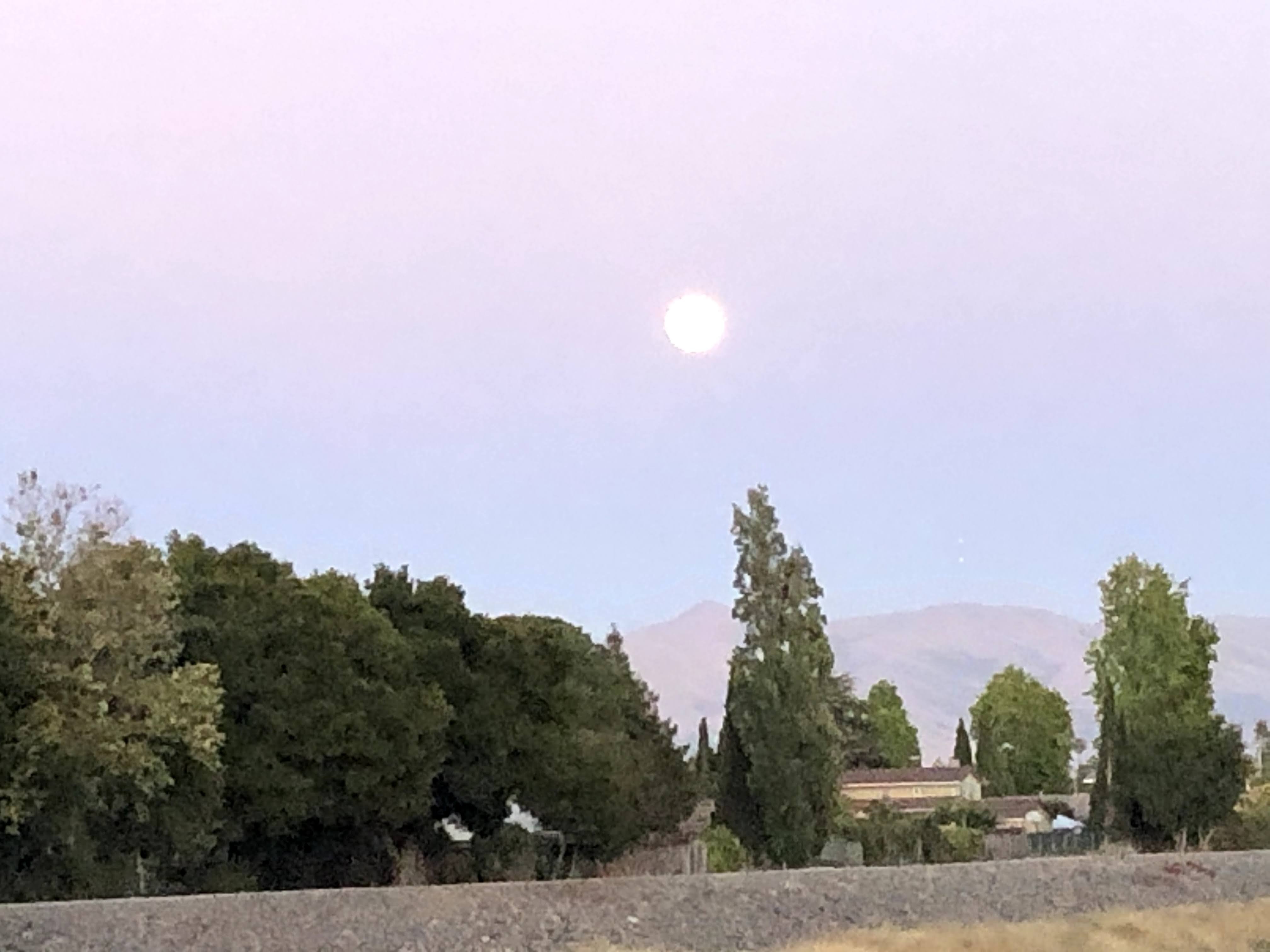
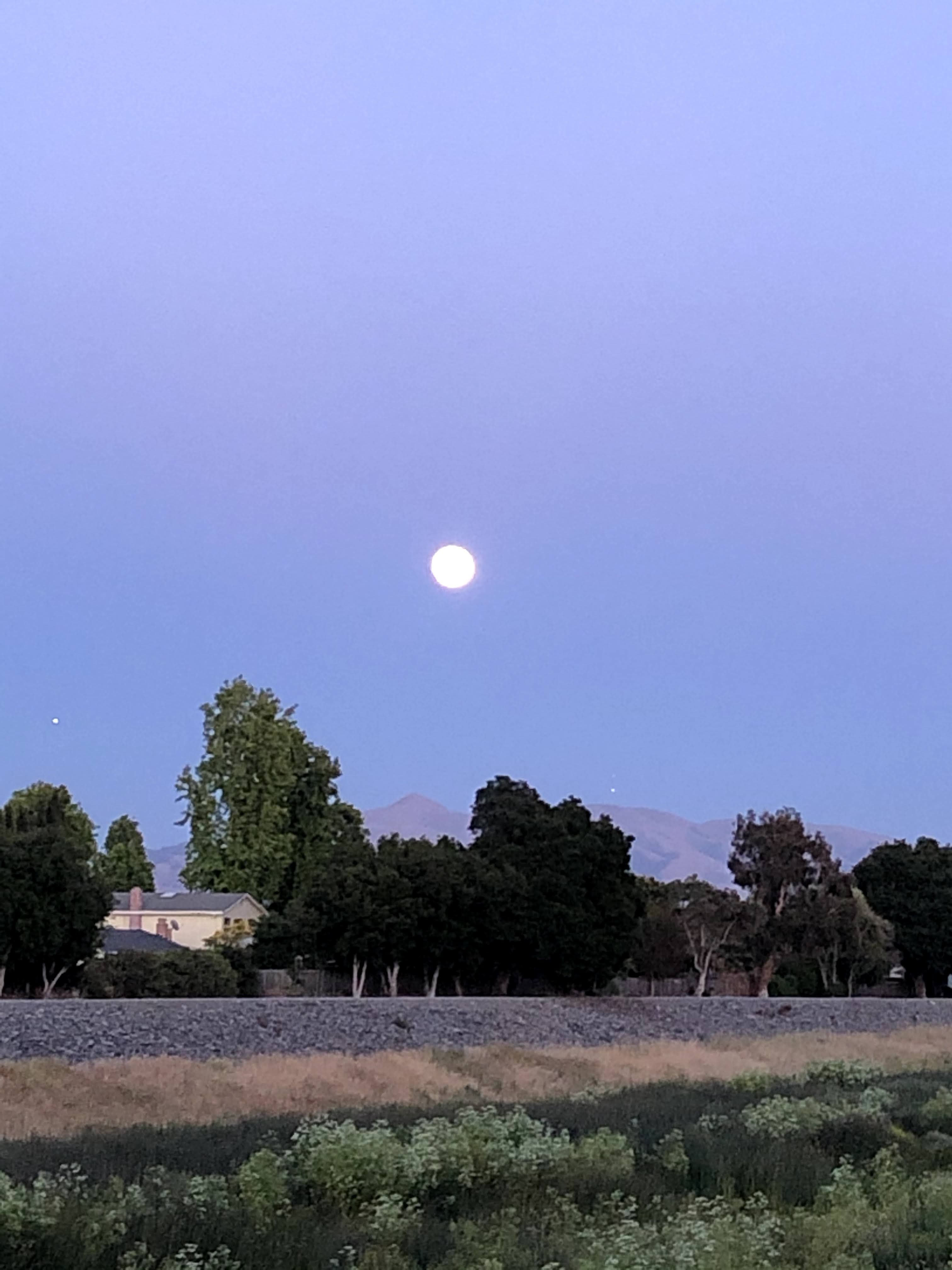
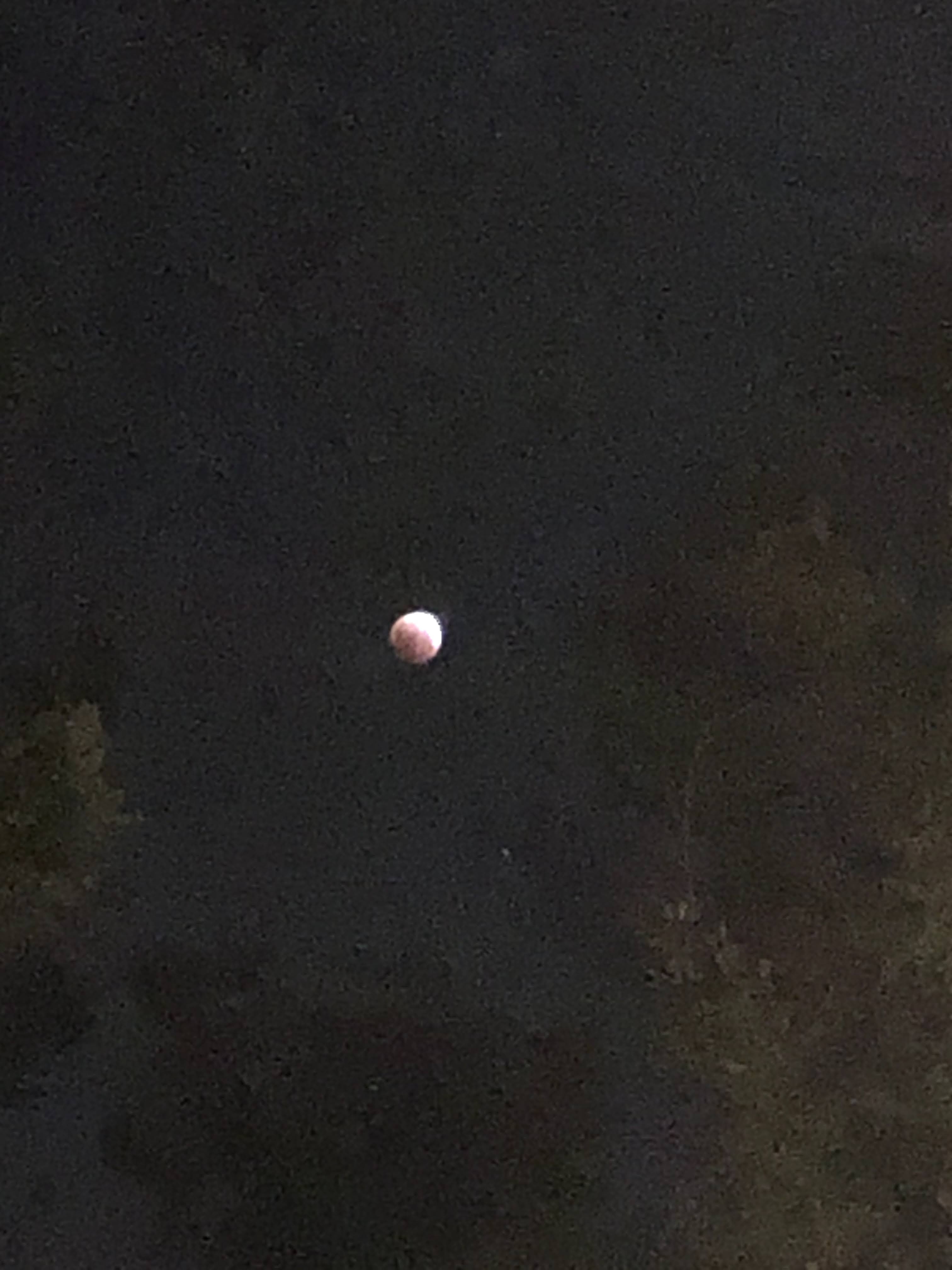
The evening was a gentle spring one. My friends and I walked on into the evening, as the full moon rose in splendor on one side, while the sun set with elegance on the opposite side. The Worm Moon, as the full moon in March is called, was exceedingly beautiful against the spring evening as we walked on.

Though this time of year seems to signal that all is well with the world, there are spots in the trying world as we make our way through it. Life is full and with a full life comes a good helping of worries. We walked on swapping tales and confiding the worries of life that seem ubiquitous.

Somehow, the worries seem to reduce in size in the shared experience of it all. Just in the acknowledgement of it. It reminded me of the marvelous children’s book, Ruby Finds a Worry by Tom Percival.

In the book, Ruby is a happy child who loved to explore and be herself. 

Until one day when she finds a worry. 

img_1727

The book talks beautifully about the concept. How the worry stays with her, and seems to grow in presence and size though no one was able to see it. It was there with her in the classroom, on the swing, and even occupied half the school bus. 

img_1728

It is a beautifully pictured concept with the worry inching in everywhere till poor Ruby is unable to be happy at all.

Then, one evening at the park, she finds a boy sitting alone and a worry looming over him. She goes over and they share their worries and talk about it.

“As the words tumbled out, Ruby’s Worry began to shrink until it was barely there at all.

Soon, both of their Worries were gone!”

It is a simple tale of friendship and worries shared, and yet the book captures it all in so beautiful a manner. You wonder and marvel yet again at the profundity of childrens’ books. 

img_1730

That evening as the worm moon rose and sprinkled its silvery little sparkles over the lakeside, the same thing seemed to be happening to us in real life too. To nature, peace and friendship whispered the evening.

P.S: March Moon is also known by various names: Eagle Moon, Sugar Moon, Wind Strong Moon or even the Lenten Moon.

Article here: Full Moon in March

img_1711