
Multi-Generational Family Sagas
I read two family sagas this year spanning multiple generations, and several decades each.
Both were highly acclaimed books, and written well. However, both of them suffered from meandering plots, and unnecessary diversions. Making them swollen at least by a few hundred pages.
“It was a bit like listening to my father tell a story about some character in his village. He’d tell me all about this character, his relatives, his relative’s friends, and the marriages that made the whole thing impossible to untangle, and so much more. By the time he finished the story, you’d be wondering what the point of it was.” I said to my friends after finishing The Covenant of Water.
I understand too how that can be a daunting task. The mother had seven siblings, the father nine. Their parents, I am not even sure, for I might have switched off in between.
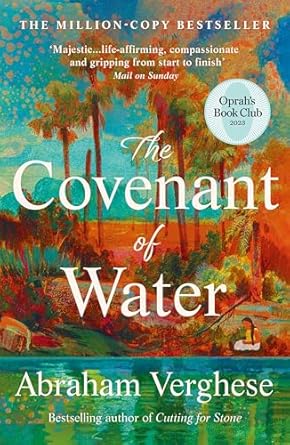
The Covenant of Water – By Abraham Verghese
The writing is beautiful – lyrical, and his characters have endearing qualities to them – resilience, love, grace, flaws. Abraham Verghese is also a doctor by profession, and therefore the details of all the medical terms made for a depth even if the average reader does not need as much information (ex: how a particular surgery was being performed, or how the stent would have served better from a particular perspective)
Set in Kerala, South India, the book spans the family of Big Ammachi (the matriarch of the family) between 1900 and 1977.
It would also have been nice to know a little bit more about the living conditions and life in that time period. For instance, there is a character, Uplift Master, who derives his purpose from getting the village around Perambil (the ancestral village in which the whole saga takes place) developed and to march into the twentieth century in style. Knowing the problems Uplift Master faced in terms of discrimination by the British Raj, or bribery would have been useful.
Casteism is touched upon, the perils of life as a leper is well depicted.
The plot itself could have been condensed. That apart, it is a good book.
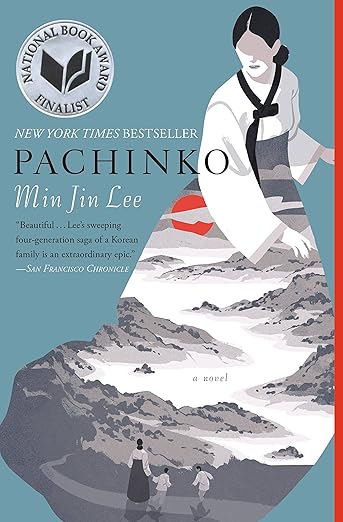
Pachinko: Min Jin Lee
Pachinko is set in a similar time period in Japan(1910-1989). It outlines the generational problems existing between Koreans and Japanese.
The story also spans multiple generations and revolves around the life of Sunja – a poor Korean who moves to the city with her husband, Baek Isak, and child from a previous tormented relationship.
Reading about the effects of racism, poverty and war is never easy. Writing about them keeping the humanity of the characters intact is even harder. Min Jin Lee manages to do that with ease. It would have been nice to see how things were changing as the century progressed, but we do not see too much of it.
The Tides of Humanity
The tides of humanity are apparent even if there are literally oceans separating the stories.
- The Covenant of Water is set in Kerala, South India(1900-1977).
- Pachinko is set in Japan(1910-1989)
They both deal with matriarchal characters (Big Ammachi alias Mariamma & Sunja) who do their very best by their kith and kin in difficult times. Providing love, trust, and hard work as tenets to a good life.
I think this line from Noa (Sunja’s firstborn) in Pachinko, outlines the angst of humanity pretty well:
Noa didn’t care about being Korean with anyone. He wanted to be, to be just himself, whatever that meant; he wanted to forget himself sometimes. She could not see his humanity, and Noa realized that this was what he wanted most of all; to be seen as human.
– Min Jin Lee, Pachinko
There is plenty to be learnt in life as a human, wherever one lives.
In the Covenant of Water, Philipose (Big Ammachi’s son) says it best:
“Ammachi, when I come to the end of a book and I look up, just four days have passed. But in that time I’ve lived through three generations and learned more about the world and about myself than I do during a year in school. Ahab, Queequeg, Ophelia, and other characters die on the page so that we might live better lives.”
― Abraham Verghese, The Covenant of Water
 Nourish-n-Cherish