The Spider’s Vision

The son and I had embarked on a lovely bike ride. The autumnal equinox means that the sun sets earlier and earlier in the day.  It was still early enough in the evening and we biked along amicably talking of this and that. 

When we finally decided to take a short break by a lake, the son climbed a nearby tree, while I sat myself on a park bench. All was tranquil. The pelicans went about their ballet dance of coordinated fishing in the distance, the hawks and turkey vultures circled high above in the skies. Out in the distance, a dog ran on the shore chasing the birds and squirrels. Overhead, hundreds of ravens were flying and making their way home. 

It was in this world that I called out to the son and pointed out a visionary at work. We sat side-by-side in awe. For it was obvious, from conception to creation this would’ve daunted most competent engineers to undertake a project of this size alone, and here was this lone spider doing so : competently, peacefully and apparently with engagement.

In spider terms, it was the equivalent of building a bridge across a bay. From one tree to the next on the other side of the looming lagoon, a large suspension thread held the intricate web forming in the middle. How strong must the thread have been to sustain and hold the weight of the structure in the middle? Not to mention its prey.

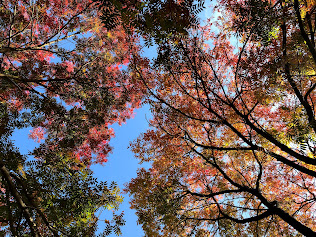
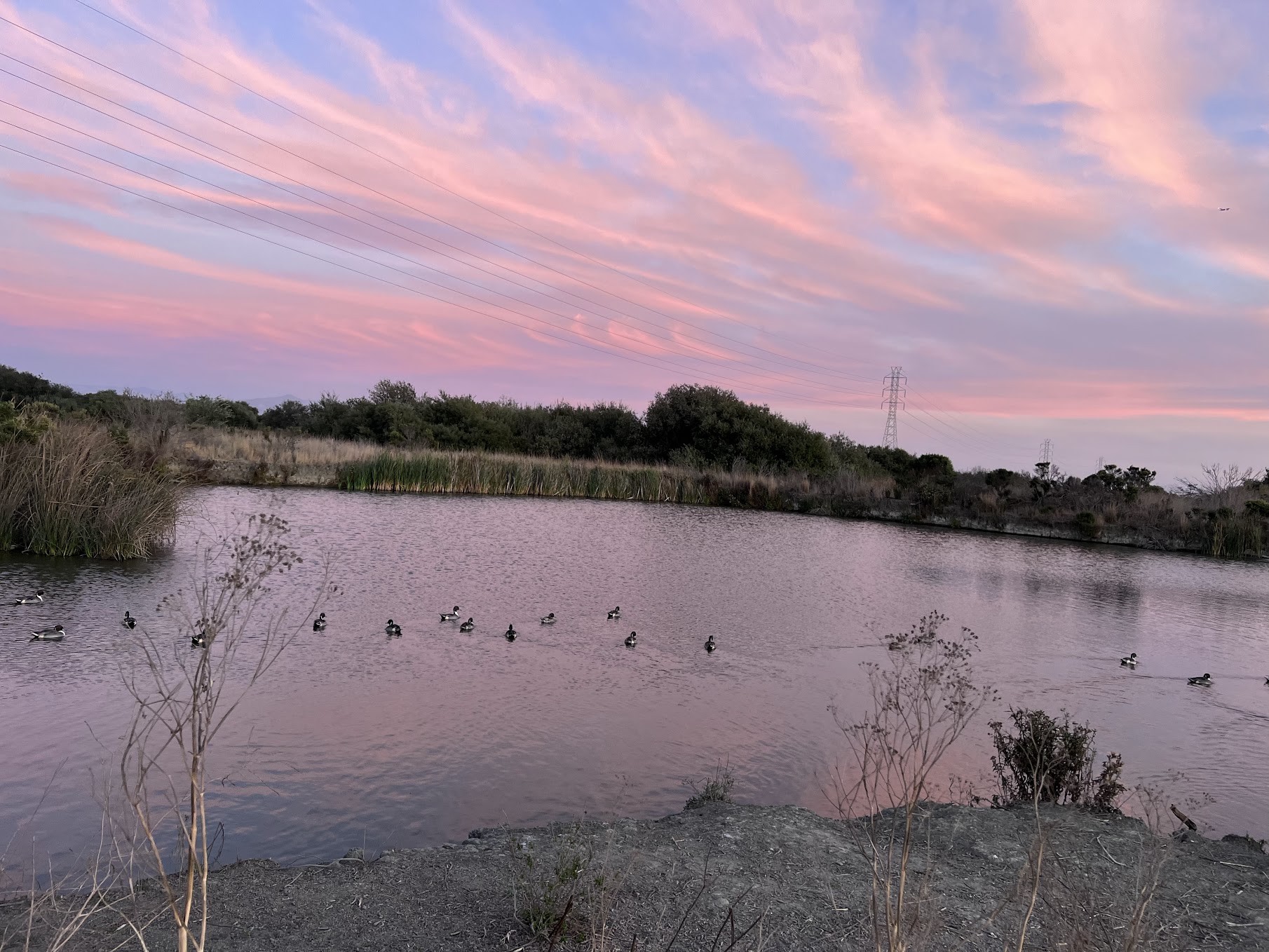
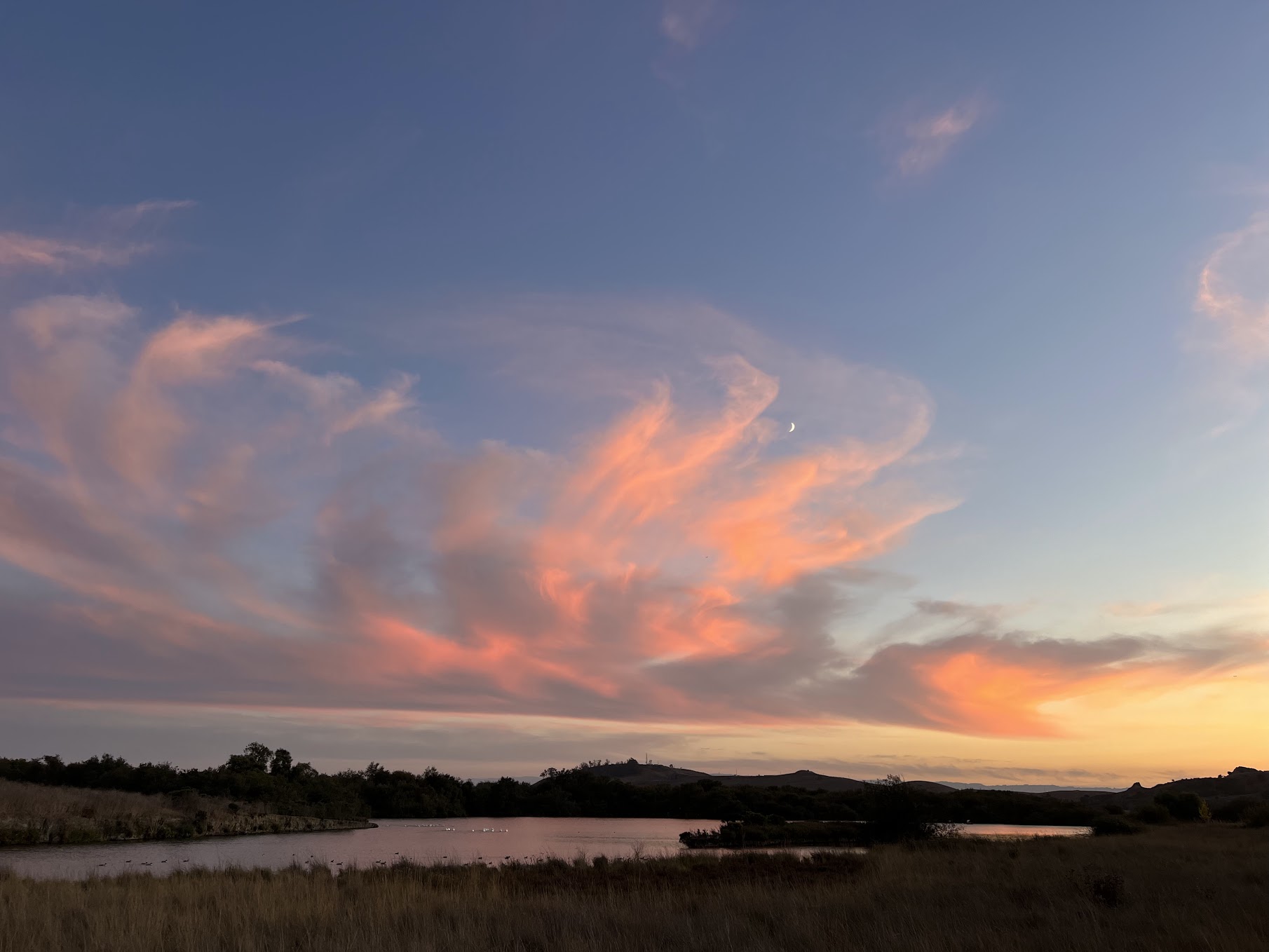
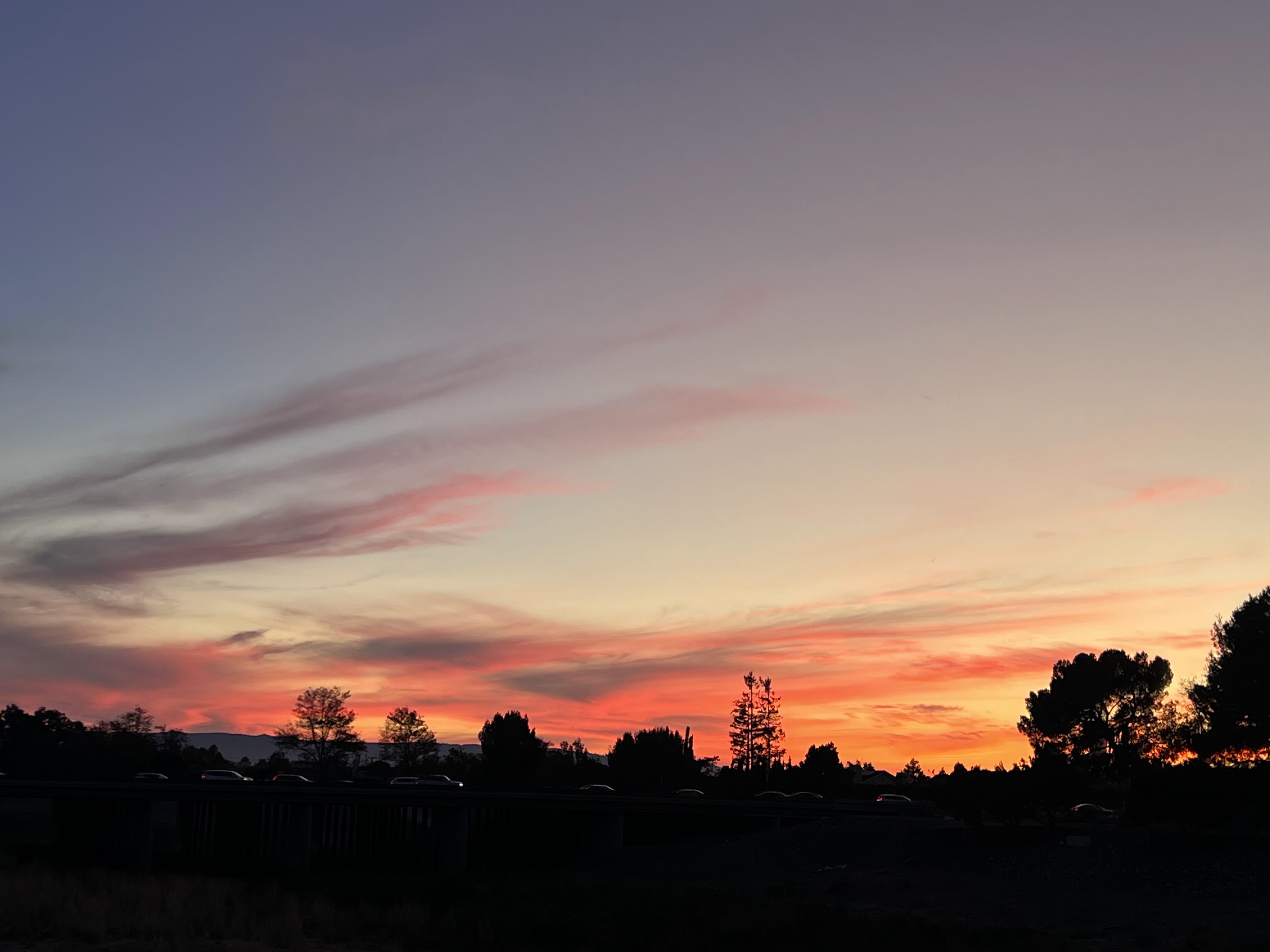
When finally the spell was broken, the sun had set further and the spiders web was now bathed in a golden light. In those few moments of magic where nothing but weaving and creating was happening overhead, the earth around had changed its hue. From a bright blue sky, the pinks and oranges were thrown with abandon. Pretty soon, it would be getting ready to cloak itself in the inky blues of the night. 

The son and I got up – a sense of reverence and humility restored in our proud human spirits of achievement. Here was a lone spider, envisioning a humongous structure, creating a web of art and material integrity to withstand prey probably three times its own weight and going about it in a symmetric and beautiful light of the setting sun. What’s more? It was a design that was biodegradable and all the earth could be covered in this soft, silky web with nothing the worse.

Whether as materials for clothing, or structural integrity such as design of bridges, or the bio degradation of our products, a spider’s web is an inspiration for biomimicry based designs.

Biologically inspired materials could revolutionize materials science. People looking at spider silk and abalone shells are looking for new ways to make materials better, cheaper, and with less toxic byproducts. 

Janine Benyus, Biomimicry

Sometimes, a bike ride is all that is required for perspective to take its throne. 

A Heron’s Lessons

A day or two after the Navarathri season, the husband & I headed out on a walk by the riverside. All was quiet. The husband and I were not. 

The most common ailment of our times: busy times were ailing us both. Our days were packed, and our minds full. Corporate fortunes and misfortunes played out on the global scene. The husband, more stoic than Yours Truly in matters of life was nodding as I rattled on. 

  • Should I do this?
  • Should I do that?
  • Which course of action seems to be the most prudent?
  • Most effective?

Finally, I slowed down enough to make a comment about the trees and leaves. The earth was parched – California’s drought this year has left a dry riverbed, and I felt sorry for the numerous creatures that lived here.

The blue herons, great white egrets, cattle egrets, and hundreds of blackbirds, wrens etc are a welcome sight on walks. My eyes involuntarily scoured the riverside for the marvelous creatures, even though the sunset skies were gift enough. 

The deer, fox, sheep, cats are all admired too. 

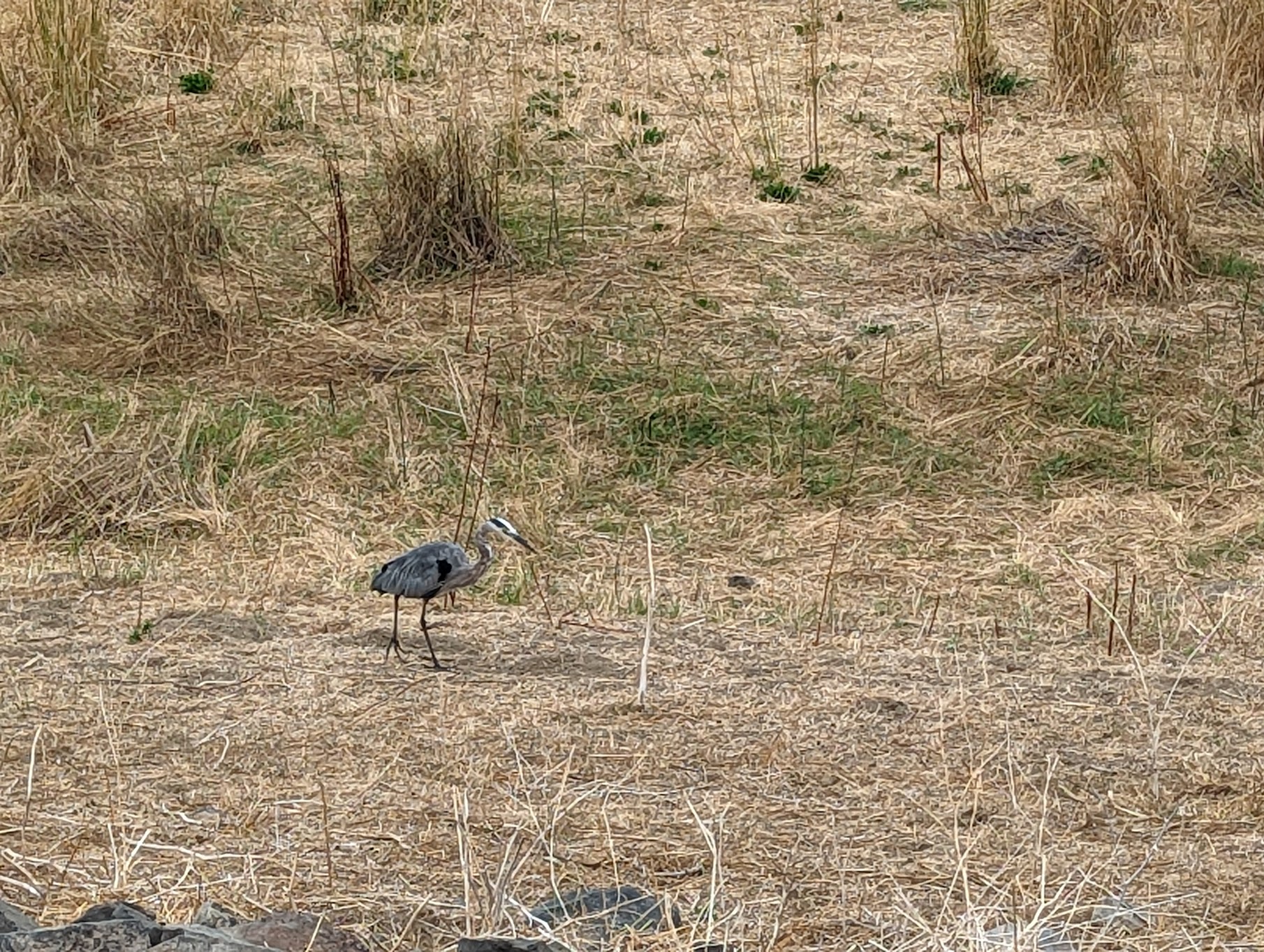
As we were talking of this and that, I spotted a blue heron standing on the river bank. It was probably a baby (an ornithologist on the trail told me that the grey coloration of their feathers, and the thickness of their necks are indicators). I tugged the husband’s hands and said, “Look!” 

We both stopped. Admirable creatures, herons. 

“You know? Herons teach us to remain calm and observe life without taking too much tensions of the comings and goings around them. But when swift action is merited, you can’t beat them. We must be like herons!”  I said.

The husband gave me an amused look and I laughed “I know! I know! Nice talk – but where’s the application you ask?”

We both laughed, but the image of herons never fails to calm me down. Maybe that’s what we must have in our calendars – heron time, hummingbird time, tree time, star time. 

When despair for the world grows in me and I wake in the night . . . I go and lie down where the wood drake rests in his beauty on the water, and the great heron feeds. I come into the peace of wild things who do not tax their lives with forethought of grief. . . For a time I rest in the grace of the world, and am free.

Wendell Berry

Poetry

“How was your morning Amma?” said the son looking solicitous. He has taken to asking me this question every now and then knowing that I have been missing the companionship of the past few months. (The daughter went to college, the parents left for home, the niece left for her college, and what was a swirling whirlwind of wonderful social interactions suddenly quietened down to a buzz. I do enjoy solitude, but the suddenness of it took me by surprise )

That week-end morning, I answered with zest.

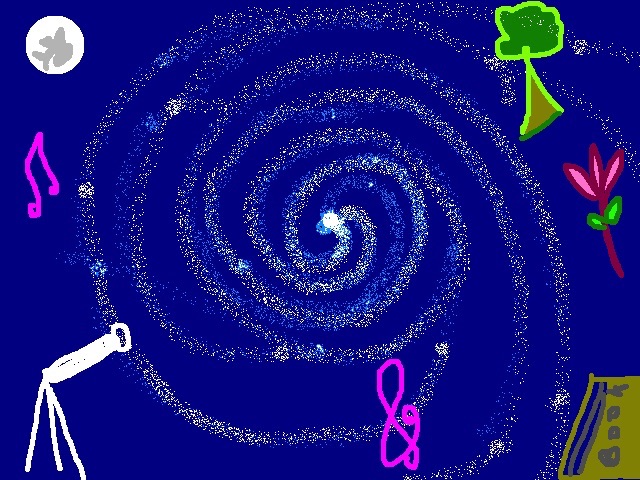
“Good kanna. I listened to galaxies, and then went rock climbing to solve a few problems. Then, I closed my eyes and went to some wild, wild places to hobnob with some wild, wild things. “

“Right!”, he said rolling his eyes just like his teenaged sister taught him. “So you read a couple of children’s books!” 

“Yep! Which ones did you like best?”

I looked at the cosmophile and gave him my truthful answer.

“Listening to the Stars – the life and story of Jocelyn Bell Burner who was credited with discovering the first 3 neutron  stars, but denied the Nobel Prize for the discovery. They gave it to her male colleagues instead.Ugh!”

“Yes..I read that book too. It was awesome! I wish she won the Nobel Prize too.”

We then shared a moment or two about the unfairness of it all. Then to lighten things up, I said, “But I also realized that the fragile tendrils of love tethering us to Earthly existence are very strong!”

“Ugh! Cheesy! Which book is that?”

“Forgotten poems of Pablo Neruda.” I said grinning.

He chuckled as he walked away. “Poems by Pablo Neruda!”

“You can’t just be an astronaut – you also have to have poetry in your heart so you can share it with the cosmos my man! Remember how folks would’ve liked that from Neil Armstrong & Buzz Aldrin?”

“And music too. Remember you might to have to interpret whale song for other lifeforms! Our life as a kaleidoscope!” I said with a grand gesture of the world with my hands.

“Yes..yes! Well – good to hear you all chirpy. Have fun ma!”

The Power of Banned Books

The son & I were chatting of this and that as we walked into the library mostly missing the old pater who had left the previous week. Grandfather, Grandson & Self: would make a song and dance out of our library trips, and look forward to it with shining eyes. 

The rest of the household indulged us in this pursuit. We traipsed home with seeds for the vegetable garden from the Solarium in the library, we came home with books defying regular ideas, we got on spaceships and shot off to Mars and beyond with our books, we explored magical entrances to worlds in which we could safely explore our problems, we went on philosophical jaunts with ideologies, we set about trying to understand ecosystems, habitats, climate change, economies, neuroscience, cellular biology, systems design whether or not we completely understood, but just because we could and it was fun to do so.

Books became our source of infinity and the three generations were content for days in our different worlds. 

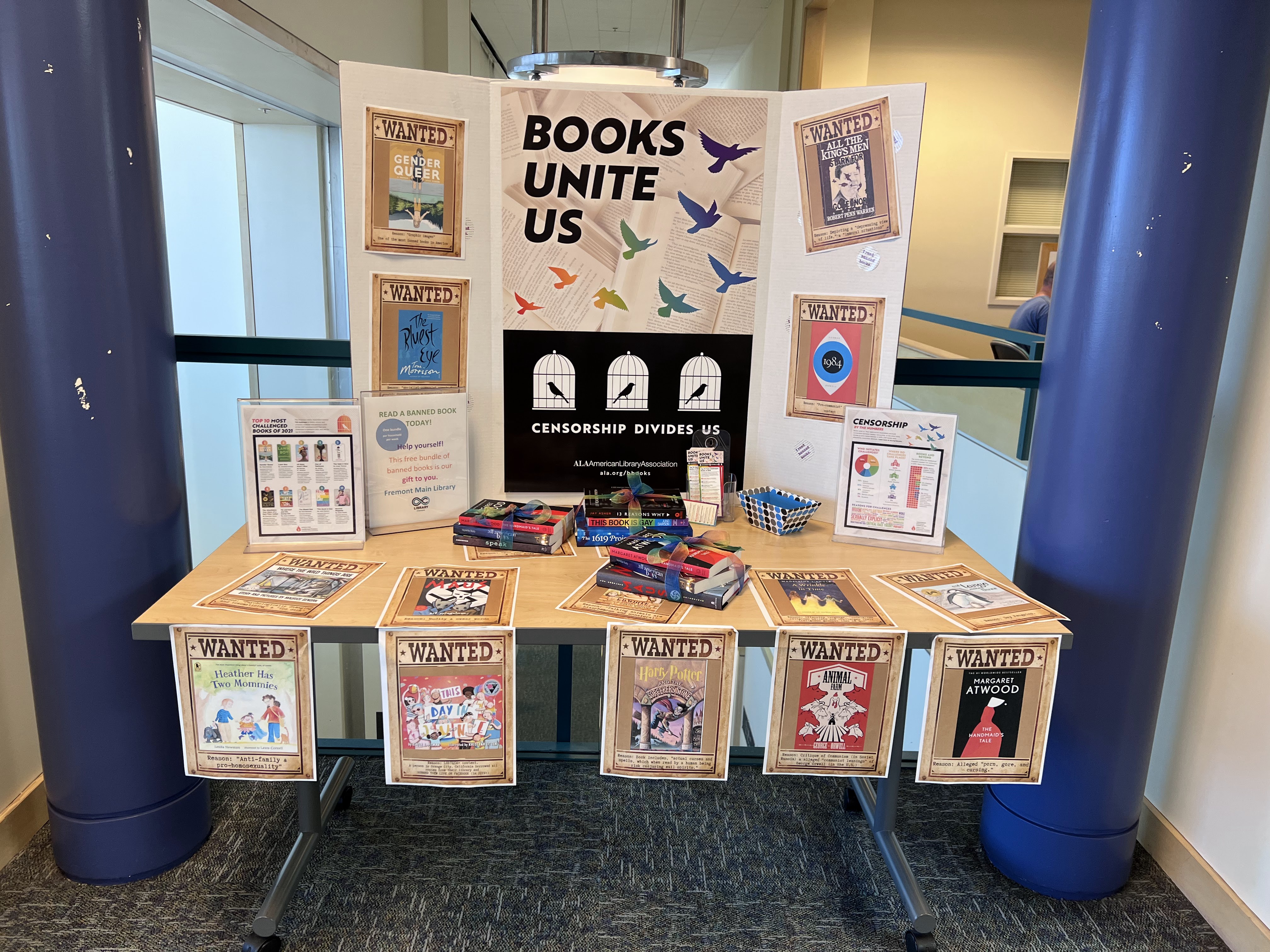
“I wish Thaatha was here to see this. Oh! He would’ve loved to look at this.”, said the son, stopping in front of the spectacular Banned Books exhibit in the library.

For Banned Books Week, the little exhibit showcased famous banned books and the reasons they were questioned in the first place. 

The son, looked at me with huge round eyes and said – “Really! Why would they ban Wrinkle in Time, Harry Potter, and this cute little book on Penguins just because it has gay penguins?”

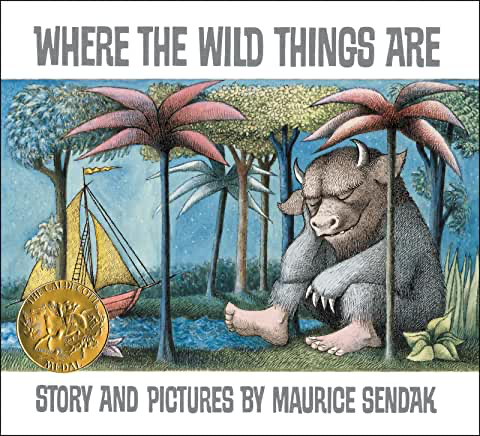
I joined him at the exhibit and saw The Handmaid’ s Tale, Where the Wild Things Are, Charlotte’s Web and a score of other loved books in that list. 

I saw the concern in his face. 

“You know? When I see this list, I am grateful we got to read so many of these books, but also makes me think of that little snippet in Harry Potter and the Order of the Phoenix.”

“Which snippet?”

“The one where Hermione Granger is beaming after Umbridge bans Potter’s interview proclaiming the return of Lord Voldemort? She says that if Umbridge could have done one thing to make sure that absolutely everyone in the school read the interview, it was banning it.”

He smiled and we discussed why books are banned in the first place. Are inclusive ideas that frightening? Why do dictators ban books – for the ability to imagine is a dangerous game. What if their oppressed populace imagined life without their tyrannical rule? 

Many authors have faced life threatening situations (most recently Salman Rushdie) for their ideas. Ideas are seeds after all, they can take root and make people imagine a better existence for themselves and where would be then?

“I wish your Thaatha had access to a good public library in India.” I said sadly. It has been a wish and a dream for the country I was born in. 

We harked back to a little town he had designed. In that world,  libraries were prioritized right alongside schools, hospitals, parks, and public transit and I liked it so much. 

I picked up Where the Wilds Things Are – by Maurice Sendak for it seems we needed to read at least one book on that exhibit.

A Question of Time

The past week has been an interesting one in many ways. Emotions aside, what this meant in practical terms was that the nourish-n-cherish household ran on a clock. 

The map says it takes 45 minutes at peak traffic, but surprise of surprises, it took 62 minutes, neatly shaving off the buffer we had baked in for grabbing a snack. 

At 10:45, we would have to be there at Y parking garage so that we could get to X building at 11:00.

At 4:45, the flight leaves from Airport Here. That means, the time at Airport There would be x-12.5, but there is x+7.5 stop-over in between.

By pure chance during this time of frenzy, I had with me a slim book, Longitude – The True Story of a Lone Genius Who Solved the Greatest Scientific Problem of His Time by Dave Sobel.

It made for an interesting read on how we managed to get time down to a science. Dava Sobel creates an excellent narrative around the problem of Time and Maritime navigation.

“Time is to clock as mind is to brain. The clock or watch somehow contains the time. And yet time refuses to be bottled up like a genie stuffed in a lamp. Whether it flows as sand or turns on wheels within wheels, time escapes irretrievably, while we watch. Even when the bulbs of the hourglass shatter, when darkness withholds the shadow from the sundial, when the mainspring winds down so far that the clock hands hold still as death, time itself keeps on.”

Longitude by Dave Sobel 

While many astronomers tried to solve the mystery of keeping time using the astronomical events in the sky such as mapping Jupiter’s moons and their eclipses etc, one man, John Harrison set about solving the problem mechanically with a superior clock design. Clocks of the fifteenth and sixteenth century lost time because their pendulums lost their swing with the swaying of the ships, the internal mechanics rusted with the moisture at sea, and numerous other problems.

Reading about Time and how difficult it must have been to measure, has always fascinated the son & myself.

I suppose Time has become such a cornerstone of our existence that it makes for a refreshing read to hark back to the times when time was an indicator and not as much of a martinet as it is in our over-scheduled lives today.

I was reading Mrs Pringle of Fairacre by Miss Read – every time when life demands a slowing down and it is physically hard to do so, a dip into the lovely village green of Thrush Green or Fairacre does the trick. In the Fairacre books, Mrs  Pringle is the competent school cleaner who is also a bit of a virago. Her scatter-brained niece Minnie Pringle is often featured – incompetent and maddening as she is, she helps(or hinders) Miss Read out now and then. In this snippet, Miss Read learns that Minnie Pringle, a mother of 3 and stepmother to 5 young children, never really learnt to look at the clock and read the time.

Mrs Pringle of Fairacre: About Minnie Pringle 

I had not really taken in the fact that she could not tell the time

‘Well, I never sort of mastered the clock”, she said vaguely, implying that were a great many other things which she had mastered in her time.

‘But how do you manage?’ I enquired, genuinely interested.

“I looks out for the Caxley’, she replied. ‘It gets to the church about the hour.’ (The Caxley is the local bus)

‘But not every hour.” I pointed out.

‘Yes…but there is also the church bell.’

‘It still seems rather hit and miss,’ I said.

Mrs Pringle – By Miss Read

When I read the above snippet, I threw my head back and laughed. Almost subconsciously, I glanced at the various apps on my smartphone to remind me about the day : there were calendars synced with my meeting schedules, alarms to remind me of certain events and classes for the children, timers to help the rice cooker turn itself off, the world clock app to let me know when it is okay to call my friends in the different corners of the globe. 

Maybe John Harrison (The man who came up with the design of a clock that could hold time during maritime vagaries such as storms and tidal waves without rusting or losing momentum in the sixteenth century) did not quite anticipate the extent to which the world would adhere to Time, but it is refreshing to think of a few people who are not ruled by the ticking of the clock.

Maybe we should have Do-Nothing Days in which neither the phones, nor the passing of time intrude. It will be a refreshing change for sure.

Note: The obsession with Time is called Chronomania and those who live in perpetual fear of time ticking, time passing have Chronophobia.

The Other Dog

The Other Dog – By Madeleine L’Engle

Written by the legendary author of The Wrinkle in Time, Madeleine L’Engle, I could barely believe it when I saw the well-loved book in the library. This book is written from the perspective of their dog, Touché L’Engle and how she welcomed the other dog everyone calls a baby.

The Other Dog – by Madeleine L’Engle Illustrated by Christine Davenier

It is a light-hearted and joyous book celebrating the life of their first pet, Touché . At one point in the book, I stopped and laughed out loud.

The Other Dog – By Madeleine L’Engle

I always tell my master and mistress

when the telephone or the doorbell rings.

No one could be more efficient,

more energetic,

more conscientious,

or louder

about this than I am

Madeleine L’Engle – The Other Dog

I remember my friend telling me a few years ago that their dog, with whom I shared a birthday, and was always very proud of it, had taken it upon himself to take care of the children. Which meant that every time one of her babies cried, the dog would bark too, and every time the door bell rang, he would bark too. 

As a visitor to their home, I found it all very amusing. I would ring the bell, listen to the gongs echo through their house, then the dog would bark, and usher me in with welcoming wags of his little tail. While there, if the baby so much as whimpered, the baby monitor would amplify the sounds and relay it to the room we were in. But that wasn’t enough:  the dutiful little dog took it upon himself to also convey the message, and so there was a grand flurry of activity every time the baby got up. 

I remember laughing so hard at all this activity, and my friend, tired as she was with a new baby in the house, joined in, and laughed heartily too. The dog was thoroughly bewildered. Had he not conveyed the message properly? THE BABY WAS CRYING! Why were we standing around laughing so hard that we had to clutch our stomachs?

What a lovely peek into the past that book was for me? Reading about the story of how the book came to be was fascinating in and of itself. Long before she became famous for her Wrinkle in Time she had written the book, The Other Dog, but it never made it to a publisher. Years later, long after Touché the dog had passed on, this book was published. Touché was a little grey poodle who was adored by fans for his appearance in stage plays in his youth. Reading about Touché, it was apparent that long after this death, Touché is also adored by all his book-reading fans.

Touché’s debut was in the production of Checkov’s The Cherry Orchard.

We go through life seeing many people who might’ve made good celebrities, and I am glad to say I have a met a dog or two in that category too. But fame, fickle as it is, can sit very poorly or gracefully on certain characters. It looks like Touché was gracefully accepting of his time on stage, and never let himself down from the higher standards of deportment he had set out for himself. If I were a celebrity, I would’ve learnt a thing or two from dear Touché.

Oh! The Places You’ll Go – By Dr Seuss

There is a general hum of excitement when  an Amazon package arrives outside the home. Is it some exciting thing required for the college-bound daughter, or something that would make the husband excited for his myriad hobbies, or another household item that would make yours truly beam?

Usually, the honors of opening the packages are done by the daughter with her adoring brother watching on. Hope I set the stage sufficiently:

Amazon package on porch

Children of house all expecting something for themselves open it

Oh The Places You’ll Go – By Dr Seuss

Oh The Places You’ll Go” by Dr Seuss. I held the book out to her and gave it to her as a college-going gift.

“Why would I take a children’s book to College Mother?” She said rolling her eyes and wishing her mother would have more sense. 

Her grandparents, on the other hand, were truly thrilled by the book. 

“What an excellent book ma? It was written the year before his death and has a lifetime of wisdom in it. Excellent book!” said the grandfather.

“Written in such simple terms for children to understand too. ” said the grandmother.

The grandmother and grandfather united in praise of a book shook her a little bit, but how could she? A near-18 year old, always sharing her ripe wisdom with her adoring brother, accept things that easily! 

I saw her steal a glance at the book.

You have brains in your head.

You have feet in your shoes

You can steer yourself

Any direction you choose.

Dr Seuss – Oh! The Places You’ll Go

I, for my part, was an amused spectator. This book was one of Dr Seuss’s that I read multiple times over – every time I face a bleak stop at the waiting station, or an exciting time where I hope to soar.

Waiting in Life

Dr Seuss’s book is an energetic reminder that life throws many curveballs, and somehow in this shared sense of struggle and being, a human camaraderie emerges. 

And when things start to happen,

Don’t worry. Don’t stew.

Just go right along.

You’ll start happening too.

Oh! The Places You’ll Go – By Dr Seuss

Every human has struggles, has ups and downs, waiting periods where nothing seems to happen. 

Every time, I talk to my friends and colleagues who in the course of their careers have inspired and taught me, I think how incredibly lucky I am to have had the ability to work with people like them.

And how, without our knowledge, we all lifted each other up.

You’ll be on your way up!

You’ll be seeing great sights!

You’ll join the high fliers

Who soar to high heights.

Oh! The Places You’ll Go – By Dr Seuss

And then, in particularly stressful periods, when you are in the waiting station, and have to learn to un-slump yourself, I read that too, as a reminder that life is never a smooth ride and everyone goes through phases of the not-so-happening, not-so-good.

Yet, at the very end, when the book assures you that all will be well. You do develop an optimism and hope that everything will turn out well in the end.

“And will you succeed?

Yes! You will, indeed!

98 and 3/4 percent guaranteed) 

KID-YOU’LL MOVE MOUNTAINS!

Oh! The Places You’ll Go – By Dr Seuss

It is no wonder that this book is popular as a gift for anyone starting out a new phase in life. 

Or not. It is a gift for all the times you need a reassurance of all that life takes.

Feeling Blue?

Fascination with the color blue I realized on picking up the books, BLUE – In search of Nature’s Rarest Color – Kai Kupferschmidt, is not a nourish-n-cherish household trait, but a universal one, and what a lovely revelation that was. 

Blue – In Search of Nature’s Rarest Color – By Kai Kupferschmidt

There are blues that are particularly attractive in clothing. For instance there was a deep sea blue nickname M S Blue, for the famed singer, M S Subbulakshmi first stylishly wore saris win that rich blue to concerts. Then there was the copper sulphate blue, turquoise blue, peacock blue, sky blue and navy blue.

I understand the yearning to write about the color blue. Who hasn’t been uplifted by the blue waters of a lake or ocean, or the sight of the blue skies first thing in the morning? Blue seems to assure us that we are here. We Belong on Earth – on this Pale Blue Dot.

Nevertheless, the book has many interesting aspects to the color blue. Starting from ceramics to precious stones and textile colors, the color blue has always enamored artists and patrons alike.

I found myself gleefully reading about the color, YinMn (pronounced yin-min) blue created by Dr Mas Subramanian that was later honored by having a color of its own created by Crayola the Crayon company.  Made from Yttrium, Indium and Manganese, the color created a blue wave in the world of colors.

The chemical formula of YInMn Blue is YIn1-xMnxO3.

You can read about its serendipitous discovery here: https://chemistry.oregonstate.edu/content/story-yinmn-blue

YinMn or Oregon Blue – Image from Wikipedia link : https://en.wikipedia.org/wiki/YInMn_Blue

As I sat watching the son in his swim class, I felt a forced sense of ease settle upon me when I opened the book to read. The swimming pool was tiled with light blue tiles, the white lighting overhead made it a calm enough locale even though there were about a hundred people in the pool area. Waters do have a calming influence if you let it. This summer, we have been swimming a little so we could appreciate the wonders of the underwater 🗺 world 🌎 in the Pacific Ocean. Closing my eyes, I can still visualize the vibrant school of fish and the large turtle in the blue waters. 

The Sea Turtle near Kauai, Hawaii

I always imagined the creatures of the ocean having an even higher frequency range of light perception than humans. So I envisioned them swimming and living in a brilliant world of coral reefs and kelp forests with the myriad shades of blue contributing to its beauty. Imagine my disappointment then that the book while explaining the cones that are present in our eyes to detect color indicate that whales, seals and many denizens of our blue seas cannot perceive the color blue and may well see the teeming coral reefs as grey on grey. 

Image from the book as given on the Amazon page

That made me feel blue – I am not going to deny that. (Though I must admit the color blue has never made me feel blue, so I wonder where the expression comes from.)

Art work by Daughter

This book has re-awakened a dream of two science-based books that I have been meaning to write for children.  One on colors and another on how different creatures perceive our world. 

When can I become a mermaid?

To explore the forests of kelp

Or a butterfly

Or a blue jay or a hummingbird

So I can see the gardens of life abound through their wondrous roving eyes.

The Woodpecker & The Tree

I am enormously grateful that I am moved by the beauty and strength of a tree. I have spent many (but not quite enough) tranquil moments watching and admiring trees. Trees provide an unassuming, grounding presence for restless spirits such as mine.

I remember one day not too long ago when spring had turned to summer, and I stopped short and quite abruptly in front of a gingko tree. The tree was now fully covered in green leaves – when did the bare winter transform to full grown summer? I don’t remember the quiet miracle of life marching on though I passed the tree almost everyday: The efficient leaves photosynthesizing and nourishing the tree.

I am reminded of William Blake’s quotes on trees:

“To some people a tree is something so incredibly beautiful that it brings tears to the eyes. To others, it is just a green thing that stands in the way.”

William Blake

How sagely they bear the scurrying squirrels, the boisterous monkeys, the birds who make their homes in them including birds like woodpeckers who must be a noisy presence, the army of insects, and so much more? Even in my most whimsical moments, I cannot envision an angry tree or even an annoyed one. A tree is always what it is: steady, useful, beautiful.

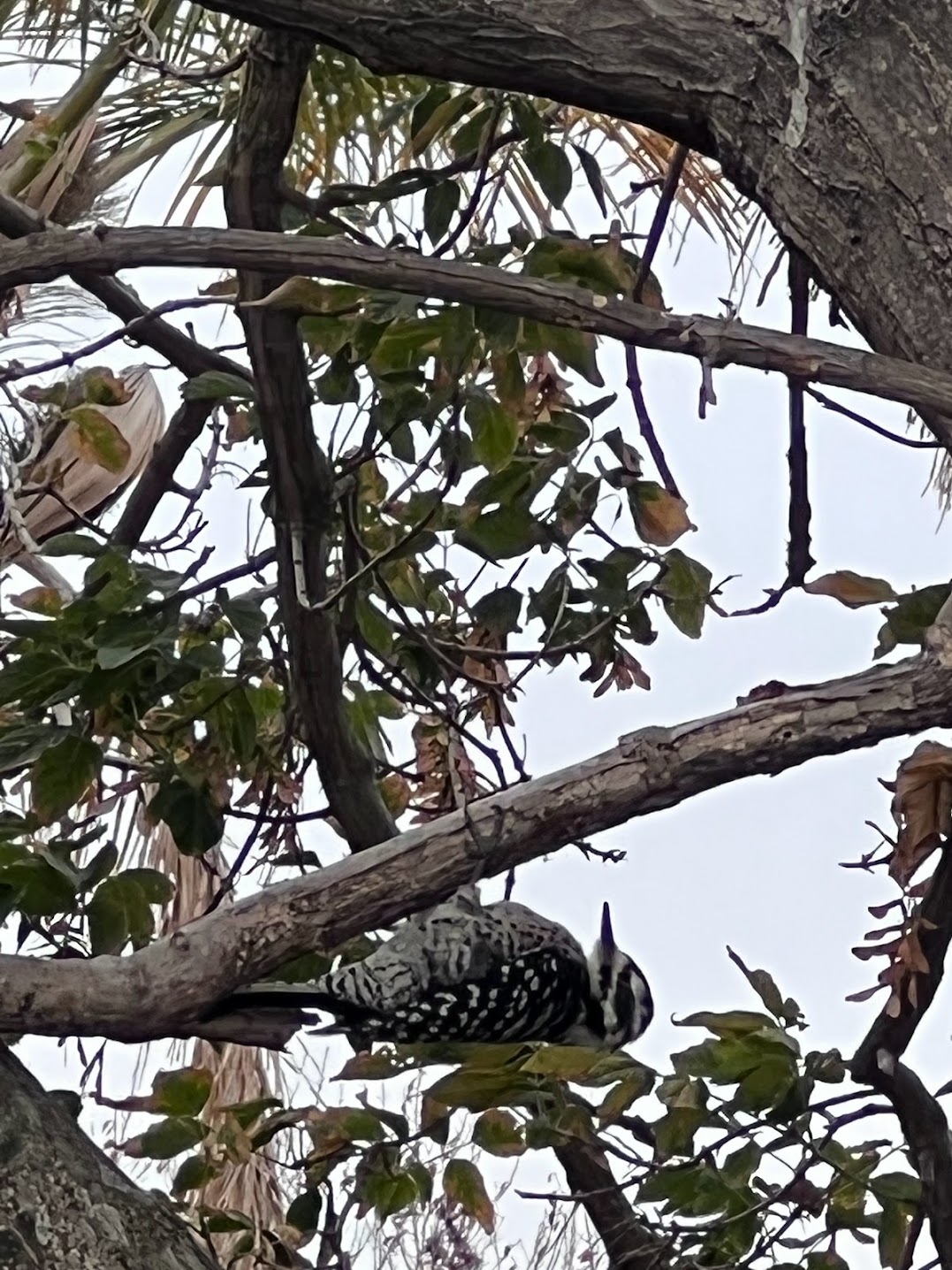
I was watching a woodpecker peck steadily at a tree branch one day.

Tok-tok-tok-tok-tok-tok-tok

Tok-tok-tok-tok-tok-tok-tok

I stood there taking in the beauty of the suns rays, the straight angle at which the woodpecker was perched on the tree (really – how was it holding on like that without ropes, and banging its head against the tree all day long?), the beautiful red of its feathers glinting against the rays of the sun, contrasting with the light green of the trees leaves.

Tok-tok-tok-tok-tok-tok-tok

Tok-tok-tok-tok-tok-tok-tok

I remember wondering why the tree didn’t just shudder a bit to shake the bird off. But it didn’t. The woodpecker for its part seemed to be so happy at yammering at the tree like that it shocked me. For such a small bird to absorb the waves created must be quite high even if it was self inflicted.

Musings like these are music to the soul. For I came back and the internet gave me plenty to read up on woodpeckers. Coming from the human world, I assumed a design structure such as shock absorbers for the woodpeckers to endure the yammering. But nature surprised me yet again. Biomimicry as a discipline continues to hold me in awe. Woodpeckers really do not have shock absorbers. Instead their skulls are designed to endure the impact much like a hammer takes the impact of a bang. Given their size, the impacts they make are just enough for them to absorb throughout the day. 

https://www.smithsonianmag.com/smart-news/woodpecker-skulls-dont-absorb-shock-like-previously-thought-180980426/

About 12 thousand times a day, woodpeckers drill their beaks into trees to search for food, make nests or communicate with other birds. 

Article linked from the Smithsonian Magazine

When pecks arrive through the day, I think of the tree, and the happy woodpecker. Even though all those who knock and peck at my attention are not exactly happy to do so, I assume they are happy like the woodpecker, and I try, poorly, to act the part of the sagacious, gracious tree and all is well.

The Peace Tree from Hiroshima

When I picked up the book, The Peace Tree from Hiroshima, I felt a familiar flutter of hope. The title promised a story about the best aspects of humankind. But little did I realize how moved I would be by the book. Published by Tuttle Publishing, which was set up to promote Asian stories in America post World War II, this is a heartwarming tale of a tree that became a symbol of peace between Japan & America.

The Peace Tree from Hiroshima

The Miyajima or pine tree was handpicked in about 1625 when Mr Yamaki’s great great … great grandfather, Mr Itaro, went hiking in the mountains of an island, Miyajama – nicknamed the Island of the Gods for its scenic splendors. Ever since the pine lived in the home of the family: carefully tended for and handed over as a legacy from father to son. 400 years later, when the nuclear bomb was dropped on Hiroshima, somehow this family and the bonsai tree survived.

From sample image on Amazon for The Peace Tree from Hiroshima

I had heard of Bonsai & Ikebana art, but did not truly understand what went into creating and preserving such magnificent specimens. When it comes to art forms with flowers and trees, the Chinese and Japanese have such a rich heritage. 

In what is the most moving gesture of humanity, on America’s 200th anniversary, Japan gifted America with 50 bonsai trees (one for each state). The bonsai trees were special ones including 3 from the Emperor’s collection. This 400 year old Miyajima tree from Hiroshima was also part of that gift and now lives in the Arboretum in Washington where it has been christened The Peace Tree. This tree that saw humankind go through industrial revolutions, technological advances unseen before, and the worst blemish in warfare is now a Peace Tree. I hope I can visit the Washington Arboretum one day and be in the presence of this little 3 ft tree with a powerful message of hope, resilience and forgiveness.

It truly became The Little Bonsai with a Big Story

This little bonsai’s story along with the Cranes of Hope, will hopefully be a reminder to us on the horrors of war.

I hope I can send these books along with the Butter Battle Book by Dr Seuss, to the current world leaders to remind them of how hard the world has worked towards maintaining world peace. A Course for World Leaders #ButterBattleCourse.

Sadako’s Thousand Paper Cranes

Towards the end of the book, the author writes a note indicating which parts of the story were fictionalized and which parts were true. They also include pictures of several bonsai trees including one that contains 11 trees in one arrangement, created by Bonsai artist, John Naka.  Apparently, one of the longest living bonsai, Fudo, lived over 900 years old. It was bought by the Brooklyn Botanical Garden, but unfortunately this one did not survive the new conditions and died. 

How could the miniature version of the magnificent large pine tree outside our house live as a bonsai tree for upwards of 400 years? Wonders never cease and artistry comes in so many forms.