Journey Through Timezones: 15 Destinations in 15 Days

In what turned out to be the journey of clocks – we managed to visit 15 places in as many days over three distinct timezones. I wondered where we were, how we got up, and how we made it from one place to another at all. But it seems we did, and we made it in one piece back to our home, so all is well.

Sometimes, I’d get up – the biological clock warring with the physical ones, and the expectations of the day starting in whichever language, country you were in. Orienting oneself always seemed to take a few minutes. I loved the sensation of relief as one realized one was supposed to be on vacation – so it must be alright.

Pack Mules

Packing for a European trip along with an Indian one seems good on paper but involves logistics that would have had a royal ensemble perplexed. With baggage restrictions, it turns out that nothing prepares us for two different cultures like this:

  • One requires thermals, caps, gloves, socks, closed-toe shoes, sweaters and jeans
  • The other requires sarees, in-skirts, blouses, salwar kameezes, cotton kurtis, sandals, and jewellery.

Planes, trains and automobiles

For you see? We also seemed to use every mode of transportation available: planes, trains and automobiles. (The boats were given a sad miss on this trip), though there were plenty of lakesides in which to catch our breath.

img_4807

We travelled by trains in India, slept through the night on berths, shot our heads out into the cool morning air as he watched the moon shine through the countrysides. We travelled by trains in Switzerland, where the freshly fallen snow on the countrysides made it all look like we had woken up in a picture postcard.

We travelled by automobiles – in deft contraptions boasting of 4 wheel drives, automatic braking, abs-something, in hilly regions both in India and Switzerland.

We braved the holiday crowds in airports and felt for the airline staff dealing with large swaths of humanity who all seem to have decided to take a holiday just then on an airplane.

Trains

One time, I woke up as a night train in India jolted me awake from a semi-state of sleep. Then I remembered why I was semi-awake. The son had gone to use the restroom minutes prior, and I suddenly felt wide awake. Could the jolt have meant … but mere seconds later, the fellow came back beaming like the waxing moon outside, “Amma! Luckily I had not yet let go when the train jolted – otherwise, my shoes would have definitely been gone!” he said.

I threw my head back laughing, and couldn’t stop for a few minutes. It was his first experience on Indian Railways for on overnight stint, and he was excited to be in the middle berth, and everything from how the iron chains held a person’s weight, to the loos, to the open doorways seemed to fascinate him.

Planes

Another time, we were prodded out of our console screens by our excited co-passenger. She was a professional photographer of sorts (who was also a nurse), and she took a picture of the clouds outside our airplane window to show us what we were seeing. She had identified it correctly – we had a brilliant look at the dancing skies of the night over the Arctic circle, and we caught the aurora borealis in its glory. It was marvelous. 

img_4178

Automobiles

The ability to catch a marvelous sunrise over the Swiss Alps, or to catch a glimpse of an elephant by the roadside was all the magic required for the automobile sections. We managed to eat exotic fruit in Kerala (nongu), and stop for a quick snacks by the roadside in India. It was all a-thrilling, till we found ourselves snoozing on the uber-ride home after all of it. 

img_4575

We travelled by planes from one continent to the next in the peak holiday season, braving crowds, and delays, and cacophonous announcements. How we managed to get from one place to another inspite of all the things conspiring to derail things was beyond us, but we were grateful for it all. Once we landed back home in San Francisco, the very air around us seemed to ease us into being.

img_4869

It also seemed like the problems we had temporarily left behind, were lurking on the corner of our home, and ambushed us as soon as we came in.

Ganga & Kaikeyi : Retelling the Mahabharata & the Ramayana

During the holiday season I read two epics from different perspectives: The Mahabharata & The Ramayana.

The Mahabharata from the River Ganga & Bhishma’s perspective: 

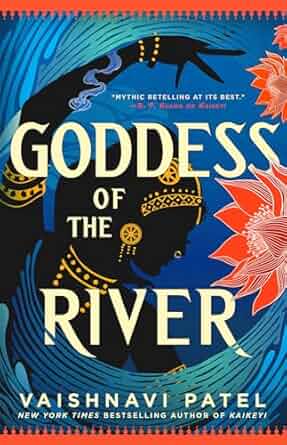
The Goddess of the River – By Vaishnavi Patel

goddess

The book started off beautifully for I have always loved myths of rivers and streams and oceans, and the gods that embody them. How they interact with the human world is a leap of imagination and faith, and when told beautifully, never ceases to make me admire the human capacity for creativity and the beautiful gifts of our imagination. 

How River Ganga fell to the Earth from the cosmic skies, unbridled, full of energy and the strength of the universe behind her is a beautiful chapter, and even if told separately without the context of the Mahabharatha makes for a marvelous read bursting with magical realism. The river’s long continuing peeve against the Lord Shiva who broke her fall to the Earth, and contained her wild spirits to be nothing more than a river able to provide sustenance for humanity is well told. 

The story of her curse, and how she comes to bear a mortal form, and how she comes to marry King Shantanu, and sire him eight offspring ,killing them all – save one, Bhishma, is enthralling.

Points to Ponder:

🦌Fascinating as this all was, the birth of Bhishma Pitamaha, the grand uncle of the Kauravas and the Pandavas may have set the stage for the Mahabharatha. But, once the river returns to her goddess form, her perspective and narrative is not enough for an epic such as the Mahabharatha.

Bhishma is the grand uncle, yes, but he is still forced to take sides, and the sides of the Kauravas, if it needs empathy, needs more work. Grand villainy is not an easy side to tell. 

🦅The river is a river and even with divine powers is only able to be in the same plane so many times, unless she was worshipped and kept in little containers by all concerned. If everyone carried a bit of the waters of the River Ganges from whence she was able to observe, it might have worked. But as it was, from a narrative point, it might’ve worked if she stopped the story after Bhishma’s birth. The author was trying to tell the Mahabharatha from a female centric perspective, but truth be told, the best female perspective for the Mahabharatha is from the point of view of Draupadi – the princess who marries all five of the Pandava princes (Yudhisthira, Bhima, Arjuna, Nakula & Sahadeva). 

🦢She might have better selected the alternating perspectives of Gandhari & Kunti (the mothers of the Kaurava and Pandava princes’ respectively) That would have been a perspective I would have liked to read, for I have always wondered how the mothers felt about their sons and nephews initiating wars, and how their hearts must remain conflicted – for love can be confusing in its loyalties and moralities especially within families. They would also have been present at all the crucial points in the story – when Draupadi was gambled away, when the kingdoms were split unfairly, when they were exiled, and when they came to the inevitable war.

The Ramayana from Kaikeyi’s perspective:

Kaikeyi – By Vaishnavi Patel

kaikeyi

I had qualms picking this up because the previous one The Goddess of the River by the same author did not hold the same kind of sway for the epic it was trying to tell.  You see, the Goddess of the River was an attempt at Mahabharata from the Goddess of the river Ganga’s perspective, which was a severely limiting perspective. If you needed a female centric perspective on the Mahabharatha, the best one still seems to be Draupadi, which is already well-written and well-received in The Palace of Illusions by Chitra Banerjee Divakaruni.

But Kaikeyi was beautifully woven. The story of the warrior princess who saved her husband’s life on the battlefield and got herself two boons to use at any time. How did this particular queen manage to get on the battlefield and save her husband at a time and age when women were kept safe in their palaces at the time of war?

I always found a pang of sympathy for Kaikeyi – for I felt her life, who she was, where she came from, were all colored with the lens of  her choices that set the Ramayana in motion. (Asking for the boons: Rama to be exiled and her blood-son, Bharatha, to be coronated as King instead of Rama) Could she really have festered ambitions for her birth son all that long, even as the epic says Rama & Kaikeyi considered themselves as mother-and-son throughout?

Points to Ponder:

🦌The author wisely stopped the narrative after Rama, Sita & Lakshmana went on exile. This worked very well, for attempting to provide a peek into the Ramayana from Kaikeyi’s perspective would have very limited narrative points of view.

🦅As it was a story from Kaikeyi’s perspective, it also provided a peek into her life. In this book, Kaikeyi’s maid and nurse, Manthara, is not filled with malice as many versions of the epic seem to indicate. In this retelling, Kaikeyi bears full responsibility for what she does and manages to convince the reader of her thoughts and motivations for essentially what set the Ramayana into motion (the exile of Rama for 14 years, and placing Bharatha on the throne instead.)

🦢The relationships between the people in Kaikeyi’s life were well done. Her relationship with her husband, Dasaratha, her fellow queens, Kausalya and Sumitra, and her maids, Manthara and Asha, her sons, Bharatha, Rama, Lakshmana and Shatrughna, her younger brothers – in particular, her twin brother, Yudhajit.

All in all, these two made for good reads over the holiday season, with a trip to India in the mix.

Suma’s A Bindi Can Be

Suma Subramanian

I have been waiting for Asian Heritage Month to review the brilliant books of Suma Subramaniam. I yearn for books that hold a nod for us. I know what it is like to be the only child wearing a bindi in a classroom full of non-bindi wearing children – and so does my daughter I am afraid. 

Despite this, whenever I could, I looked for bindi patterns. Beautiful patterns – so elegantly thought out and shaped. Tiny little spots of art that you could stick on, to transform a face. I have a special kinship to bindis that probably deserve a separate post. I didn’t realize how much bindi related material there is in my head till I started writing this post. I have at least 3 posts worth just with reading one book!

Pottu, my doll

For instance, I had a marvelous doll named ‘Pottu’ – actually the doll was marvelous, it was made to look quite horrendous with all the bindis I gave her. I drew magnificent bindis on her everyday – one day, the sun, another day a palm tree, one day – I’d fill her forehead, face and forearms with bindis. But Pottu was my doll, and there she resides in my long-term childhood memory – a small part of our identity that only those who knew about bindis could understand. 

pixar elephant

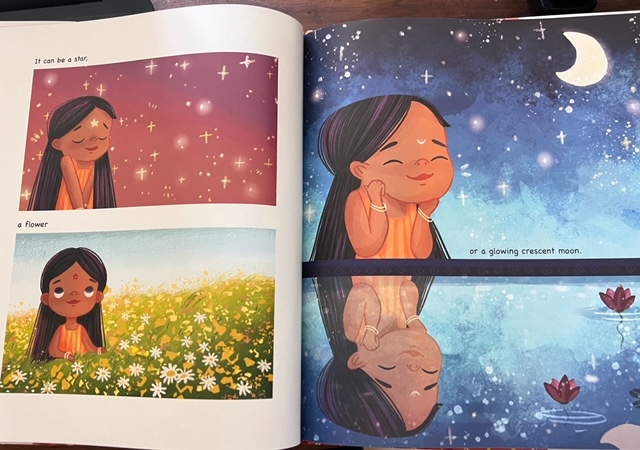
Here was an aspect of ourself that I finally saw in a book. When my daughter showed her baby pictures to her friends, they’d ask about the drishti pottu, or the pottu on her forehead. Finally, children can show their friends what a bindi is – in a book, in an American library. I am proud of that. Like the book coming out gave us bindi-lovers a tiny nod of belonging. You can wear a sari, and a bindi, and you can just Be. 

IMG_1254

Picture from: A Bindi Can Be – By Suma Subramaniam, Illustrated by Kamala Nair

Thank you Suma! 

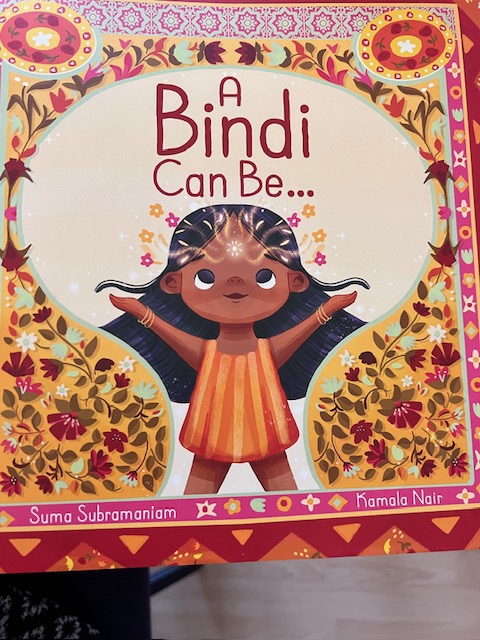
A Bindi Can Be – Written by Suma Subramaniam, Illustrated by Kamala Nair i

Now on to the book itself, A Bindi Can Be – Written by Suma Subramaniam, Illustrated by Kamala Nair it is a marvelous read. The pictures are vibrant. The joy of bindis is evident. The essence of the small dot transforming you is brilliantly done. 

67273848-1671-40B0-992C-E3C82AFDF5D4

Thank you Suma – for all those children who have had the joy of drawing their beautiful bindis, or having a marvelous bindi collection, or felt curious about a friend’s bindi, this book satisfies them all.

Sarees for Mothers

A Sari for Ammi

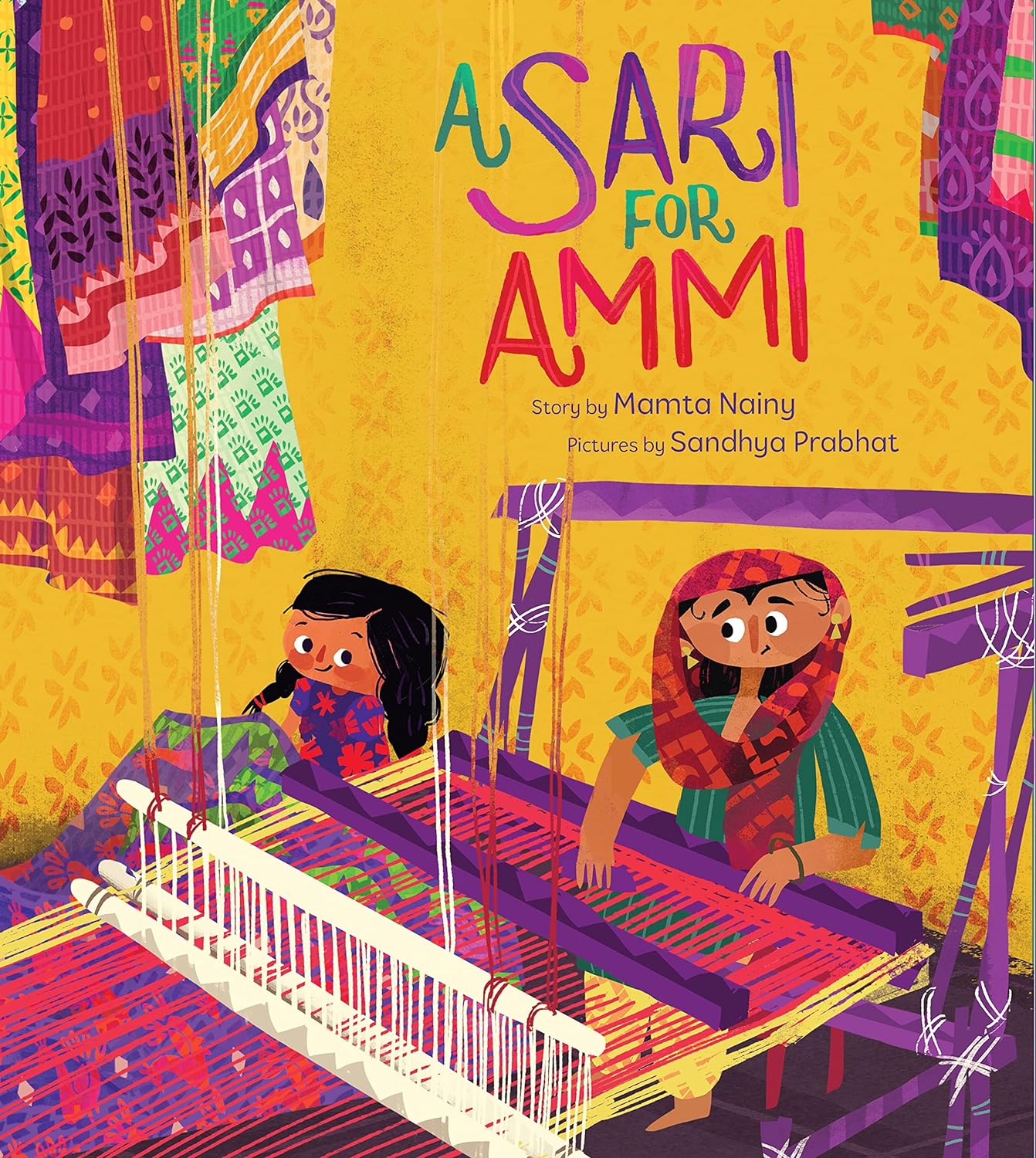
It is Asian Heritage Month, and the library is vibrant. I saw this book, A Sari for Ammi – Story by Mamta Nainy illustrated by Sandhya Prabhat. 

I thought I’d write about this for Mother’s Day, for it is a heartwarming tale. 

The young children of sari weavers watch in awe as their parents work on their arts of creation every day. Dyeing the threads, working the looms, selling their brilliant creations at the local market. Their beautiful mother, who creates magical saris can seldom wear a sari -she usually wears the practical and old salwar kameezes she owns – for she can neither afford the sairs she weaves, nor can anyone buy these for her. They are Kota Doria fabric weavers, and many generations ago moved to the Rajasthan area from Mysuru in South India at Rao Kishore Singh – the then ruler in Rajasthan.

Sari_ammi

The children decide to buy a sari for their mother: One she particularly liked, and one of her own creations. Of course, they realize that they do not have enough to buy a sari, and the heartwarming tale pushes on. 

Buying a sari for a mother is a special joy – one that Indians know and appreciate. For many years, I felt sorry that I could not indulge in this simple pleasure when my mother or mother-in-law came to stay with us in the USA. Luckily, now we have a few stores, and online options, but that was not always the case. 

A simple book that taps into the simple joys of buying your mother figures a saree.

Happy Mothers’ Day to all the wonderful mothers and mother-figures in your life.

⌘ The Essence of Life ⌘

The Fabric of the Indian household

One of my half written posts from one of my earlier trips to India touches upon the heroines of the Indian upper middle-class  household – the cooks and maids. The fabric of the Indian household is maintained through a network of maids – 3 or 4 of them, who swish through the house at various points in time, professionally taking care of the household chores, and keeping a human touch to those who crave for it. I know the aged parents looked forward to a few words with them: a smile, a question, or a comment.

As much as I savored the solitude, and quiet of nature back home in the United States, I understood the tug and pull of humanity in the fast-paced life of the Indian subcontinent, as well. You were never truly alone, even for a few hours, in India. There were maids, delivery men, sweepers, cleaners, neighbors in close proximity, cooks, who were all as much part of one’s routine as the immediate family themselves. 

“Did Appa like the avial?” the cook would ask as she entered the house, to which the father-in-law would reply cheekily that it was nothing compared to his sister’s avial. We all know, there is no point talking when his sister’s avial is raised, and she does too. “Ask your sister to make it then – look at him!” she’ll say looking to the mother-in-law for support and she would jump in with glee.

Read also: The Simple Grocery List

MrKeshav- Open Page - Groceries

Picture Credit: Mr Keshav, The Hindu, Open Page, on the article, A Simple grocery list

The whole thing would last maybe a few minutes from start to finish but this sort of camaraderie punctuated the day at regular intervals, and it provided them with much needed human contact. 

A few days before he began losing consciousness, he pestered his wife to buy their maid (their maid from a few years ago)a cell-phone, as she had told him hers was broken, when she’d called to see how he was doing.  

The Essence of Life

He was not a perfect man, and yet he managed to get people to only remember his loving side, his gentle humor, and his willingness to help. I cannot find the exact quote now, but when asked how he produced such marvelous tales of Malgudi, the eminent writer, R K Narayan, said that he only needed to look out the window, or sit in his front-porch observing life, and they gave him all the material and inspiration he needed. 

As the cooks and maids cried uncontrollably at his funeral, and told us how much they would miss him I was reminded of that interview by R K Narayan on the nature of humanity, and their human foibles being the gentle essence of life itself.

After all, we are who we are, and never is that more apparent than in the small, everyday interactions.

Stimulus🧘🏼‍♀️ 🪷 Pause 🧘🏼‍♀️ 🪷Response

“Life in India is so fast and hectic, isn’t it? “ . We were discussing the fast and furious pace of India with friends. We were each reminiscing our respective trips to India – both made under difficult circumstances, and we were both glad to be back home in the United States.

I nodded fervently, and said wistfully, “Yes – at least during the time I was there, the concept of solitude was rarely acknowledged.”

“Solitude?” And we all laughed. It was true – the populace, and the ways of life make slowing down much harder than usual. It isn’t made any easier with the speed of communications and transportation in cities. The very essence of vibrance that is a huge advantage and a beauty to the civilization was also a disadvantage.

There are times when I have marveled at how the Indian way of life came up with practices such as meditation and yoga, but then I also realize that it was there that it could have developed, for it was required to build still pockets of serene moments into one’s life. in fact, the concepts are nothing short of brilliant. The pause between breaths is essential to be mindful of, when it may be all you can get in terms of mindfulness. The breath becomes the prana in very significant ways. The pause, when rarely taken, becomes harder to practice, and yet the pause becomes that tiny moment of choice in our agency of life.

There are so many aspects to the Philosophy of Being (I am amused it has such a strictly medical sounding name: Ontology)

Keeping ontological explanations aside, if The Nature of Being comes down to simple techniques of breath, fluidity and movement, it makes the simplicity behind it all brilliant.

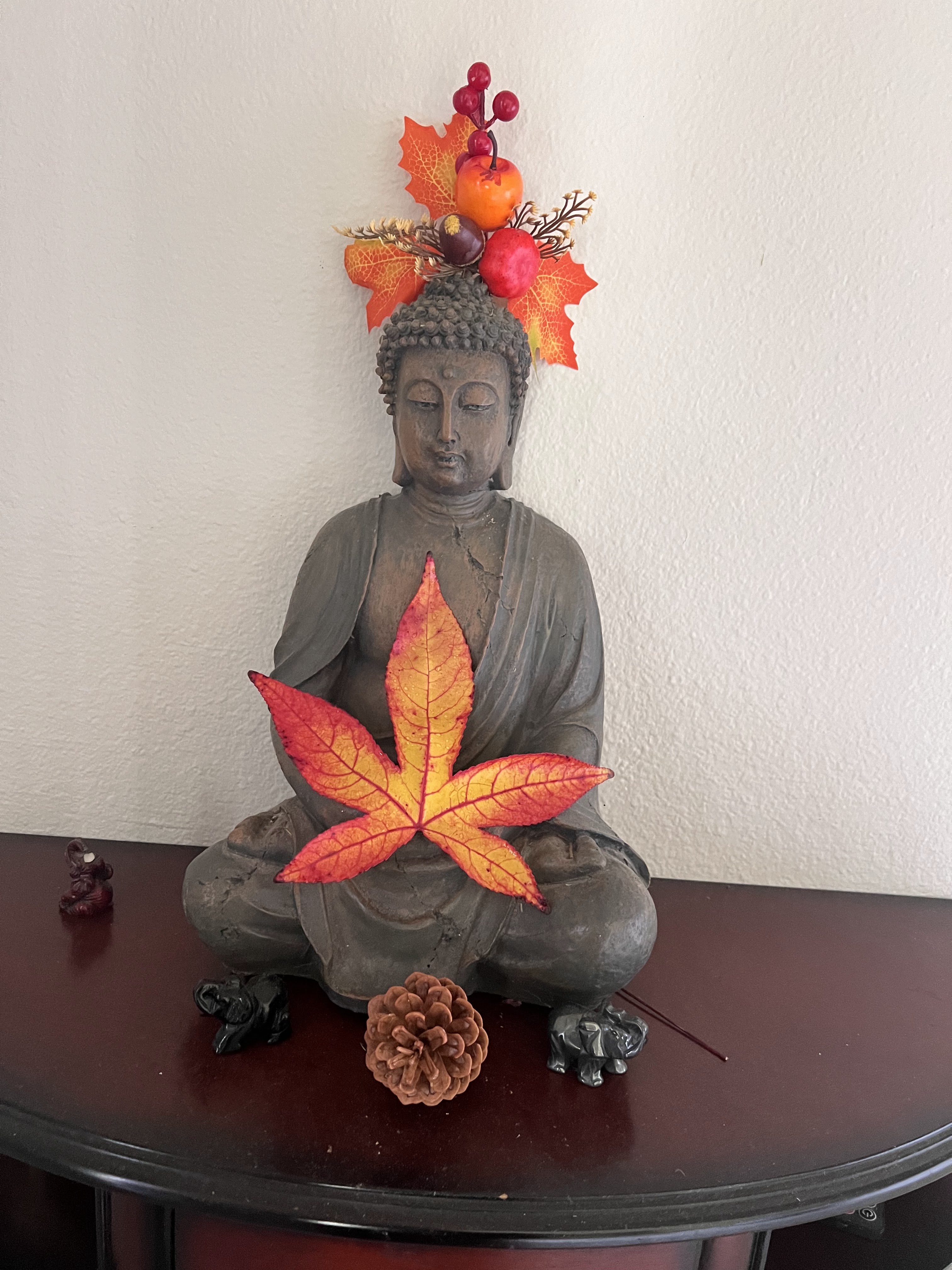
Buddha in Lotus?
Buddha in Lotus?

For many years I had thought of this quote, attributed to Victor Frankl in Man’s Search for Meaning:

“Between stimulus and response, there is a space. In that space lies our freedom and our power to choose our response. In our response lies our growth and our happiness.”

-Quote widely attributed to Viktor Frankl, Author of Man’s Search for Meaning, but not sure: Between Stimulus & Response

Back home, I savored the morning air, as I stepped out for a brisk walk embracing the nippy air. I felt like I could finally hear myself think, and I had a beautiful walk weighing and thinking of such topics as courage, resilience, choices, decision-making etc in the context of our work and personal lives. How one helps us evolve in another sphere, and how we are as human-beings are nothing more than the function of life’s ebbs and flows.

img_8958

The Whole 9 Yards

The whole 9 yards

We lost my father-in-law (henceforth referred to as Appa) earlier this month. He had a wonderful life, was loving and was loved by almost everyone who knew him.

When we reached home and awaited the body from the mortuary, bizarre things began happening. We were supposed to be sending the father-in-law’s soul to a different realm, but I found myself transported to a different realm instead.

Suddenly, one is surrounded by a society that morphs into layers of irrational. I was overpowered by a mob of conservatives who draped me in a 9 yards saree before I could breathe.

For reasons beyond me, the society of people I was born into, sets great store by a garment that is wholly undeserving of the praise bestowed on it. It is the 9 yards saree. I abhor the garment for several reasons: apart from the casteism it symbolizes, it is also an extremely uncomfortable garment.

The 9 yards saree makes one look like a roadroller, impedes motion, and rouses an instinct in all females who see you to ‘fix’ the saree. One thinks, the folding pleat behind the legs is too long, another thinks the tugging back is too long. So, they all attempt to fix it — all completely well-intentioned of course. Only this gives you a strange sense of being disrobed – for like one of these sailors knots, if you pull one place, the whole thing can unravel. One time, an aunt, tugged something while I was descending the stairs and I almost fell headlong down the stairs. After the initial flare of annoyance, I started to laugh trying to envision myself like a rolled up carpet at the bottom of the stairs, and all good hands trying to extricate me from a 9 yard mess.

I have never liked it – but as luck would have it, society is enamored by it.

As I moved numbly to see the mortal remains of my dear father-in-law, about 50 different women and 10 men told me that the important thing to remember is that I wear this particular 9 yards saree everyday – to be washed, dried and worn again for the next 13 days. “Remember – the same saree only.”

I stared at them too speechless to say anything. Could they not see I was grieving – why was this same-9-yard-everyday thing so important?

It made no sense – until you realized that religion loves giving dictums for everything starting from how a woman should dress to how she should grieve. This one was apparently to ensure that we did not accidentally attempt to feel good by dressing well.

I’ll let you all roll your eyes at that one.

Dear Appa

A few years ago, when we had moved into our new home, everyone was pressurizing me to wear a 9 yards saree for the house warming ceremony. I was sipping my tea looking glum one evening after another aunt insisted that it was a critical garment for the success of the ceremony. Appa asked me “Yenna ma?” (What is it, ma?) in his typical calm voice sensing my disquiet.

I told him that I didn’t like the 9 yards saree but everyone wanted me to wear it.

He looked at me and said, “Don’t wear it!”

I looked up, and saw him looking at me sincerely. He continued, “This ceremony is supposed to ensure that you are happy in your new home – wear something that you will be happy in!”

I didn’t wear a 9 yards saree that day. I wore something I was comfortable in.  When I came down the stairs, he saw me and gave me a glorious smile.

Dear Society, Can you change?

I thought of this little interaction every day that I was miserable in the 9 yards saree during his long drawn out death ceremonies that everyone insisted had to be done in 9 yards (for the departed soul you know?)

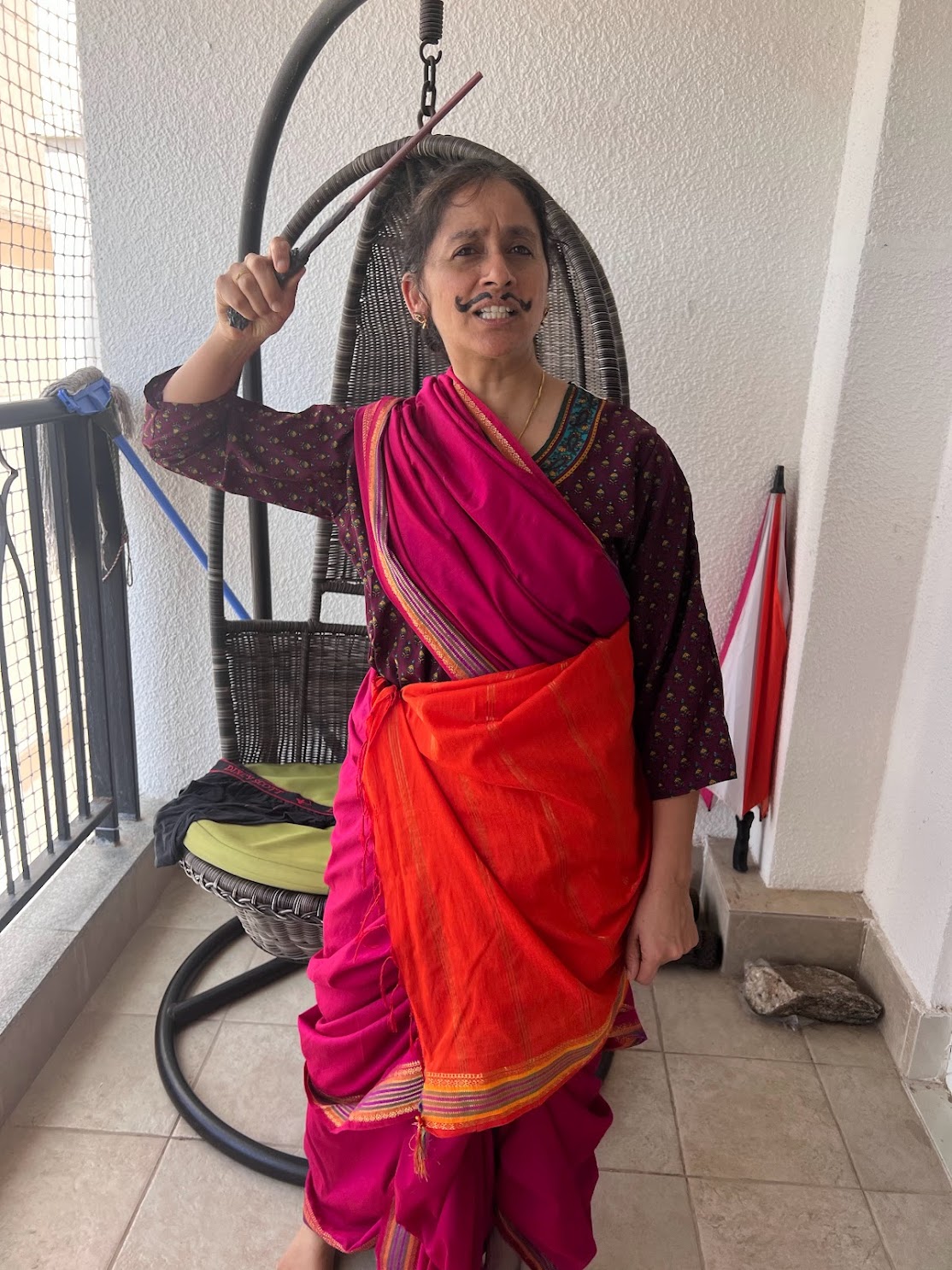
saree_potter

(Saree Potter – caption by the brother)

Actually, this seemed to be a theme through many of the ceremonies. There were a lot of things that I am sure Appa would not even have considered – but religion seemed to dictate it all necessary to his soul. There were hours of mantrams and ceremonies everyday that we little understood.

What I would have liked is for people to let us know the little and big ways in which he impacted them. For it was apparent, that he was loved by everyone who had the fortune of interacting with him. He was a dedicated brother, brother-in-law, husband, father, father-in-law, uncle, grandfather, and friend. As it was, there was precious time left for personal anecdotes and reflections after the long-drawn out ceremonies that Appa, when alive, had little patience for.

“Man is kind enough when he is not excited by religion.”

– Mark Twain

The Swirling Kaleidoscope

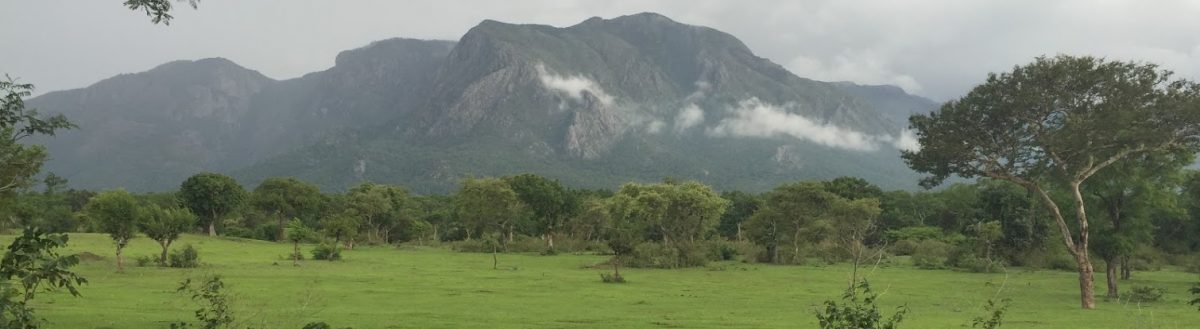
In a fit of inspiration, we planned a whirl wind of a trip to India and UAE. The grandparents, aunts and uncles were unduly enthusiastic, and we were welcomed with joy everywhere. The past month is a beautiful blur of family and friends, multiple cities, delicious foods, tropical fruits, flora and fauna like seen nowhere in the United States, and national forests. 🌳

I have tried explaining India to my colleagues and friends in the United States who have never visited. How does one capture the pure joy of peacocks dancing in the rain, the unease of the stray dogs barking and chasing you as your make your way to the ATM around the corner on the same day? (I did not stop to take pictures of the stray dogs chasing us – self preservation is a dear thing.)

It is difficult to capture the pulse of the buzzing populations, the incessant sounds of the chaotic traffic in cities, the mosquito bites, the sweat from the heat, the beautiful rains, the warmth of the people you know, the helpfulness of those you don’t, the colors and fashions like nowhere else, the birds, flowers, stray dogs, cows, street vendors, disappearing footpaths, haphazard constructions, the quintessential maids, the eateries, the clothes line, the flooring, the beautiful national forests and through it all, the keen and heightened senses required to be aware of the ever-present dangers in highly populated areas.

How does one explain the ubiquitous presence of religions – the call of the masjids, the church bells, the sounds of the temples? The paradox of freedom in a culture that is still quite demanding in its expectations of behaviors in its populace.

The varieties of music – traditional music to start off the days, the filmy beats to take one through the rest of the day: whether one asks for it or not!

It really is Incredible India.

If we stirred out into the urban areas, I quickly yearned for the quiet of home. If I was home, I was exhorted to go out, since there was so much to do, so many people to meet, and so little time. Even so, I did not do as much as I wanted to. Did not meet as many people as I wanted to.

Indian cities are a kaleidoscope of swift whirling colors, its countrysides a different kaleidoscope altogether but equally vibrant.

Consequently, back on the flight to our home in the United States, I realize I have had little time to slow down, read and rest. As the flight drones on, I nap, read, watch a movie, eat, stretch; rinse; and repeat; thrice only to see the flight blink back at me that there are 2 more hours to land. A grim reminder as to how very far away I live . My heart literally stretched across the entire span of the globe.

I cannot help thinking of Virginia Woolf’s saying on Women:
As a woman I have no country. As a woman my country is the whole world.

Too short, too fast and too little, but just enough to make me smile fondly.

Freedom Is Sweet

Driving through lush green hills, past wide rivers and huge boulders, the route was marvelous. We had been a-visiting India for a short trip. The roads were smooth, and the rain clouds brought on a blast of monsoon rains. The little car burst forth joyfully on the empty roads swerving like a little child to splash puddles along the way.

The driver may be a grown man who sports whiskers on his face, but the heart the body houses is a child’s when it rains.
“You know? Two years ago, I took this road and it was agonizing to drive. The road was full of potholes, and our backs were sore for days.” he said smiling before splashing a big puddle again. The brother was driving and we were on the way to the city where my parents lived.
“What changed then?” I asked puzzled, for the gray ribbon in front of us was smooth and clean.
“Politics happened. The interim chief minister’s constituency is somewhere on this road, so we got our lovely scenic route done up – no charge.”

mettur_route.JPG

We reached home and affectionate greetings exchanged between parents, grandparents and children alike. A little while later, I was sprawled on the couch listening to the pater rile himself up with the news. Blithering-idiots-the-lot-of-them-are, seemed to about the gist of it, and I watched him amused.

The next day was Indian Independence Day, and the politicians were scrambling to see whose speeches would get maximum coverage on television, while ensuring that important topics of daily living were tabled for later. One incensed statement from the host of the News network forced the father to mute the television, and launch into a full scale explanation of politics that is best explained with a bedtime story. If you would snuggle in and close your eyes. Good then..:

There was a diamond ring, and everyone wanted it. But one strong, majestic troll had it, and did not let anybody else touch it. One day, the troll died, and all the remaining trolls fought each other for the ring. The troll children were hungry and thirsty, but that bothered no one. They are still fighting for the ring.

The End.

I know what you are thinking. As far as bedtime stories go, that was pretty rotten! I agree, but the state in which the parents live had recently lost their chief minister, and the squabble around the position was enough to make reality show hosts blanch. The populace has learned to look at the ensuing drama as such, and take a philosophical view of enjoying the good roads while they lasted.

We chewed the fat about the latest situ. in the United States, and how divisive strains were making themselves heard, and how we must do all we can to fight it.

Like Mark Twain said, The truth is stranger than fiction, but that is because Fiction is obliged to stick to possibilities whereas the Truth isn’t.

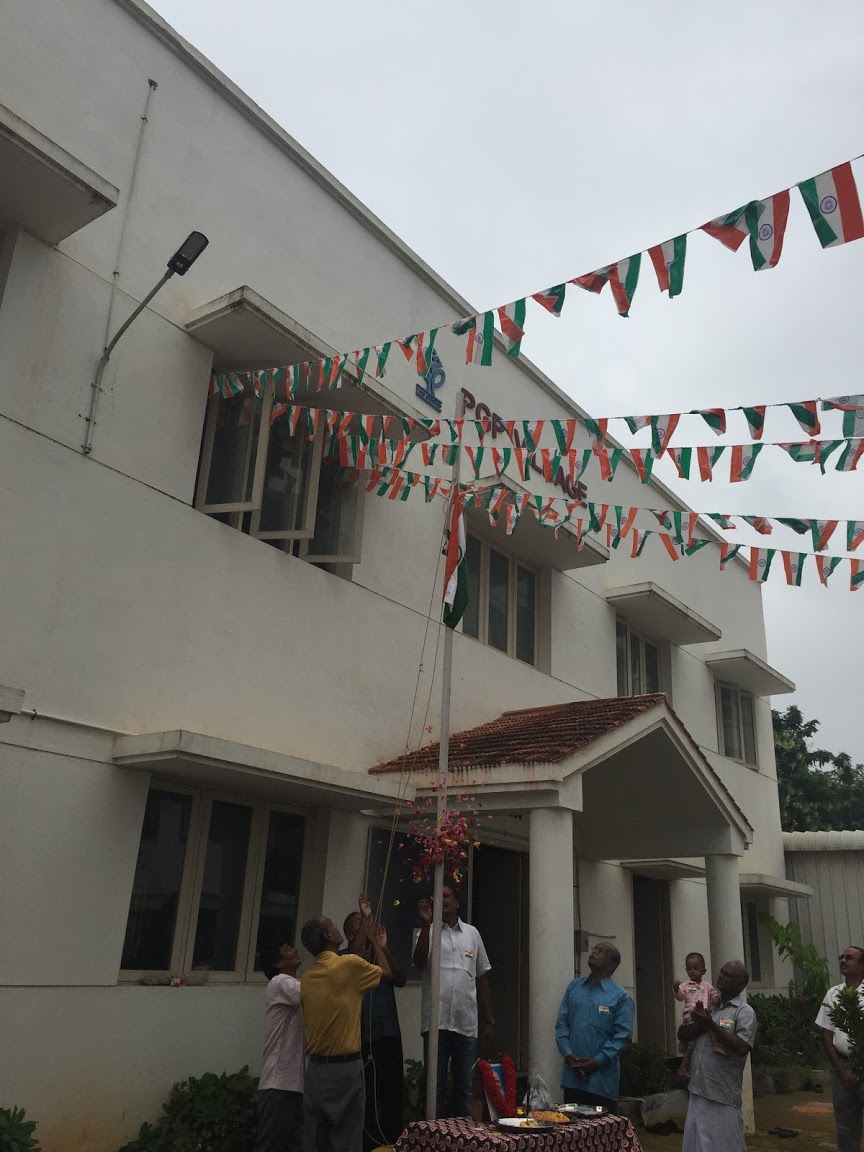
The next day was August 15th – Indian Independence Day, and we chirped with the birds, looked smart and went down for the flag hoisting in the community. I had with me my son and nephew – both five year olds who were eager for any activity involving the outdoors. As they stepped out, the boys were warned that they were not to take more than 1 sweet when offered the plate after the flag hoisting. If they were pups, I could have seen their ears drooping, but they bore the blow stoically enough and charged downstairs.

I stood there marveling at the fact that a month earlier we had celebrated Independence Day in the US. I looked around at the knot of people with whom I was celebrating Indian Independence Day. The stupendous privilege of celebrating Independence Day in the world’s largest democracies was not lost on me. To every one of us who looked at the flower petals fluttering down from the flag, freedom meant a different thing. To some of us, it meant living peaceful lives, to some, it meant having the right to dream, to some others, the ability to dissent. But we all agreed that it deserves celebration.

independence_day

Reading Lolita in Tehran, a book about the oppressive regime in Iran, was still in my mind, and as I was in the habit of reading particularly affecting passages to those near me ( a malady I inherited from the pater), I was doubly grateful to Democracy in spite of all its pitfalls. Fighting for diamond rings or no, taking a stand against divisive policies or not, we have something worth fighting for.

Afterward, we walked towards a small store. The path was an exciting one – past barking dogs, and motorcycles weaving their way through the streets. I smiled and asked for some chocolates for the lads. Their faces lit up with joy: Freedom is sweet.


The Art of Monkey Pedaling

A variant of the post below appeared in The Hindu’s Open Page

Every now and then, the productive bug gets the husband, and he sets about trying to improve our lot. Last Saturday morning, he was making a nuisance of himself trying to keep us ‘occupied’ in the home, and handing us tasks meant to enlighten and what-not. He was settling steadily into the listen-to-this-podcast routine, when I realized that this handing-out-tasks is a two way street, and told him to get the son started on riding a bicycle. There was a sigh of relief from all the occupants in the house, and I bowed like a maestro acknowledging a master stroke.

I see you pulling out the old monocle from the pocket and pegging it on your nose-tip to give us the penetrating stare. The one employed to make us feel like our spines just melted into goop. but it won’t work. It is true that we let the toddler beg us into teaching him to ride, shamelessly ignoring the bicycle with training wheels propped behind the dining table. Every time the poor fellow hinted that fellows younger than him were riding the cycle, we shooed him outside to play.

Anyway the point is that the nourish-n-cherish street played witness to several scenes that merit enactments on the Broadway stage. A couple of days later, the son was to be seen wobbling along with copious tears cascading down his cheeks, the husband mildly breaking into a sweat, and the rest of the street muttering soothingly. Children came and told heroic tales of their own learning how to cycle. One fellow said he broke not just his arm, but almost broke his mother’s arm too. Some went for the inspirational angle and said that once he learnt to cycle, the adventures never end: One can fly down from pavements and cycle without holding handle bars.

Every story was worth noting down to sit and devour on a rainy evening.  This learning-how-to-cycle is one thing you can always hope to get good stories out of. Ask anyone how they learnt to cycle and depending on where they hail from, the story is bound to entertain, amuse and sometimes curdle one’s coffee.

Watching the son cycle made me think of dear Mr Bopaiah with a pang. It was Bopaiah Uncle who taught us how to ride a cycle. He may have taught the whole street. He had bought a new one for his son who was a couple of years older than I was. The times were such that cycles were not toys everyone had. In fact, toys were not something everyone had. So, obviously, getting a brand new cycle was gripping stuff, the breaking headlines of the street, that toppled the mildly interesting news that the servant maid had run off with the local vagrant.

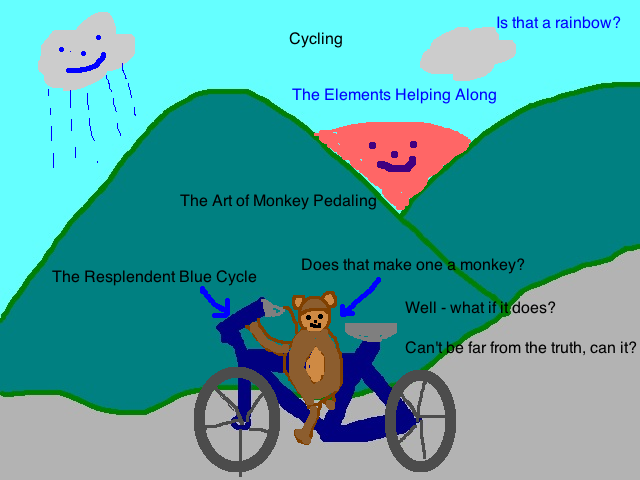
Mr Bopaiah graciously let us monkey pedal on it (it was too big for us). On that one cycle, he thought 4 kids how to cycle in one week. One glorious week in which we waited with shining eyes our turn to get on the cycle. Praying that the rains would not dish our efforts come cycling time. Armed with the simple trusting confidence that Bopaiah uncle was holding the cycle and would not let us fall.  The hopeful look on our faces as we glimpsed back every now and then to make sure he was jogging beside us holding the cycle.

bike

Mr Bopaiah was the Physical Education teacher at school, and he probably enjoyed teaching us to ride as much as we enjoyed riding.  It is a knack learning to cycle using the monkey pedaling technique, but we all managed it with his help. I also fondly remembered the delicious, large helpings of tea cake that awaited our labors at the end of the cycling sessions. Mrs Bopaiah made the best cake I have ever eaten – to date it beats all the creamy and Mickey mouse shaped ones hands down (Her butter-making was an equally fascinating act) . Many a happy day have we spent at their house, and all the memories of the dear family came flooding back.

Mr Bopaiah passed away last month, but I could almost see him send an approving nod to the son as he wobbled along on his cycle. When the golden evening sun shone down on the street of excited children, and whoops of victory came from the now over-confident cyclist and his friends, I am sure he smiled down at us. It was the kind of thing he would have liked.