Understanding Art History through Dr. Seuss’s Horse Museum

Dr Seuss’s Horse Museum – Illustrated By Andrew Joyner

This book was published posthumously and was completed by Andrew Joyner. It was based on the loose sketches and plan he already had for the book.
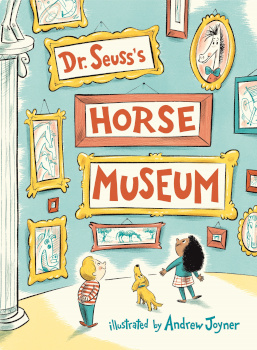
This cover image released by Random House Children’s Books shows “Dr. Seuss’s Horse Museum,” a new book by the late children’s author, coming Sept. 3. (Random House Children’s Books via AP)

It is a gallop through Art History. For someone who is fascinated by art, and doesn’t necessarily have the knowledge to go with it, the book was particularly insightful. It isn’t Dr Seuss in its style – there are no hilarious horses challenging butterflies to a flying contest, or trying to grow a tree through their nose, while flowers sprout out of its ears. It is more a book by Andrew Joyner based on the preliminary notes made by Dr Seuss.
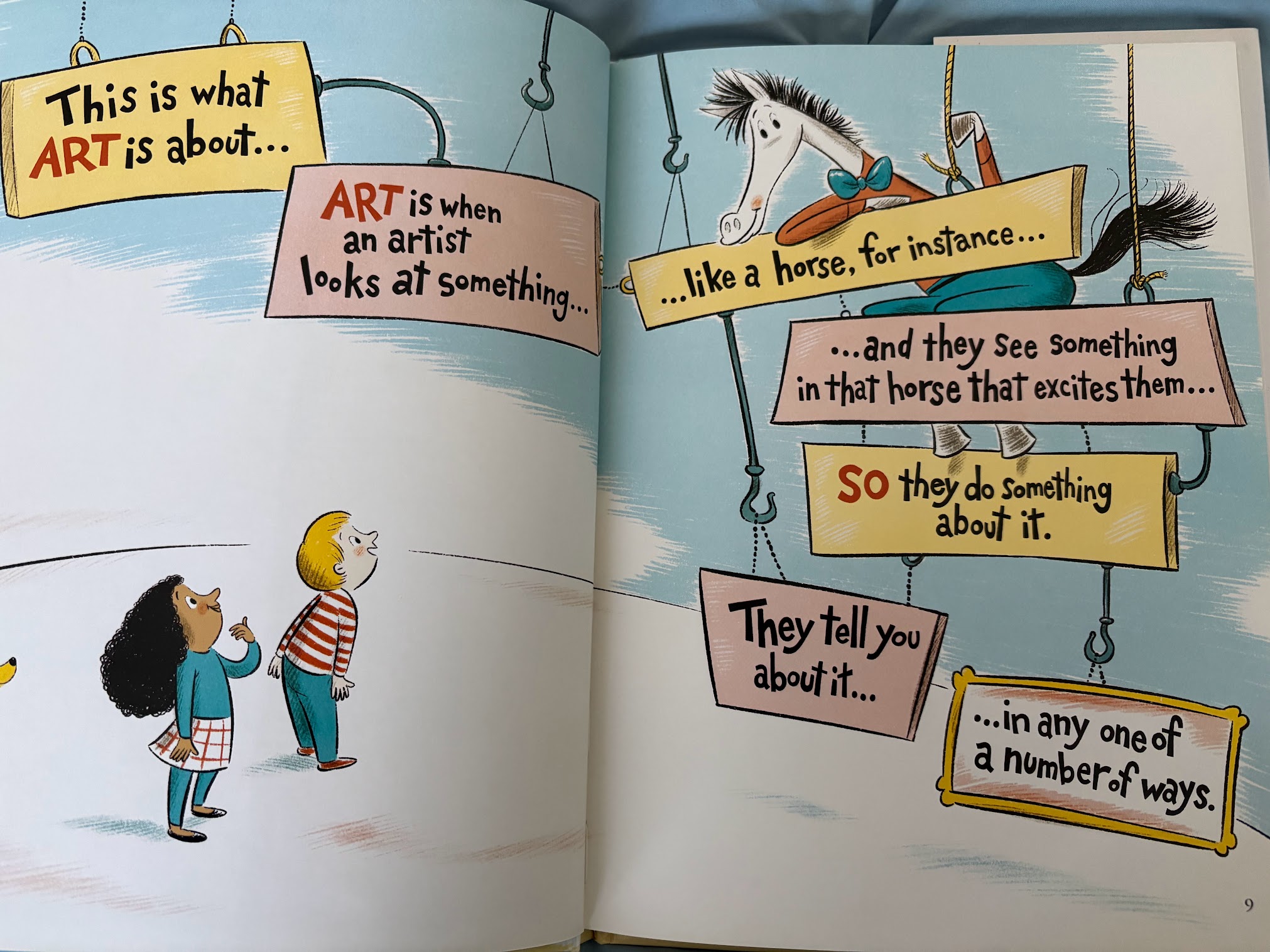
The book has references to many real pictures of horses by artists over the ages – impressionist, cubist, Japanese, Chinese, realism, surrealism etc.
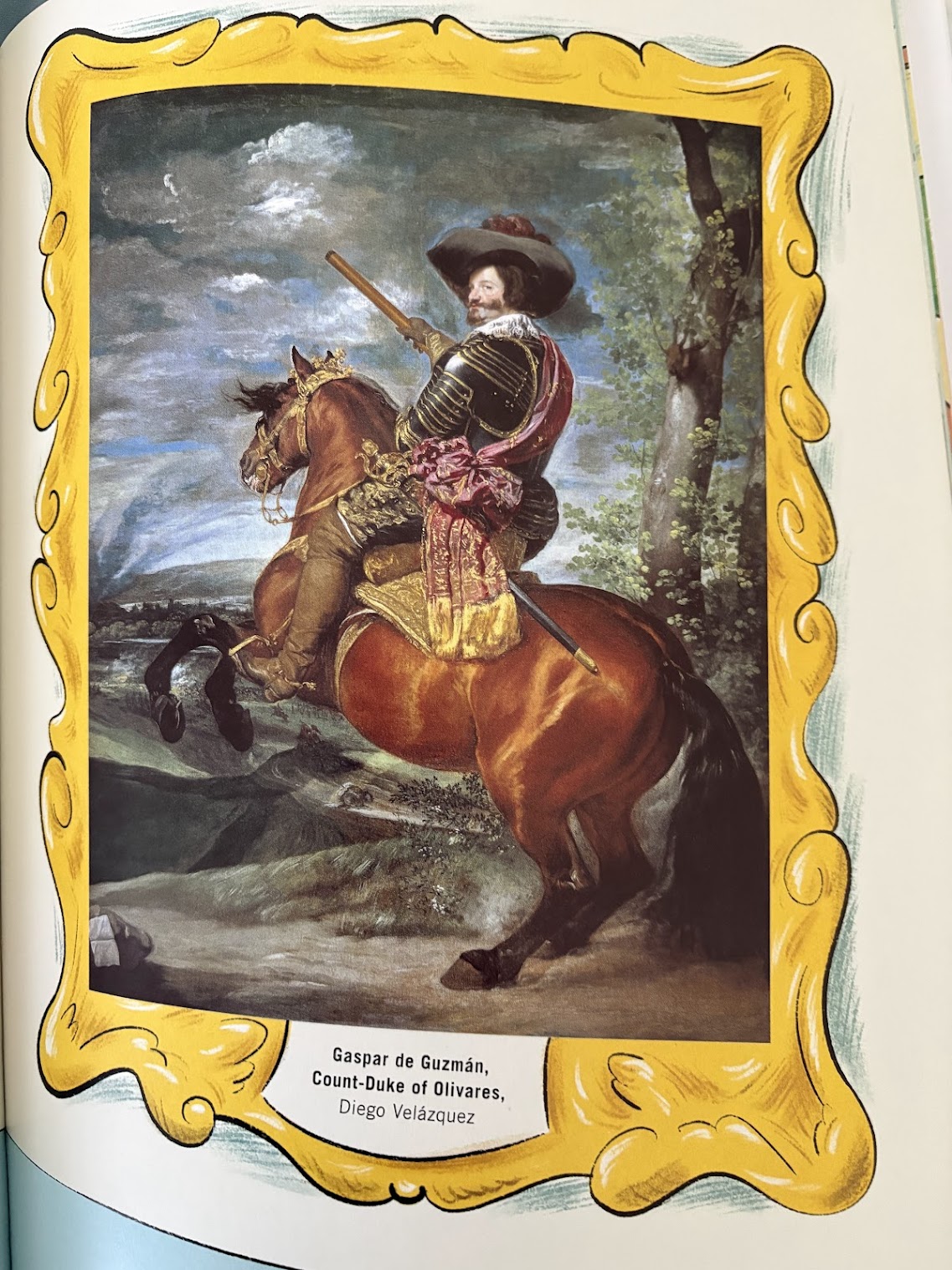
This got me thinking about a post that has been rattling about in my head for a while now with no clear structure. I have written various versions of it – each more insufferable than the previous one, but I hope I can try to wrest some form of understanding using the horses structure that Andrew Joyner curated from Dr Seuss’s horse notes.

Art History & Cultural Significances

Art History has always been hand-in-hand with the cultural significances of the time. For instance, Renaissance artists were drawn towards accuracy in anatomy which coincided with an uptick in scientific thinking.

Surrealism rose after the horrors of the World Wars I & II – people needed to believe in something fantastical after the horrifying realities of the world around them. Example: Lord of the Rings was written post world war by J R R Tolkien who was himself devastated by the effects of the First World War in which he fought.

https://nourishncherish.org/2026/02/17/exploring-americas-artistic-evolution-through-history/

In the spirit of trying to see the evolution of art in the digital age, I tried to see how the horse would evolve:

Horse picture – Industrial Photography Era:

Black & white using reels – Dr Oliver Sacks had written about this in his book, Everything in its place. Picture animated based on the pictures taken by Edward Muybridge. 
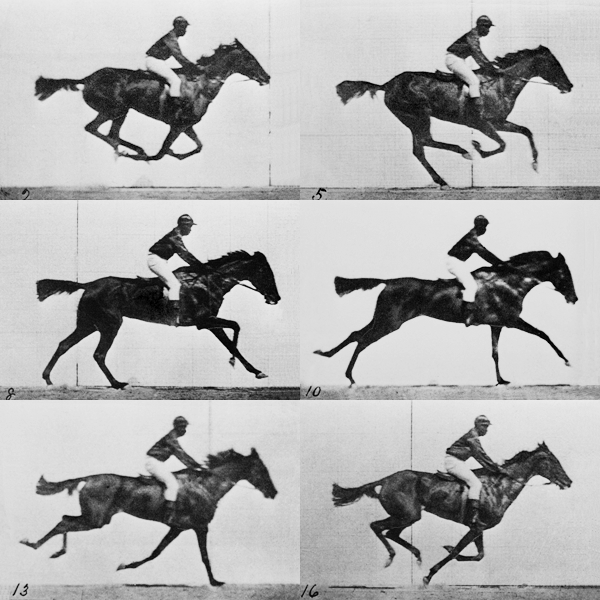
English: Animated sequence of a race horse galloping. Photos taken by Eadweard Muybridge (died 1904), first published in 1887 at Philadelphia (Animal Locomotion).

Muybridge used 24 cameras along a track where the shutter would be tripped by the horses themselves as they galloped past to capture the movements of the horse as they raced.

This era coincided with the Industrial Revolution – the efficiencies that changed the fundamental way in which things were done.

Horse picture using iPhone – Digital Media Era
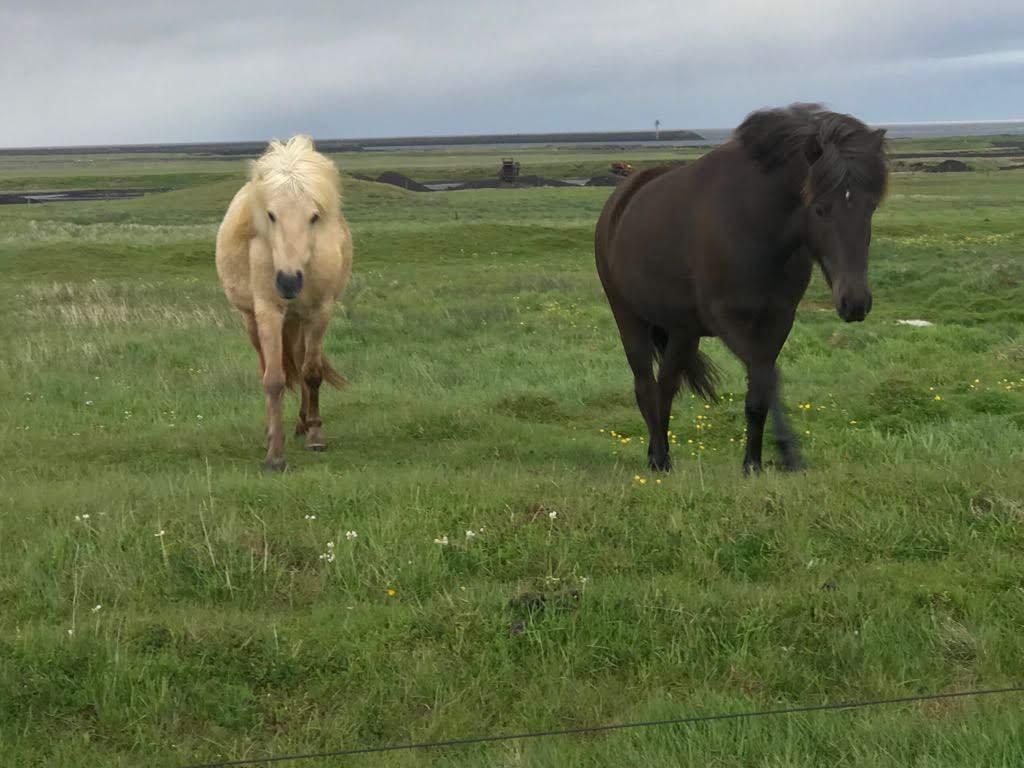
Horse videos, Horse shorts, Horse animations
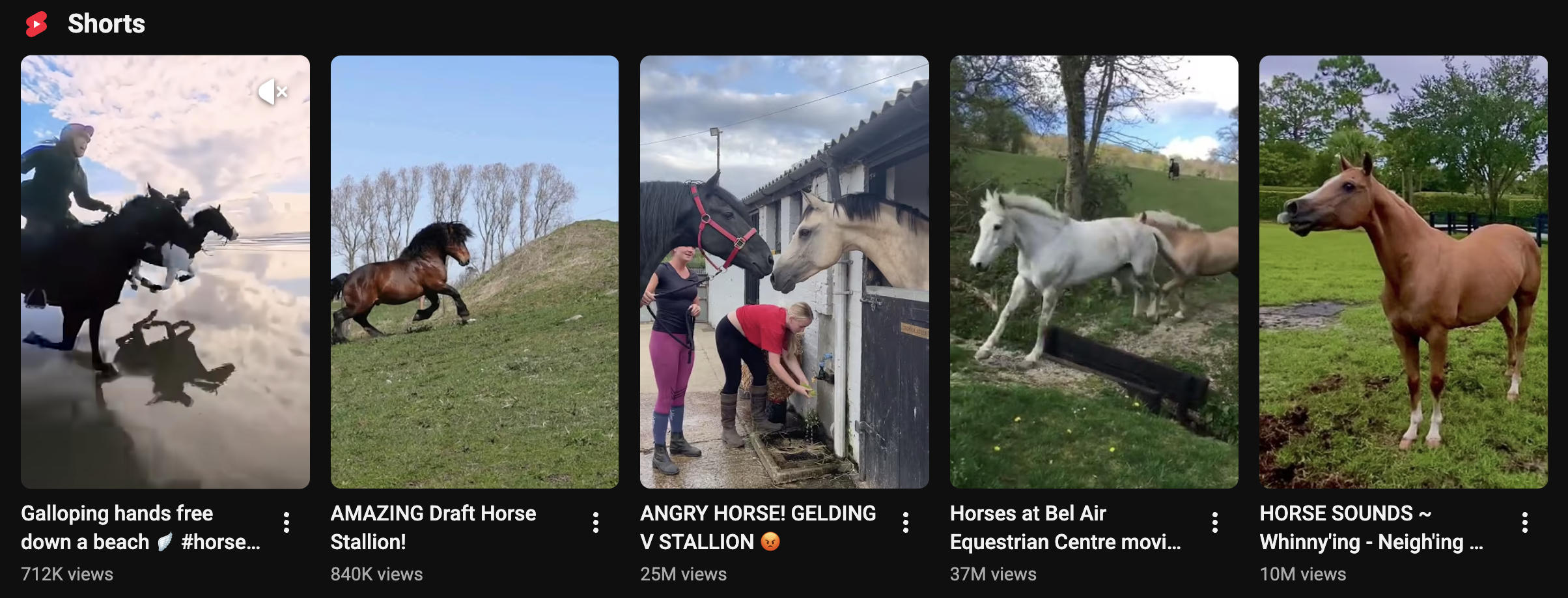
This era coincided with the Internet and the Social Media era. I am not sure they can be combined this way – I feel the internet gave rise to social media in such a forceful manner, that they probably deserve separate art eras. I marked them as digital era for the purposes of this post.

AI horse : Neo -Surrealism era

As the next stage in this evolution is AI generated images and videos.
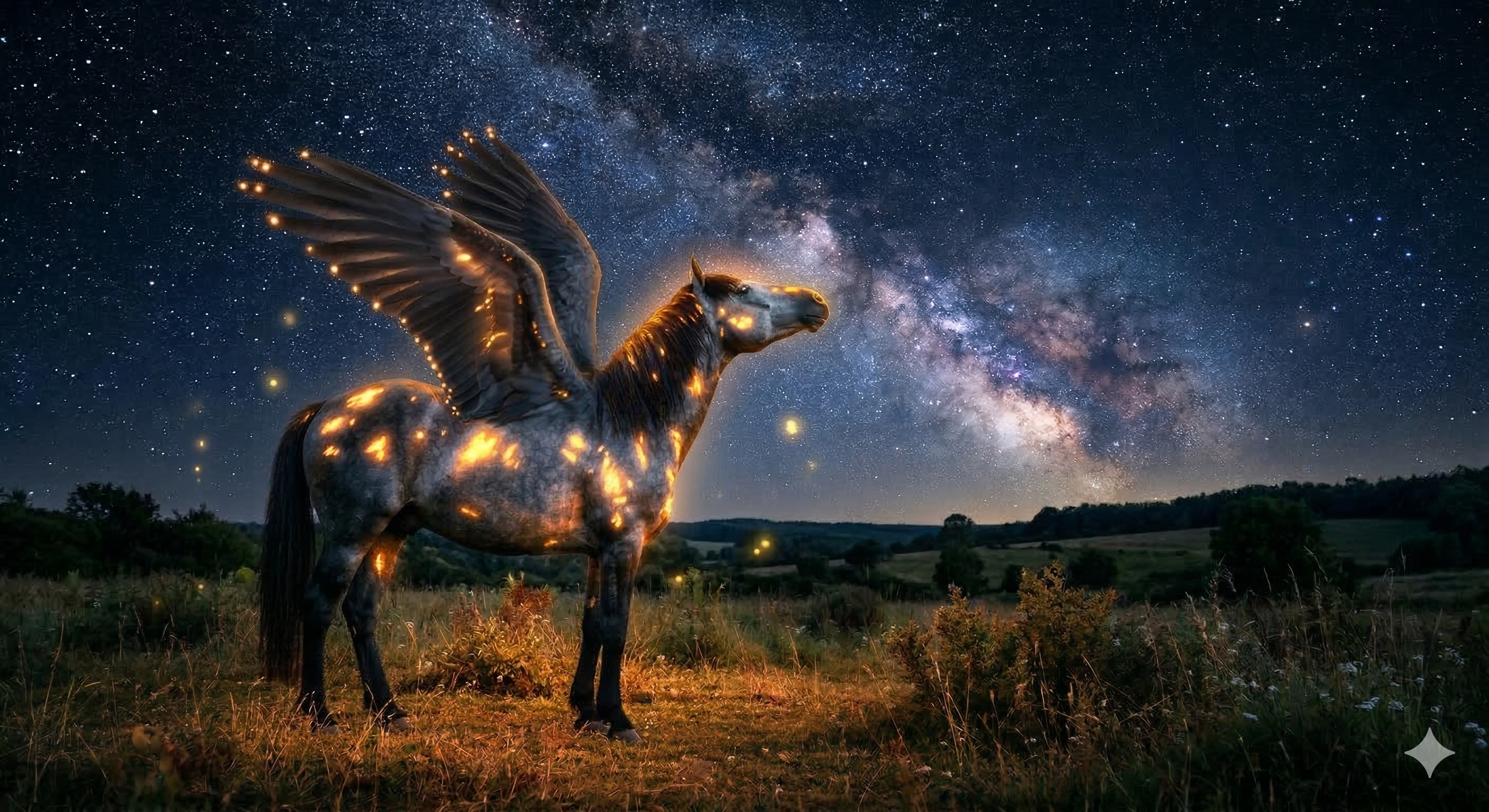
Could this be the neo-surrealism era? The need for our fantasies mingled with the need for speed of creation.

What do you think?

I am not sure if each of these stages in art have a name yet. But I am sure future art historians will come up with names for each era and how it denotes an era in technology or world history.

What do you think the names of each era would be?
Read Across America: Honoring Dr. Seuss

“Oh no! I missed Dr Seuss’s birthday!” I wailed.

The husband said “Who?” In that befuddled manner he gets when it comes to reading. The son said, “Oh no! How did that happen?” He understood.

One of the many brilliant things about raising children in a country and culture other than the one you were raised in is this. You get to read new books, be baffled about why something was iconic, and discover the joys of it all anew (like Star Wars for us).

Dr Seuss, Thomas the Train, Curious George, Dora the Explorer, and so many fantastic characters enabled me to become a wide-eyed child reading along with them over the past two decades, and I am immensely grateful to that.

Somewhere along the way, the children told me that Read Across America week was the week it was Dr Seuss’s birthday. Oh! How I loved that? What a legacy to leave? To have a Read-Across-America week dedicated to the week of your birthday.

So, in my somewhat scatter-brained fashion, I had planned to read and write about several of his books in the lead up to the week. But I had forgotten in the chariots of time, and let’s face it, in the gloriousness of spring. I can see Theodore Geisel (Dr Seuss is his nickname) shaking his head in amusement at this, and probably pencilling it down a for a future hilarious Dr Seuss book somewhere.

The books I did read were just as charming and insightful as usual.

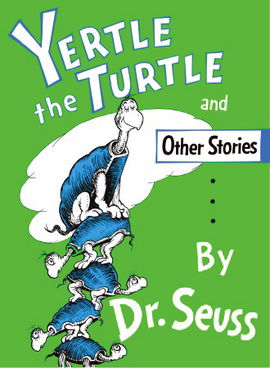
Yertle The Turtle & Other Stories – By Dr Seuss

The story is about Yertle the Turtle who is the king of turtles in his pond. He is liked enough to be left alone, and do turtlish things and go about the days of his life with peace and contentment. But does he do that?

No!

One day, he gets it into this head that what he wants is to extend his rule. So, he calls on the turtles nearby, and has them scramble on each other, and he scrambles right on top of them all. From that vantage point, he claims he is the king of all he can see.

In typical Dr Seuss form, Yertle is never happy, and goes on piling turtles on top of each other…till. Well – you’ll just have to read and find out, wouldn’t you?

This story is such an apt one to read in the current geopolitical climate. All our great leaders busy scrambling on turtle’s backs, and launching missiles. Sigh.

https://en.wikipedia.org/wiki/Yertle_the_Turtle_and_Other_Stories

Fair use, https://en.wikipedia.org/w/index.php?curid=17391831

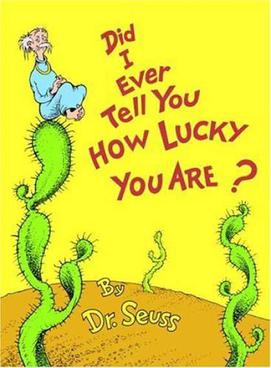
Did I Ever Tell You How Lucky You Are – By Dr Seuss

This book is priceless. I read it every now and then especially when I am really feeling low, and somewhat antsy about the state of the world. It is good to remind yourself that you didn’t get stuck in the traffic jam of Zayt Highway 8 in Ga-Zayt, or that you weren’t one of the builders of Bunglebung bridge.

By It is believed that the cover art can or could be obtained from Random House., Fair use, https://en.wikipedia.org/w/index.php?curid=44085819

But mostly, it is a simple tale that will have you wondering just a little bit about all the little ways in which you are lucky, even if it doesn’t seem like it. The next morning, the sound of bird-song as you make your way to your car sounds sweeter.

Horse Museum – By Dr Seuss

This book has been on my list of books to write about for a long time. I think I shall attempt a separate piece for this book for it is fascinating in a way that is different from all his other books in a specific way.

The book shows you all the different ways in which horses can be drawn in the Horse Museum. Of course, the horses are hilarious and his narrative sparkles.

This cover image released by Random House Children’s Books shows “Dr. Seuss’s Horse Museum,” a new book by the late children’s author, coming Sept. 3. (Random House Children’s Books via AP)

By dr-seuss-horse-museum.jpg at Time CDN, Fair use, https://en.wikipedia.org/w/index.php?curid=60107701

But more than any of this, he lists all the famous paintings of horses that inspired his tale. A journey through cubism, realism etc. From Picasso to Jackson Pollock.

So, even if I didn’t quite to get to write about Dr Seuss’s books in time for Read-Across-America week, I still got to read and relish them.

I don’t think he’d mind if we read them now, next week, or next month, do you? So, please feel free to pick them up, and share your own books you’d like to read for Read-Across-America month.

Bring in the Horses!

“We live in capitalism. Its power seems inescapable. So did the divine right of kings. Any human power can be resisted and changed by human beings. Resistance and change often begin in art, and very often in our art, the art of words.”

Ursula K. Le Guin

What will we fill our heads with?

This is an oft remembered quote for me. Every time I see patterns of behavior that I hope will be changed for humanity’s arc, I think of this. Sometimes, in order for things to change, it has to reach levels of intolerable.

Maybe that is where the attention industry will reach, and it this feeling of overwhelm that will herald in a new system of reward.

We had our hands full with survival in humanity’s infancy,  
   we filled our heads with myths and legends of heroism, superhuman strength, superhuman abilities.

We evolved and figured out ways of relatively sustainable food sources, 
   we filled our heads with epics, art, and music.

We figured out mass production,
   we  filled our heads with science fiction and fantasy seeking out other planets, other environments.

We figured out how to amass our thoughts and search/retrieve with ease, 
   we filled our heads with social media.

We are figuring out meta-cognition,
   what will we fill our heads with then?

Some days it isn’t the woodpecker who brings on the musing. It is the memory of a gas station.

The gas-station quandary

I had stopped the other day at a gas station (for gas – the clarification is necessary. These days we can stop at gas stations for milk, chips, entertainment and so much more) . Now, I don’t know about you, but I usually like to see the steady increase in the gas the tank is taking in. 12.00, 12.11, 12.12, 12.13, 12.14, 12.14, 12.15, 12.16.

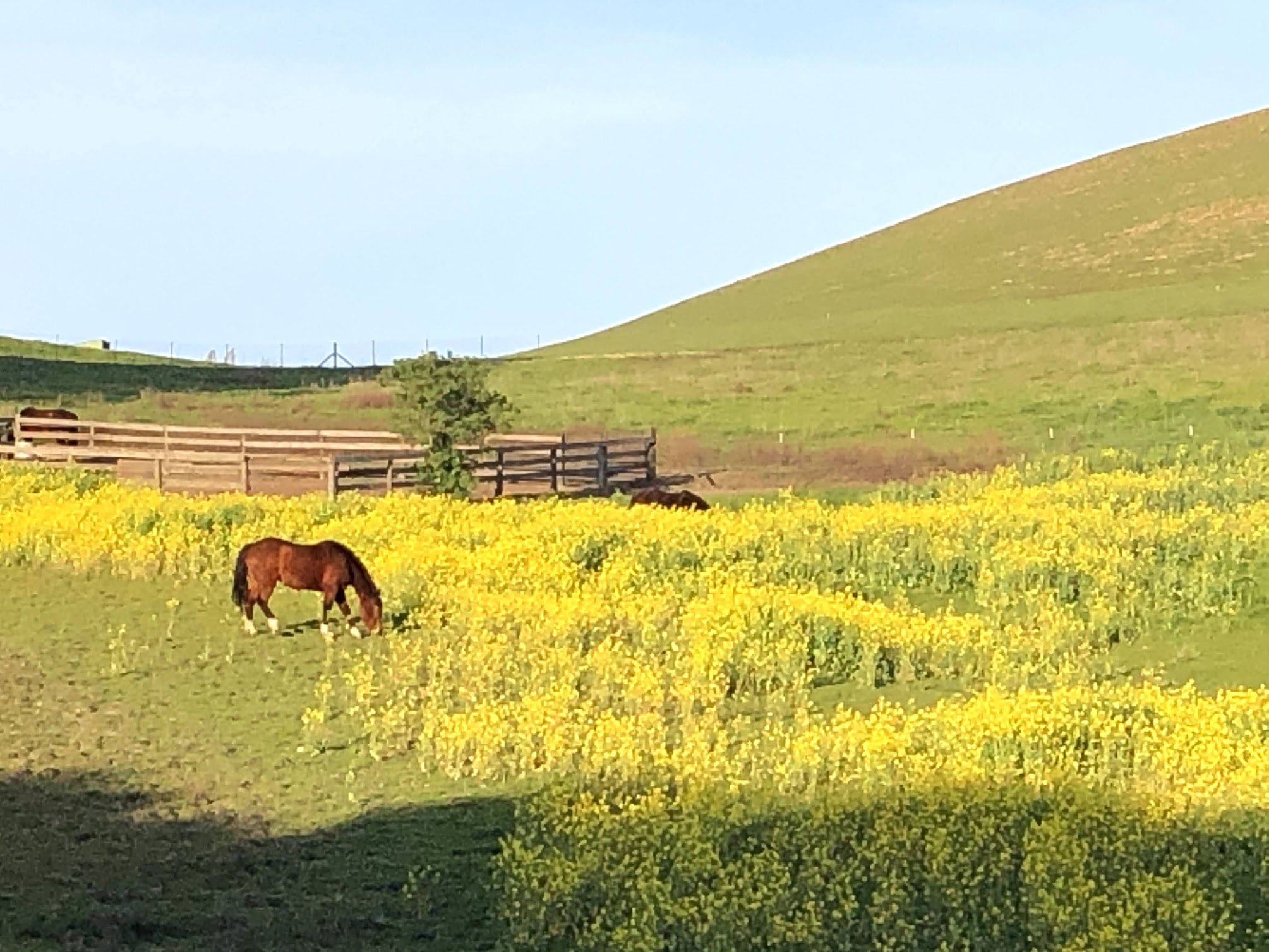
A smile on my face when I see our car gulp in the gas like it’s a thirsty horse after a long run. The silly comparison makes me cringe a little, yes, but then I had seen a few horses trot in their pasture once just before stopping to fill gas, and often when the mind wanders at a gas station, I think of these chestnut beauties throwing their manes back and feeling the breeze.

But the other day, my attention was pulled towards a screen perched over the meter showing me advertisements on what they think should occupy my attention for the three minutes I was there. Combined with all the flashing billboards, and the moving screens, and the flashing games mobile phones are full off, I felt off-kilter. 

How did we get here? 

When did attention become such an important commodity that we sacrifice almost everything at its altar? Peace, quiet, steady study, calm, concerted effort – everything giving way to drama, loudness, frenzied movement, and quick reward systems. 

What can be done so that the opposite is rewarded again? For it is clear we are driven by reward. 

Can there be a small quiet reward to our brain when we quieten a loud intrusive distraction? 

Bring in the horses

I smiled at that. “Monkey brain!”, I chided myself. Though I have to admit, I am not sure what the attention span of monkeys are. I hope monkey mothers are not yelling at their children as we speak – “Human-brain! Distracted all the time. Swing. Leap. Onward and forward!”

I forced myself to bring in the mental image of the horses I had seen all those years ago before getting to a gas station, and they came. Reluctantly at first. CNN was asking me to get affronted about something, and thoughts of monkeys and horses could not pull me away easily. But they finally did. They cantered into the mind’s eye, like William Wordsworth swaying daffodils, and the brain quietened down. The green pastures the horses trotted in bursting with flowers, and I felt a calm. By the time I pulled out of the gas station, I had needed help from a menagerie to pluck my attention.

What would it take to become focused on something so beautiful and deep, that nothing matters?

How many of you are flibberty-gibbets? What would the social order be to reward that and what would be incentive enough to disrupt our current trend?

Paint the Wind

Paint the Wind – By Pam Munoz Ryan

The book starts off like most children’s books do, by taking the parents conveniently out of the way. In this one, the parents are killed off in a freak accident and the child, Maya, we meet at her paternal grandmother’s house leading a dull, orderly life in which there is no place for frivolity, laughter or joy. Her grandmother dies and the young child finally gets to see her maternal side of the family who were held in such disdain by her pat. Gran that she does not have any recollections of them.

Of course, all this is meant for us to feel for Maya and hope her life turns around and she gets to enjoy life in her time. She does. 

I don’t know why books do that. But they do. 

The book is a story of how Maya finds herself while finding the horse her mother adored a decade ago. The horse, Artemisia, is now a wild stallion who broke free from her aunt’s ranch and joined a stud stallion, Sargent, and became the leader of the herd. Some wisps of wisdom offered up here and there make the sweet story likable. 

🐎 “With horses, it’s not the biggest or oldest who is the lead. It’s the horse who has the confidence to guide the family in times of danger, who has knowledge of the land and knows the routes to safety, who is herd smart and can make alliances with other mares and keep peace. Some mares have the ability. Others don’t. Think about great human leaders. They have many of the same qualities.”

Pam Munoz Ryan – Paint the Wind

🐎 “When the horses run against the wind with their manes and tails flying, I think they look like fleeting brushstrokes of color.” 

Pam Munoz Ryan – Paint the Wind

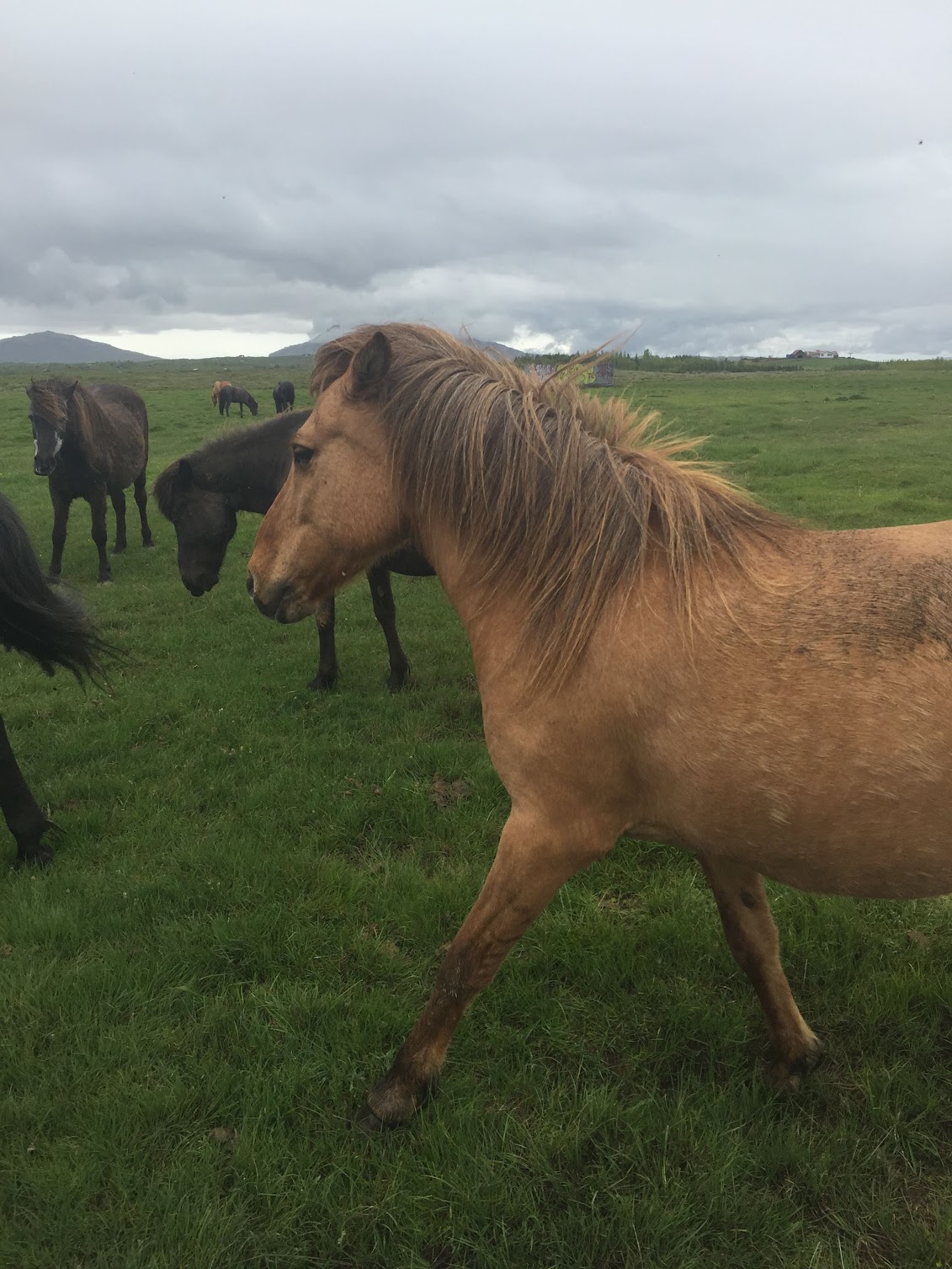
I have never had the opportunity to photograph a field of racing horses, but I have admired them. Their power and strength seeming to include the environment around them. I remember pulling over on a whim in Iceland where a field full of Icelandic horses offered us their manes to pat. It was easily the highlight of the trip for the daughter. I hope she remembers the way her face lit up when one nuzzled up next to her. 

I have to admit I chose the book because I saw Artemisia on the blurb. That was the name my daughter wanted to name her horse who was secretly a unicorn, and only reveal itself to her. I miss the innocence of her beliefs and the determination with which she loved her book horses. She read American Horse Diaries, watched My Little Pony, though her favorite was The Secret Unicorn. 

So many little tidbits that I’d listened to with fascination when the daughter as a little girl told me came back: #horsemagic

🐎 The color of horses: Audubon (light tan) dun, bay (red-brown) 

https://horseracingsense.com/12-common-horse-colors-patterns-pictures/

🐎 The different strides and their names: trotting, canter, gallop , lope

🐎 Horsing vocabulary such as Remuda: a herd of horses on a ranch

All in all, it was a wild journey into the canyons with a little girl and her horse. We all belong on Earth and there are so many ways in which we can find that feeling. Our attraction to nature, this planet’s nature, is one of them. 

Buckle Bo & The Mystical Orb

One day, I saw the daughter hard at work writing an entry for the Young Authors Contest in her school.  Usually, when she thinks of a story, unicorns, horses and ponies, leap across continents and worlds to establish their roles in them.  If there is a human element involved, that person would have just moved to the countryside and gotten a horse as a gift. The horse could then become a unicorn and shall reveal itself under special circumstances or continue along life as a special horse with powers almost magical to behold. I glanced at the story, and surprise of surprises: there was a unicorn, a mother unicorn and seven sibling unicorns. I was a little tired of this arc, so I asked her to try something else for a change. A dash of encouragement, and some coaxing later, she agreed to try. The tale that emerged this time, I was thrilled to see,  was one where the protagonist was a duck battling an evil raven, and not only that, the duck had a noble purpose: to save all plant life. So good so far.

(Note to self: I should have taken a picture of the book title at least, but I forgot. I could have pasted it here *facepalm*)

I was mildly proud of myself. I had truly inspired her enough to try different stories. I swelled at the thought and every time I saw her working on the story, or drawing a picture for it, I would smile a little. There is something else that I should probably mention here. Recently, I spent an afternoon in her class reading out one of my stories to them, discussing the elements of writing and such. It was a golden afternoon in my mind. I had the time of my life discussing moral dilemmas, morals, plot devices and narrative styles with them. Children can be precocious and highly engaging when they want to be. In that class, it was hard to think that these children are the same ones who will double up and laugh at fart jokes. The discussions were so animated, intelligent, and lively. It was like floating in a hot air balloon above some fuzzy, golden clouds on a full stomach.

Floating in a Hot Air Balloon

Obviously, when I met her friends at School later, I asked them whether they were going to write as well. Some eagerly nodded, while others skulked off. Her friends, who did try,  told me their titles. I don’t know about the stories, but the story titles made you want to snatch a chair and settle down to read: The Adventures on Mount Whirldoom, The Mystery of the Missing Phantom, Buckle Bo and the Mystical Orb (that was the daughter’s title). Very fancy, I tell you. Very fancy.

One of them hinted that she picked up some tips from my discussion in their class the other day while writing her story. I was so happy to hear that, I beamed. Clearly fishing for more compliments, I asked them why they wanted to write: did they think it will be fun to construct a plot?

Now, I don’t know what devices hot air balloon makers use to deflate their devices, but I needed none of that. Their answers were enough.

‘Oh! That. No. Usually, there is a pizza party for participants.” said a Jane Austen.

“Hey, don’t forget we also get ice-cream.” a Mark Twain piped up.

“And brownies.” said an Enid Blyton.

My hot air balloon crash landed on the lawns nearby, and I fumbled out.

Buckle Bo & The Mystical Orb, if you please!