Bring in the Horses!

“We live in capitalism. Its power seems inescapable. So did the divine right of kings. Any human power can be resisted and changed by human beings. Resistance and change often begin in art, and very often in our art, the art of words.”

Ursula K. Le Guin

What will we fill our heads with?

This is an oft remembered quote for me. Every time I see patterns of behavior that I hope will be changed for humanity’s arc, I think of this. Sometimes, in order for things to change, it has to reach levels of intolerable.

Maybe that is where the attention industry will reach, and it this feeling of overwhelm that will herald in a new system of reward.

We had our hands full with survival in humanity’s infancy,  
   we filled our heads with myths and legends of heroism, superhuman strength, superhuman abilities.

We evolved and figured out ways of relatively sustainable food sources, 
   we filled our heads with epics, art, and music.

We figured out mass production,
   we  filled our heads with science fiction and fantasy seeking out other planets, other environments.

We figured out how to amass our thoughts and search/retrieve with ease, 
   we filled our heads with social media.

We are figuring out meta-cognition,
   what will we fill our heads with then?
Some days it isn’t the woodpecker who brings on the musing. It is the memory of a gas station.

The gas-station quandary

I had stopped the other day at a gas station (for gas – the clarification is necessary. These days we can stop at gas stations for milk, chips, entertainment and so much more) . Now, I don’t know about you, but I usually like to see the steady increase in the gas the tank is taking in. 12.00, 12.11, 12.12, 12.13, 12.14, 12.14, 12.15, 12.16.

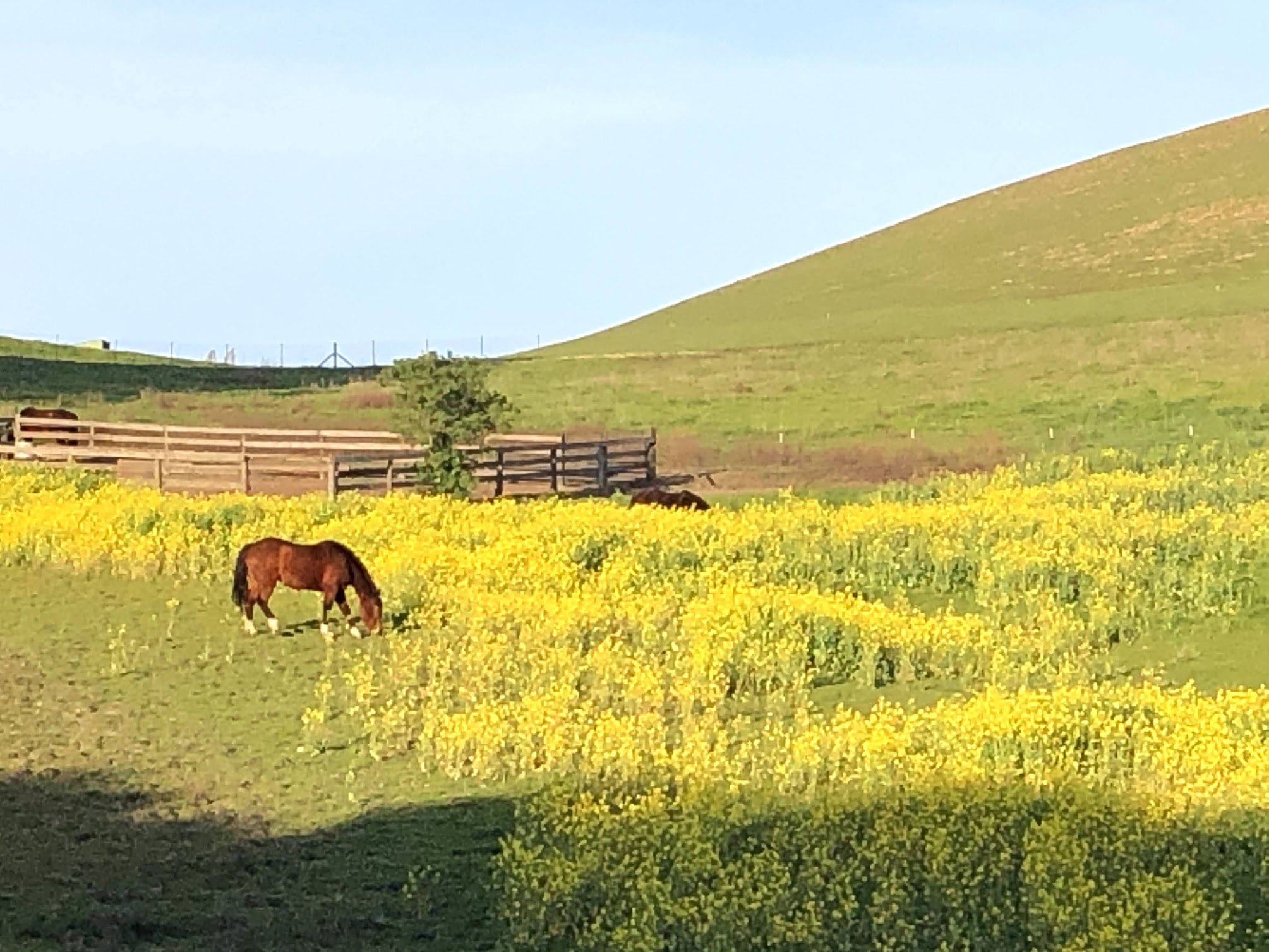
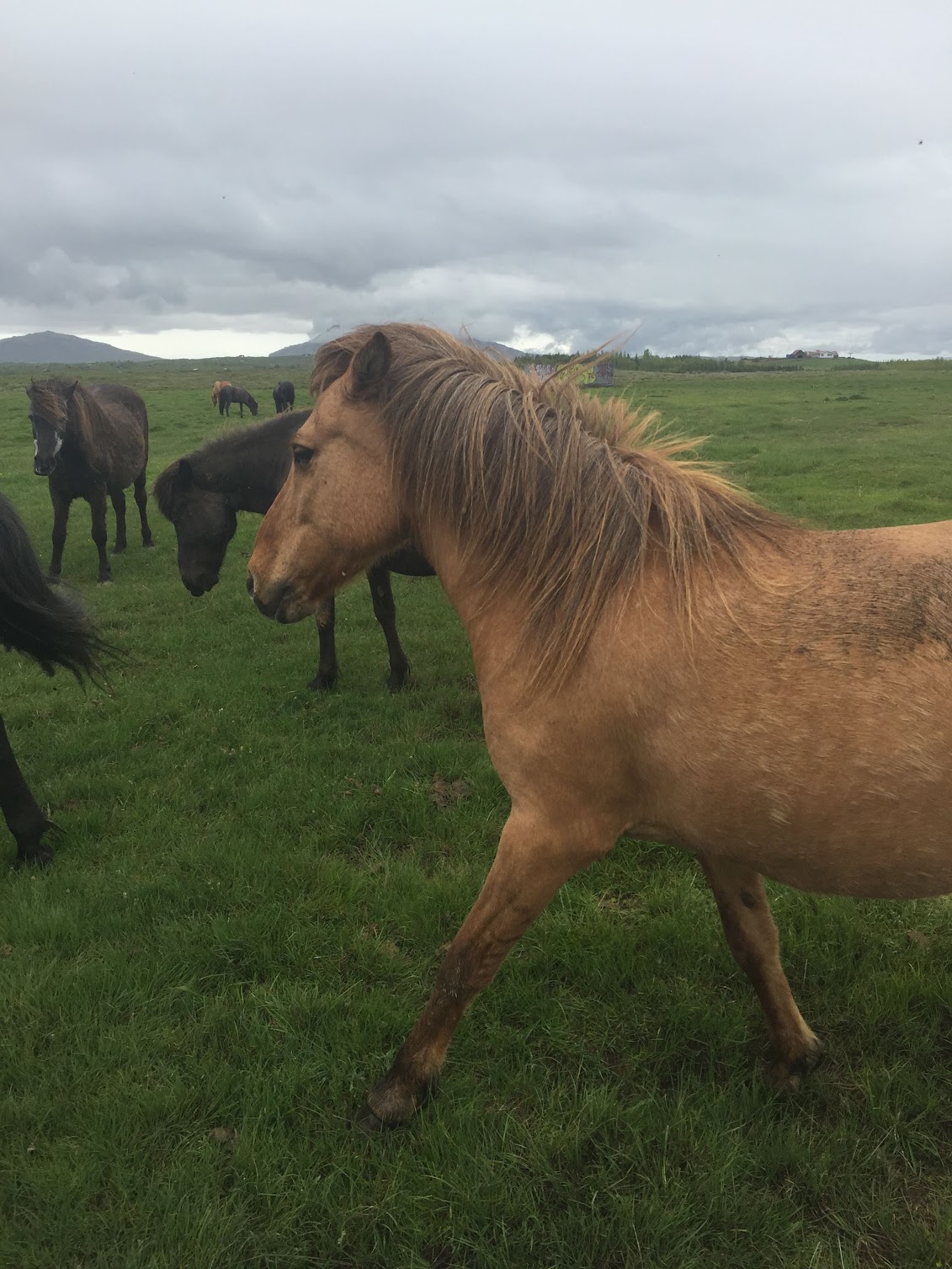
A smile on my face when I see our car gulp in the gas like it’s a thirsty horse after a long run. The silly comparison makes me cringe a little, yes, but then I had seen a few horses trot in their pasture once just before stopping to fill gas, and often when the mind wanders at a gas station, I think of these chestnut beauties throwing their manes back and feeling the breeze.
But the other day, my attention was pulled towards a screen perched over the meter showing me advertisements on what they think should occupy my attention for the three minutes I was there. Combined with all the flashing billboards, and the moving screens, and the flashing games mobile phones are full off, I felt off-kilter. 

How did we get here? 

When did attention become such an important commodity that we sacrifice almost everything at its altar? Peace, quiet, steady study, calm, concerted effort – everything giving way to drama, loudness, frenzied movement, and quick reward systems. 

What can be done so that the opposite is rewarded again? For it is clear we are driven by reward. 

Can there be a small quiet reward to our brain when we quieten a loud intrusive distraction? 

Bring in the horses

I smiled at that. “Monkey brain!”, I chided myself. Though I have to admit, I am not sure what the attention span of monkeys are. I hope monkey mothers are not yelling at their children as we speak – “Human-brain! Distracted all the time. Swing. Leap. Onward and forward!”

I forced myself to bring in the mental image of the horses I had seen all those years ago before getting to a gas station, and they came. Reluctantly at first. CNN was asking me to get affronted about something, and thoughts of monkeys and horses could not pull me away easily. But they finally did. They cantered into the mind’s eye, like William Wordsworth swaying daffodils, and the brain quietened down. The green pastures the horses trotted in bursting with flowers, and I felt a calm. By the time I pulled out of the gas station, I had needed help from a menagerie to pluck my attention.

What would it take to become focused on something so beautiful and deep, that nothing matters?

How many of you are flibberty-gibbets? What would the social order be to reward that and what would be incentive enough to disrupt our current trend?
Leonardo Da Vinci’s Horse

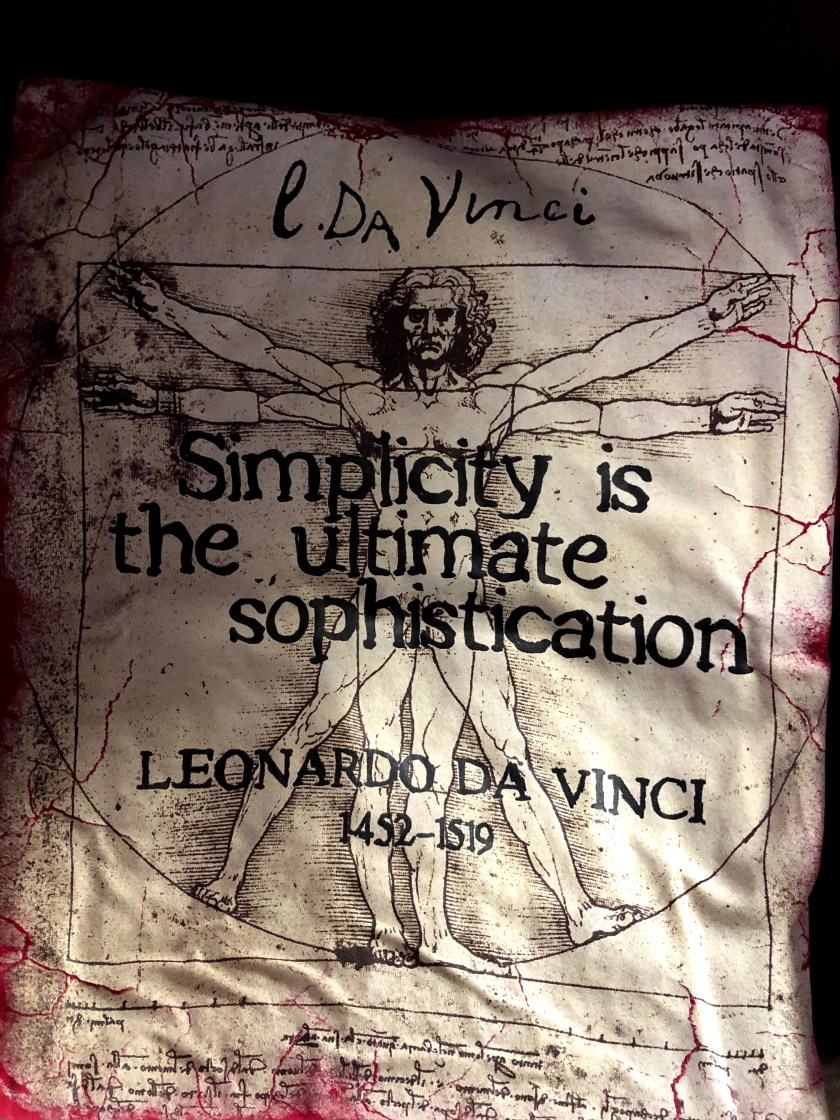
The husband was wearing a red t-shirt that had Leonardo Da Vinci’s drawing on it, that said, Simplicity is the ultimate Sophistication.

He was particularly fond of the t-shirt, especially as he was reading the biography of the great man.

img_4057

“Be like Leonardo Da Vinci guys. Be simple and eh… persistent.”, I said.

“Oh! I don’t know about that! Did you know about Leonardo Da Vinci’s horse? “, said the husband. He was reading the biography of Leonardo Da Vinci by Walter Isaacson, which is to say we almost read it. The book is a lengthy one, and as he made his way through it, he shared tidbits of things that fascinated him.

Time has probably been kind to the memory of Leonardo Da Vinci. Most of us only seem to be remember his genius in art, his legendary stature as a polymath, he said. The husband chuckled as he read and told us about Walter Isaacson’s portrayal of him – a tempestuous man who often did not complete the commissions given to him. Leonardo Da Vinci’s horse is an excellent example.

He then went on to relate the tale to much mirth and chuckling from the children. Apparently, what was commissioned to him was to build an epic statue of the Duke’s son riding a horse. He then went off to live on a farm, to study horses. The farm life yielded a treatise – an unpublished book, on different kinds of horses, equine surgeries to understand horse anatomy etc. He had originally planned to create a statue of a rearing horse.

This is an image that is much popular in the art forms at Italy, I remembered. The raw power of a horse rearing up on its hind legs is both attractive and magnetic. I am not sure how riders feel when they are about to be bucked off, but it makes for good Art. The prince would have to look brave while clinging onto dear life.

Study_for_the_Sforza_Monument
Abandoned Design. Image Courtesy: Public Domain, https://commons.wikimedia.org/w/index.php?curid=59580

Anyway, after a few years studying horses, their physiology, their movements etc, he started developing models for his statue. Clay, lead and bronze made its way from the armies to Da Vinci for his great statue. Then, he figured that the greatest statue of the magnitude he had in mind would not be supported by the hind legs structurally, and he went on to make it a standing horse. The prince riding the horse resplendently was forgotten!

These things took time, but it did not seem to perturb him. His sponsors may have been antsy, the bronze supplies may have been running low, the armies getting fidgety with not having enough new armor, but that was their problem, seemed to be his opinion.

In time, a large clay model of a beautiful horse may its way for the Duke’s inspection. The model won Da Vinci much critical acclaim. It truly was beautiful. If the Duke was slightly upset about not seeing his son on the horse, he did not show it. The royalty raise their children well.

Soon, war broke out, and no longer could his rich patron commission bronze and lead to be diverted to the most magnificent horse statue of all time. The clay model was put up in Milan, and was used as target practice by the young lads joining the army.

“But isn’t there a big horse in Milan or Florence? Da Vinci’s horse? I remember seeing a picture somewhere.” said I.

“Yes, but that was not done by him. Years later, somebody else finished it. “, said the husband.

By now, we were all laughing.

“What is remarkable is his insatiable curiosity and creativity however, and though he went off down rabbit holes, it was from a deep motivation to understand the world around him “, said the husband.

Read also : Gates Notes on Leonardo Da Vinci

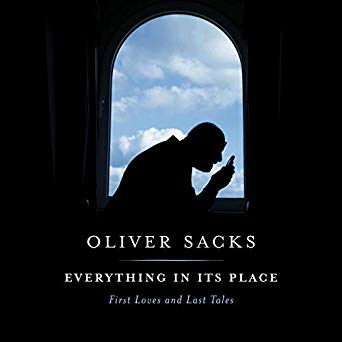
“These days it is so easy to take a picture of a horse, model it, and run a simulation for structural evaluations. We sometimes forget how hard studying movement must have been!” I said, remembering the essay by Oliver Sacks on the Elephant’s Gait, in the book, Everything in its Place.

everything_place

He writes about how more than a century ago, Etienne-Jules Marey & Eadward Muybridge pioneered the study of animals running using 24 cameras along a track where the shutter would be tripped by the horses themselves as they galloped past to capture the movements of the horse as they raced.

Persistence comes in various forms, we all agreed. Muybridge and Marey were examples in a long list of people for whom a problem was intriguing enough to delve deeper and deeper into things that may or may not yield results.

But we never know the breakthroughs possible, and how things will change. That is why I am vary of futurists. A few centuries ago, to study the muscles straining for a horse running, one had to have an almost eidetic memory, along with a decent understanding of anatomy.

Today, photography has come so far as to allow us to snap a thousand pictures, take slow motion videos, and analyze everything from a butterfly flutter to the swift flying of hummingbirds. People are still extraordinarily creative with photography, and as long as we retain curiosity and creativity, I suppose we shall thrive.


Walking with Spirit to Dakota and Pluto

I’ve written about the pony before. The daughter loved riding that pony, Spirit, so much, that this was her entry for the Google Doodle.

Keena Google Doodle

I was pleasantly surprised at this entry of hers. She practiced it on her little drawing board multiple times over. It started off with a barn and then morphed into the all-to-do-with-horses theme.

Maybe an occasional day with horses could be her indulgence we thought to ourselves and arranged for another pony ride for her. But this time, they gave her a horse, and told her she could ride it herself. Tell the husband something like this and his inner hero rises automatically. “Don’t worry!” he tells her. “I will ride with you on another horse to make sure you are fine. Don’t worry!”

“But I am not worried!” laughs the daughter rolling her eyes perfectly at this (an art form that seemed to be have been honed over decades of practice, but it can’t have been seeing that she is less than a decade old)

Stung, the husband said, she did not know anything about galloping horses and he would be her savior if the need arose. So, the pair of them set off to get saddled and bridled or whatever else horse-riders and their mounts do. The first thing they were required to do was to fill a form asking if they’ve ridden horses before. The daughter proudly answered ‘Yes’.

The husband flashed his mind back to the time his parents had arranged for him to mount a well-nourished donkey that called itself a horse on the beaches of the dirty Marina Beach in Chennai at the age of 9 and decided to answer ‘No’. “That horse”,he said later, “used to stray off to eat peanuts and trash paper on the beach completely forgetting that a rider was upon it!”

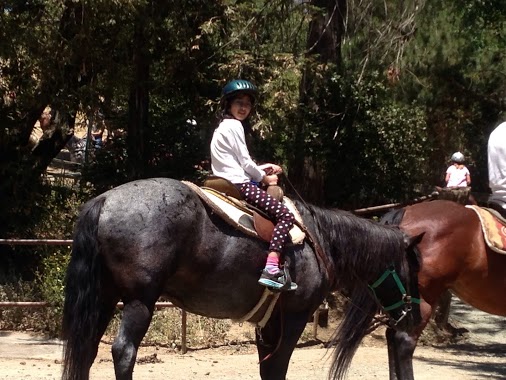
keena riding

The daughter was assigned Pluto and the husband Dakota. Dakota was supposed to follow Pluto. The husband was to chase after the galloping Pluto remember? They waved their good-byes and set off. From here on, I enter the terrain of pure hearsay. The accounts of the husband and the daughter diverge a good deal, and I have taken the liberty of constructing my own sequence.

The husband says that Dakota seemed to think Pluto was his playmate and took great pleasure in tickling Pluto on his hind. The daughter says that Pluto was doing fine till Dakota annoyed him. Pluto and Dakota reached an impasse and one of the instructors had to intervene and send Dakota ahead of Pluto.

There was another problem: Dakota differed from the horse on Marina Beach in one respect only. It went for grass and not paper and trash, but that may be because the trail upon which they rode did not have paper and trash. It kept going off to eat grass and straying from the path.

The daughter had to take on the role of savior and had to shout out instructions to the husband on how to reign Dakota in and keep him on the path. The husband hotly contests this and says he knew all along how to go about horse riding, but did not want to yank at the reins for it might hurt the horse.

What can I say?! Potato – Potaato.