Analyzing Love

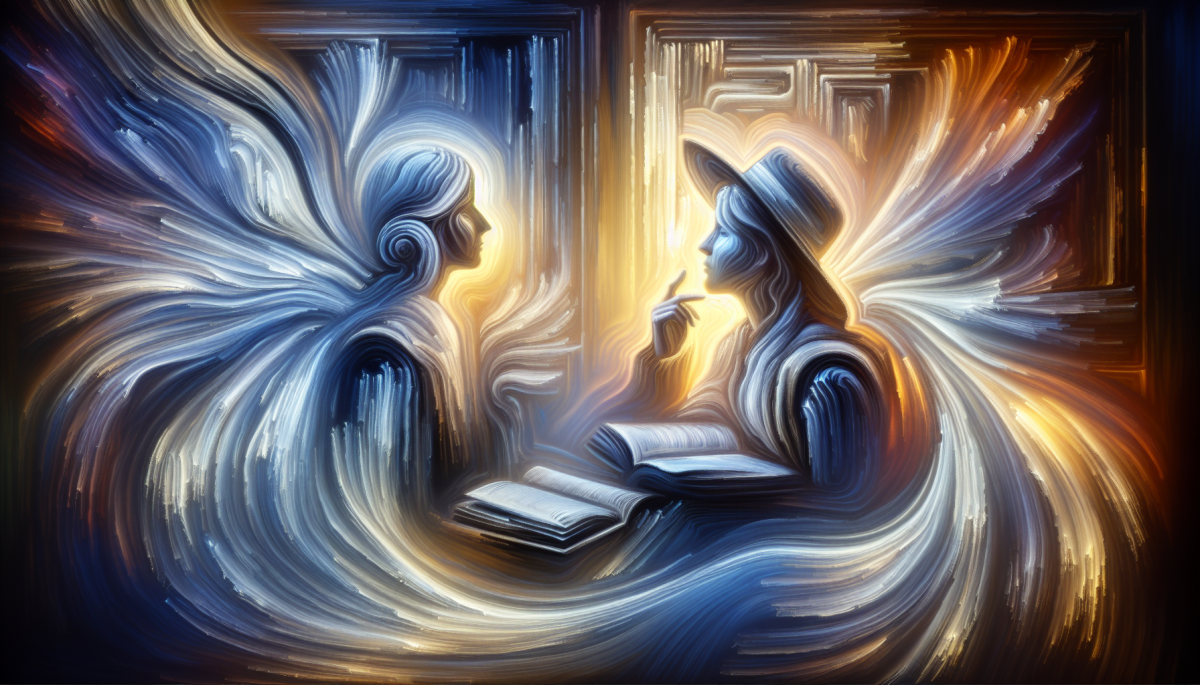
The niece & I were discussing the what-ifs, what-abouts, and why-nots of life. A vibrant character, she is also blossoming into a lovely young lady, and I told her so. She laughed.

“So do you believe in soul-mates?” she asked reminding me intensely of the sort of things the daughter would throw my way in terms of conversation.

“Yes!” I said without hesitation. I hope all of us have had that tug of friendship or love where we do not know why exactly we love a person, but we do. People name it different things: wavelength match, soul mates etc.

She tried narrowing it down though, to whether there is a soul-mate, whether destiny plays a role in determining our love lives and so on.

After a chatty session in which I got to enjoy the perspectives of the younger generation , I finally threw up my hands and said, “I don’t think we should analyze love too much. Just be glad that we can give and receive love.” 

She was kind enough to not roll her eyes at that, but I knew what it must’ve cost her to do so. “That is love!”, I said, and this time she did roll her eyes. 

All the talk about love and destinies and soul-mates and what not got me thinking on what a messy business life and love is. 
img_0494

Love in Literature

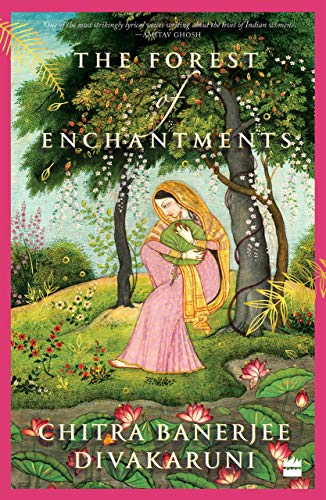
In the book, Forest of Enchantments, Chitra Banerjee Divakaruni talks about all the different things love makes us do. This is a retelling of the epic saga, Ramayana, from Lord Rama’s wife and consort, Sita’s point of view.  

“My first lesson on nature of love was that in a moment it could fulfill the cravings of a lifetime, like a light that someone might shine into a cavern that has been dark for a million years.”
― Chitra Banerjee Divakaruni, The Forest of Enchantments

It is true:

Love anchors us, and unhinges us at the same time

It refines, and sometimes defines us

Love is predictable 

It also makes us do unimaginable things

Love keeps us rational

It also makes us behave irrationally

As quixotic and frustrating as it all is

Love is our only hope

I thought of all the heartbreak and hurt feelings that Love leaves in its wake,  of all the great stories of love that play out in our lives. Every single person around us has been affected by love or the lack thereof. We only need ask, and they only need tell.

It is my fervent hope that we all feel the positive and nourishing powers of love – whether from a friend, parent, uncle, aunt, teacher, guide, maid –  at some point or the other. Every loving interaction has contributed to who we are, and why we are the way we are. 

As Jane Austen says,

There are as many forms of love as there are moments in time.”

-Jane Austen, Mansfield Park

Even the love we feel for each person is defined by moments in time.  So how can we rationalize, predict, counteract, and otherwise analyze this marvelous force? There is only one thing for it – be grateful.
It is why most of our literature, songs, ballads, and poems all need either love or war to make it enduring, as the daughter so eloquently put it, a few weeks ago.

War & Peace, Love & Power

Moments of Love & Power

Half a decade has passed in a heartbeat, yet I can hear the clear voice of the then elementary school going daughter ringing out in the aisles of the toy store : “Oh! That isn’t sexist at all!”

I laughed, the proud, indulgent laugh of a strong girl’s mother, even as I hushed her.

We had gone looking for a bow and arrow as a gift for her then toddler brother. His fascination for the super-hero phase was just starting and she wanted to get him his own Quiver of Arrows. After looking hither and thither, the heart sinking just a little bit at the amount of plastic and mass produced toys, we bobbed up to the lady in the front desk to ask where we can find bows and arrows for young children.

“In the first row of the boys’ section. “ she said, and I thanked her.
“Oh! That isn’t sexist at all!” said the daughter to me in her clear, ringing voice, as we left the puzzled clerk who had heard the daughter’s remarks. I laughed, hoping that this clear sense would always aid her as she navigated life.

I was reminded of that scene as I held the Forest of Enchantments in my hand. I hoped it would assuage a little of the disappointment I have had with Sita’s characterization in the epic. Every time somebody sang the virtues of Rama the Just, and Rama the Virtuous and Rama the Obedient, I was sure I was not the only one in the room whose thoughts were clouded by his treatment of Sita.

forest_of_enchantments

There was no justice there. The virtuous man would have overcome his doubts, believed and trusted the one he loved, and helped right the wrong of perception. He could have set the tone for innocent-until-proven-guilty with ease.

The obedient man could easily have made a case for the need for civic disobedience and charted the course of millions by his actions, but the epic fell short. Always.

He was a human incarnate after all – so his flaws were there, was all I was given by way of explanation along with being hushed for asking inconvenient questions.

While the book bore the hallmark of Chitra Banerjee’s poetic twists and turns, coupled with the magical realism, there were a few areas in which I wished she had done better. The epic of Ramayana is a well-known one and while she cannot be expected to go over all the nuances and side-stories, there are places where, had she spent more time on certain aspects would have made it a more enjoyable and nuanced read.

Like the relationship between Lakshmana and Sita for instance. 14 years in a small hiking and camping group of 3 is a long time, and one in which I am sure a person of Sita’s calibre would definitely have formed a relationship of mutual respect with her brother-in-law, even if he had left her sister back in the palaces to protect his mothers. That would have meant it was harder for Rama to do the things he did to Sita for his own brother would have chastised him for it, and that in turn would have humanized Rama’s flaws to a greater extent. As such there is a little of the anguish but how much of that is Sita’s hope?

The book, however, was still an enjoyable read with the author’s many meditations on the different aspects of love. The kind of love that makes you do unimaginable things, the forces of love when thrown together with duty, loyalty and ambition, the feelings that love can engender, the kinds of things love can make one do. The kinds of clarity love brings in complicated situations; and its paradox more apparent in our lives than we realize: the kinds of complications it can bring to otherwise clear situations.

I could not help thinking of Jane Austen’s words on Love – “There are as many forms of love as there are moments in time.” It was true – the intensity, kinds and forms of love were always unique, and ever evolving.

Do we ever meditate on love the way we do on our breaths?

In short, I expected the book to be the one the now teenaged daughter goes to, and understands clearly the Sita who would have been happy to hear her ‘sexist’ comment in the aisles. The author tried to bring it out, but I am not so sure. The epics don’t always give you a lot to play with when it comes to sexism.

Why must a loving heart not make a power move?

Also read: Mary Beard on Women & Power

https://www.npr.org/…/what-history-and-fiction-teach-us-abo…

https://www.theguardian.com/…/women-and-power-a-manifesto-b…