Limbo between Roti Land, Poori Land and Parotta Land

I tend to agree with Vasundhara Chauhan. Who is Vasundhara Chauhan? Why would I agree with her? These are valid questions and deserve to be addressed. V.Chauhan penned this article in the Hindu where she deplores the flood of standard dal makhani, butter chicken, and naan wherever one looks for good indian food.

http://www.hindu.com/mag/2010/04/25/stories/2010042550280700.htm

Imagine my surprise therefore when I stepped into an Indian restaurant, and they asked me whether I wanted Naan or Chappati to go with dal makhani and mutter panneer. I went in for the Chappati – the old jaws need a break sometimes and soft chappatis would fit the bill nicely. The chappatis arrived, and if anything, they were worse for the jaws than a bunch of sugarcane chunks.

The chappatis did not stop me from taking a mental trip down the Cauvery river, however. Yes, the chappatis were a sturdy breed that is the hallmark of the South Indian Chappati Making Foundation. You see the folks of the S.I.C-M-Foundation have a process:

1) You first sit on the floor with a huge bowl of flour, and one leg outstretched from beneath the saree.
2) You tip a generous serving of oil in the flour.
3) You knead it to a rubbery consistency that is bordering on hard. Sort of like those mock cork balls.
4)  You take up approx 323 sq ft with spread out magazines, and flour and generally shoo the crows and children wanting to play with the flour away.
5) Then, you proceed to roll out triangular chappatis that have a tendency to shine with oil
6) Once this arduous process is done, you can proceed to the actual task of putting them on the tava. Oil should be used again and poor triangular blighters have to be flipped back and forth till you have a coloration that tells you not to expect something soft.
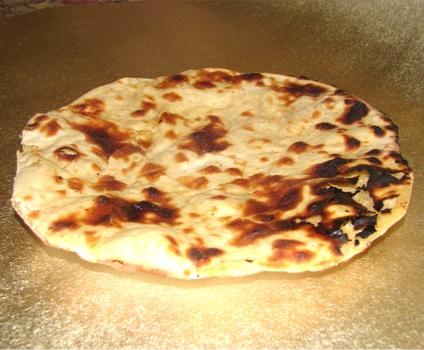
The SICMF does not like to see soft chapatis without oil. The chaps have to be mid way into being poories, stop short and decide in the last minute to become parottas, and stay in the limbo between Roti Land, Poori Land and Parotta Land.

The process takes a brisk 58 minutes for 15 chappatis, and is usually served with ‘Gurma’.

For the records, I was not scarred excessively with the chappati-poori-parotta treatment, since my mother broke her ties with SICMF early in her career, and we had fantastic, soft rotis instead of chappatis.

Why didn’t the Chinese think of it?

Chopsticks have always intrigued me. They look disconcertingly similar to knitting needles. Now you knit up in your mind the old wizened lady lovingly using both her hands, sitting in a rocking chair by the fire and knitting a warm sweater. I hate to dish it to the old lady like this, but you only can use only one hand, use both needles and knit the same beautiful sweater OL. Go on old lady. Try. Try like the dickens. How does that sound?

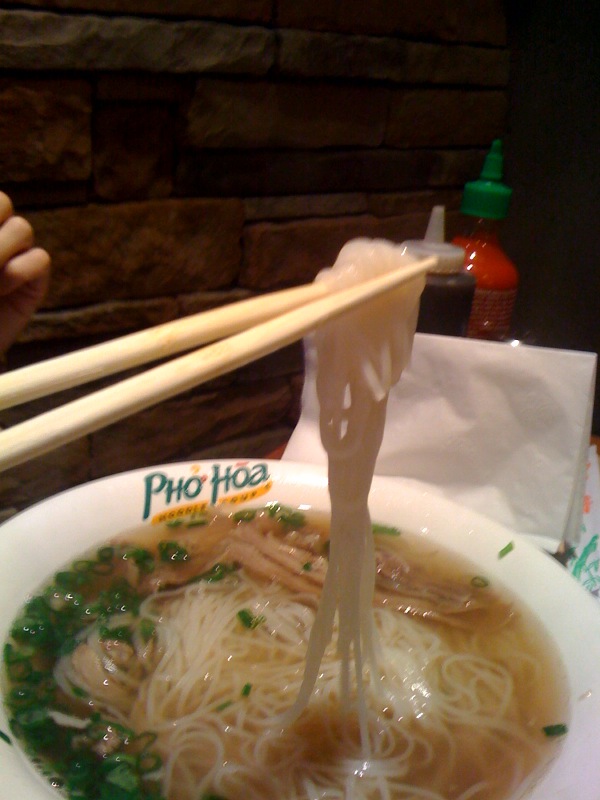
That is exactly what eating with chopsticks seems to me. You are given two condiments, you have two hands. Simple? Not simple. The technique is simple, any child brought up on Chinese food in a Chinese setting will tell you how easy it is to use chopsticks. All you have to do is grasp the sticks like this.

Then, move finger number two by using finger number one as the lever/rudder. (When you are trying to keep the sticks afloat in a bowl of watery soup, you are allowed to use the word rudder). Let’s get back to technique now that the use of rudder has been explained.

During the entire process, finger number three is jammed between the sticks, and is expected to move in the same angle maintaining a level of parallelism with finger number two. Never mind that finger number 3 is screaming for respite by now. That demand cannot be met. Ignore finger number 3. It can start acting up midway through the process, and you will be stuck with a finger-chiropractor, soothing function back to it. Don’t worry, it is a part of life. I realise there is no such profession as a finger-chiropractor, so if you would kindly tell me the name of one such specialist, I will gladly update the post.

The trick is to be firm with finger number 3. Show it fingers number 4 & 5 as a method of consolation. Fingers 4 and 5 are in a worse state. They can’t move remember?

Also remember that while one is fiddling with these sticks in the soup, the soup is turning cold. Not to mention the odd contours on the face as lines of worry and concentration contort it into a horrible frown. One would think, that not being able to function with chopsticks will have sent the author home hungry and dejected, with a new sense of purpose – learning to use the sticks before the next soup stop.

Not so…not so! Mere technicalities like chopsticks don’t deter me. I creased out the lines of concentration, ironed out the frown and put on a smile. I then attacked the soup like this.

People were looking at me with awe. Pretty soon, I could see folks cast me the envious look. Their eyes screamed the obvious “Why didn’t the Chinese think of it?”

I refused to wipe the smug smile of my stupid face, and went on eating like this, till a waiter who was charging about the vicinity like a racing bull, stopped in his tracks. You know how these cars screech when they sudden brake? Something like that.

“Next time – fork okay? I give fork okay?” he said.

I shrugged – I’d already mastered chopsticks now, who cares for forks?