Appa, My Friend

Appa

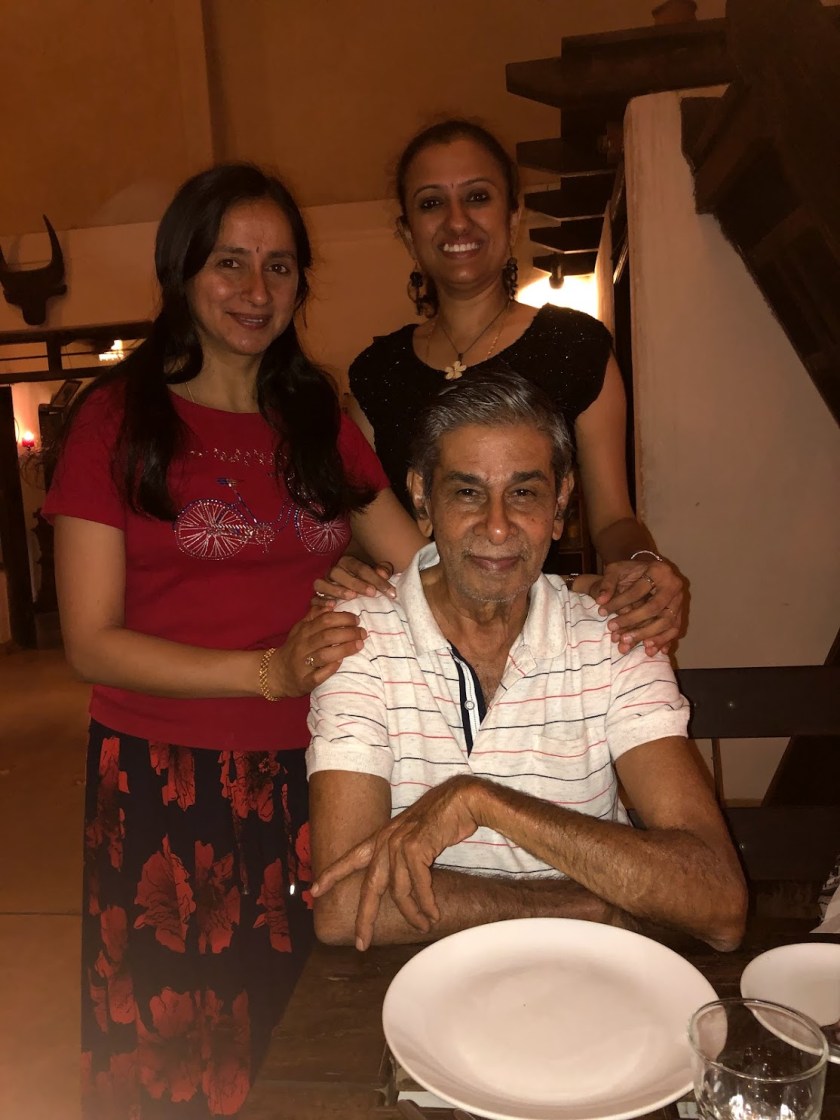
Mine was an arranged marriage. The first people I met from the husband’s side of the family were his parents. The one who drew us all in with his quiet charm, shy smiles, simplicity and overall, just by being his authentic self was Appa. He knew how to make an uncomfortable situation comfortable. He must’ve sensed a girl with modern thinking not liking this ‘arranged marriage girl seeing thing’. So, he made it simple by removing the formality from the process: Let’s just chat like we are old friends.

Any new bride going in to a large, loud, slightly overwhelming family knows what it takes to make that first meal or that first cup of tea in an alien kitchen alone. She is intensely aware that all tongues out there are waiting to judge the taste of it, the consistency of it, the heat, and sugar, and the judgements are harsh and swift depending on the existing political climate between the folks in the room.  She also knows that her efficiency, charm, competency all hang on the hinge, even if one is an educated professional girl who should not set store by these things. Appa did the thing he does best. He followed me into the kitchen – quietly removing himself from the larger family, and giving a shy smile. He had come to help.

He gave me the necessary ingredients, a hint or two or how they like the water-milk proportion by making a small joke about it, and then as quietly as he had come, he left.He did not hover giving directions. Then, a few minutes later, as I was flailing around looking for the glasses, he was back again. He took the cups that everyone liked, quietly strained the tea, and left again.  I don’t think anyone noticed the head of the family nip out to the kitchen to help his daughter-in-law.

When the tea was served and everyone smiled happily, he gave me one of his trademark encouraging smiles, and that set the tone for our relationship: Appa was always there for me. He and I were going to be best friends, and I knew it then. He had your back, he was always, firmly in your corner.

Long before corporates came up with terms like inclusivity – Appa showed us how it is done. It is done by making people comfortable.
IMG_3183

Raju Thaatha

When children were born, he was there for them. He was there for us. Any grandchild who has had the privilege of being held by Raju Thaatha has been blessed by the cosmos multiple times over.  He would come to meet me every evening at the railway station with my baby in his hands so I could see her as soon as I came out of the train. Decades later, many fellow commuters have asked me how the baby and her loving grandfather are doing.

Fussing children, overactive children, rambunctious children, shy children, they all felt comfortable in Raju Thaatha’s hands. He could put children to sleep, get them to eat, and he never, ever in all the years I knew him raised his voice with them. They all behaved like perfect lambs because they loved him.

“You need Power only when you want to do something harmful; otherwise
Love is enough to get everything done.”

– Charlie Chaplin

That was Appa – he was not a powerful man, he was a loving man, and that was his greatest power. He loved you, wholly, and simply. We all wanted to do things for him, we all wanted him to be happy because he was such a pure, loving soul.

raju_thaatha

He never took sides in any conflict, but always knew who was aching and soothed everyone just by being him. When anyone was ill, Appa with that keen sense of empathy, knew when a fruit would be welcome, or when a glass of water was required. But he didn’t use words like empathy. He just did things for others – without show, without expectation, and with great competence.

Days after they left, after every visit, I would miss Appa. For he was the one who helped me the most. He was the one who helped me in the kitchen. He was the one who’d cut fruits and lay them on the table because he knew I liked fruit. He was the one who would know when to take a fussy infant from my aching arms. He was the one who went for quiet walks with me.

He was my friend.

When I spoke of my father-in-law like this, many folks were surprised that an Indian man of his generation was like this. But he was – he was supportive of everyone – through and through. He did not tell any of us how to behave, or what to do, he showed us. He would light up when I said “Good Morning Appa!” in the mornings, or when I said a tired ‘Hello Appa’ in the evenings. “Hello Saumya.” “Good morning ma!” , “Yenna ma?” (What is it ma?) – his quiet, friendly voice that surely guided us through life is ringing in my ears as I make the last journey to see his mortal remains.

It hurts me beyond measure to write of him in the past, his sort of love in the lingering type: like the sun, always shining, always nourishing. We are enormously blessed to have had him in our lives.

Thank you Appa – May you always be happy!

How My Mother Saw Her Father

My mother saw her father for the first time last week. She is 73 years old.

Her older siblings are in their eighties and nineties. Yet, their reactions on unexpectedly seeing their father made one think the last seven decades never happened. Will miracles never cease? Geriatric Joy is a lovely thing to behold.

My mother was the last born in a family of seven. When she was 3 years old, her father passed away. A shock that left the family bereft, and sent their mother into a decline from which she never recovered. Kind relatives helped, but there was no denying that the household was headed for turbulent times. Her older brothers, then teenagers, made for the nearby towns in search of work. They were hard-working boys, and slowly, the boys managed to bring the rest of the family to the town. Despite all the hardships and the lack of money and resources, they sent my mother and her sister (still young children) to school.

The girls did not disappoint them. Their intelligence, hard work and perseverance was easily recognized by their schools, and soon, they were encouraged to get a college degree. When all the world around them judged the brothers for spending their hard earned money on educating the girls (That too sisters, not even daughters wagged the tongues in the village), they did it anyway. The sisters became the first graduates from their village and went on to become Physics and Chemistry teachers.

Life’s tempests may have denied my uncles the opportunity to study, but they did not hesitate when it came to educating their little sisters. They, in my mind, are the true heroes of the #HeForShe movement.

“O, brave new world

that has such people in’t!” 

William Shakespeare, The Tempest

I remember reading the children’s book, Are You My Mother, By P.D.Eastman . In the book, an egg hatches when the mother bird is out. The chick goes out into the world searching for its mother. The little chick asks all types of creatures: dogs, cows, and even cars and planes, “Are You My Mother?”. 


I remember thinking that my mother must have felt the same way about her father. She had no recollection of how he looked, and this was something that always wrung my heart given how much I adore my own father. She, however, was stoic and practical about it, just as she is about life. She always considered herself lucky to have been a sibling to such a loving set of brothers and sisters, all of whom dote on her to this day.

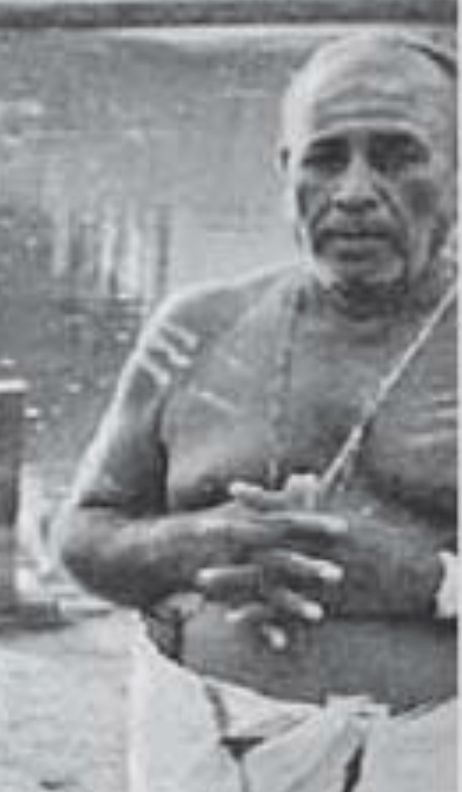
Her brothers, our dear maamas, told us that they looked and searched for any photographs of their dear father, the good-looking, duty bound man.  They had combed through the scant wedding albums, peered into old archives since he had worked as a chef in the Kanchipuram Sankaracharya’s Mutt,  but they were disappointed. Though many people had good things to say about him, and even went on to say my mother looked a lot like him, there were no photographs anywhere. He lived on in the memories people had of him, but my mother did not even have any of those to hang on to.

Then, one spring morning in 2018, on a new moon day,  her 90 year old brother sat down with his morning coffee in hand and opened Dinamalar, the Tamil newspaper. That day the newspaper had printed some pictures from the Kanchipuram mutt’s archives. And there he was. In the frame beside Sankaracharya stood their father. Maama recognized him, and immediately hollered to his son, to send the picture to my mother. “She is the only one who has no memory of how he looked.”, he said smiling like a child again.


So, at 73, my mother finally saw her father. R Iyer had 7 children, two of whom have already passed away. The youngest is a septuagenarian. What were the chances of a 90 year old man still retaining the habit of reading the newspaper every morning? Why he had been reading that particular newspaper that day? The fact that he retained the mental acuity to recognize his father who passed away 70 years ago is nothing short of a miracle.

I sat with my mother while she massaged her arthritic knees, and asked her how she felt at seeing her father’s face finally. Her face broke into a slow, wide smile, and she said, “I felt very happy to see him of course! You should have heard anna and akka (elder brother and sister) though. They were so excited and happy to finally show me my father!”

amma_thaatha.jpg

I love the word, Serendipity.  If this isn’t Serendipity, what is? Though a tiny analytical piece of me nudges me about probability and coincidence, I think R Iyer wanted his youngest daughter to have a glimpse of him in her lifetime, and he revealed himself to her.


The Tongue-Tied Commenter

The father is an obsessive news watcher and every season sees a different upheaval.  The news, for its share, never ceases to entertain him.

I remember, years ago, when he had his opinions typed out and sent to the newspaper. He beamed when they were published in the newspapers. He proudly showed the piece of paper on which he had typed it out using the pen-name he had given himself so people would believe him. I suppose it was something, given that the editors combed through hundreds of letters to the editor and posted a select few.

The advent of the Internet might be a blessing in many ways, but it has made this man’s life busier than ever. There is new content being posted all the time waiting for his review and approval. How many articles jostle for his comments and views? It is tiring work sometimes, but the septuagenarian keeps at it. He painstakingly lingers on the keyboard, his face screwed up with intense concentration, and uses his index fingers to type out his thoughts. As his comments rush out, his tongue peeps out of his mouth to see a bit of typing action. It means he is focused. Before long, one sees scathing remarks, where his dry wit shines through. It is a pity Literature students don’t comb the comments section on Indian newspaper sites. The prose there is littered with the profuse, the exaggerated, the new word that came through in the word-a-day email: it is all there and more. I have tried telling him that there being no limit to the real estate on the internet, all his comments will be published, but he shakes his head sanguinely and explains to the idiot child, “No. That cannot be true child. If that is the case, how come my comments don’t appear immediately? I get an email stating that the comment has been approved, which means that only valid points are being published.”

There is another change: he now boldly uses his own name, links to his Facebook profile (much to the mother’s chagrin, since they have one profile and it looks like she is typing the theses. “As if I have no work!” she says disapprovingly). A change that I am not exactly proud of, given that India’s tolerance seems to be dipping.

The last time he visited us, the 3G scam was the topic of conversation. This time, it is the sliding value of the Indian Rupee against the dollar.

The markets have been volatile as a result of which the Indian rupee lost about a third of its value. Inflation has been on the rise and Indian economists are clawing at arguments and counter-arguments to see what the solution is. The father, the commenter, has been writing furiously on varied sites about how the country came to be in such a sorry state with all the time he can spare. Sometimes, another octogenarian somewhere will ‘Like’ his comment, and that evening he is a pleased man. “I told you people read all the comments.” he says.

The Commenter

Even he had no comment to make to this posting however.

http://articles.economictimes.indiatimes.com/2013-09-02/news/41688915_1_rupee-madhya-pradesh-congress-appreciating-dollar

The Madhya Pradesh Unit of the Congress ( A leading political party in India) came up with the argument (pasted below) for the sliding rupee and was evidently so pleased with itself for thinking up something this brilliant, that it went and posted it on Facebook for all to see:

“The value of rupee is the same in India… Only the value of dollar has increased… The value of rupee has not fallen. How many of you people go to the market to buy dollars? How many of you come back with dollars? The value of dollar has increased only for those who buy dollars.”

A great philosophy that is not being given the credit it deserves. But such is life. I am sure that the father would have thought up something appropriate on the topic by the time I roll around in the evening, but till then, the article languishes without his comments. It seems a pity since it seems to be taking heat from a large number of people and there might have been a chance of someone reading his comments on the subject.

I saw this meme on my google plus feed and thought it most coincidental that it should appear the day I am writing a post on comments (I could not find the original author of this one to credit him or her, but I truly laughed at it….so, whoever you are, thank you.)

simba