
The Power of Belief
The world was swirling in activity, news, festivities, events. The world felt turbulent, swift, and equal parts joyous and worrisome.
The Navarathri festival meant that all versions of the festival were being celebrated – there were Durga pujos, Garba and Dandia dance events, golu, bommala koluvu. All in all, it was a week wrapped in the surreal – creation myths, war legends, female power. Most old cultures have versions of these – and if it takes festivities to remember the good old good-vs-evil arcs, and the figurines of goddesses to remind us of the righteous power women hold within themselves, so be it.
In some ways, it was a welcome distraction from the doom-and-gloom of news cycles. It was as if we could build a dichotomy of spirit within us.

Serene Solitude
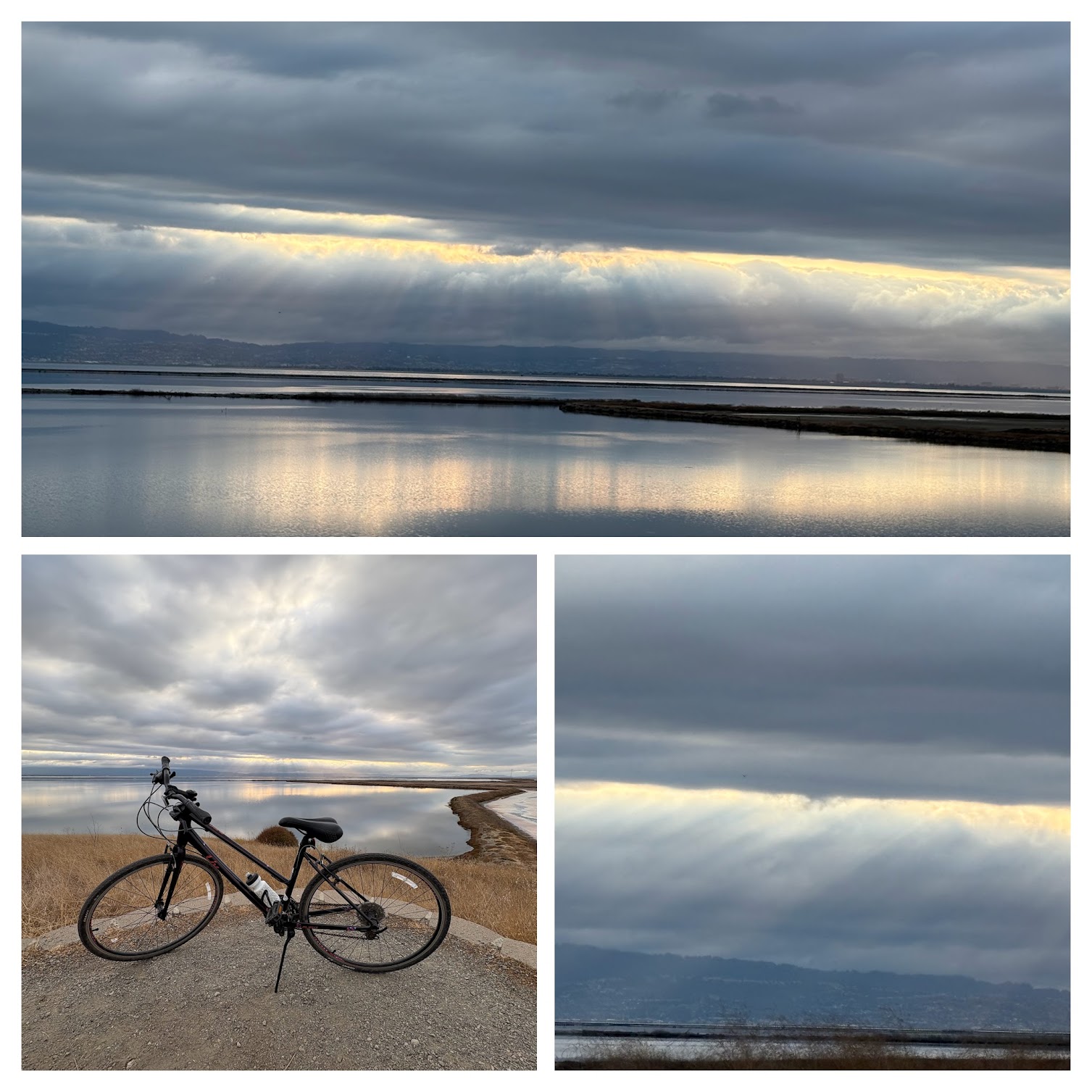
Come Sunday evening I craved for some solitude, and nature too, to round out the craving for peace. So, off I went with my bicycle, into the cycling trail nearby. It was tough going – all that festive food sloshing inside of me. Made me feel heavier and more sluggish than usual. But the trail is magic – it seems to lead, with each pedal stroke, to a place of peace.
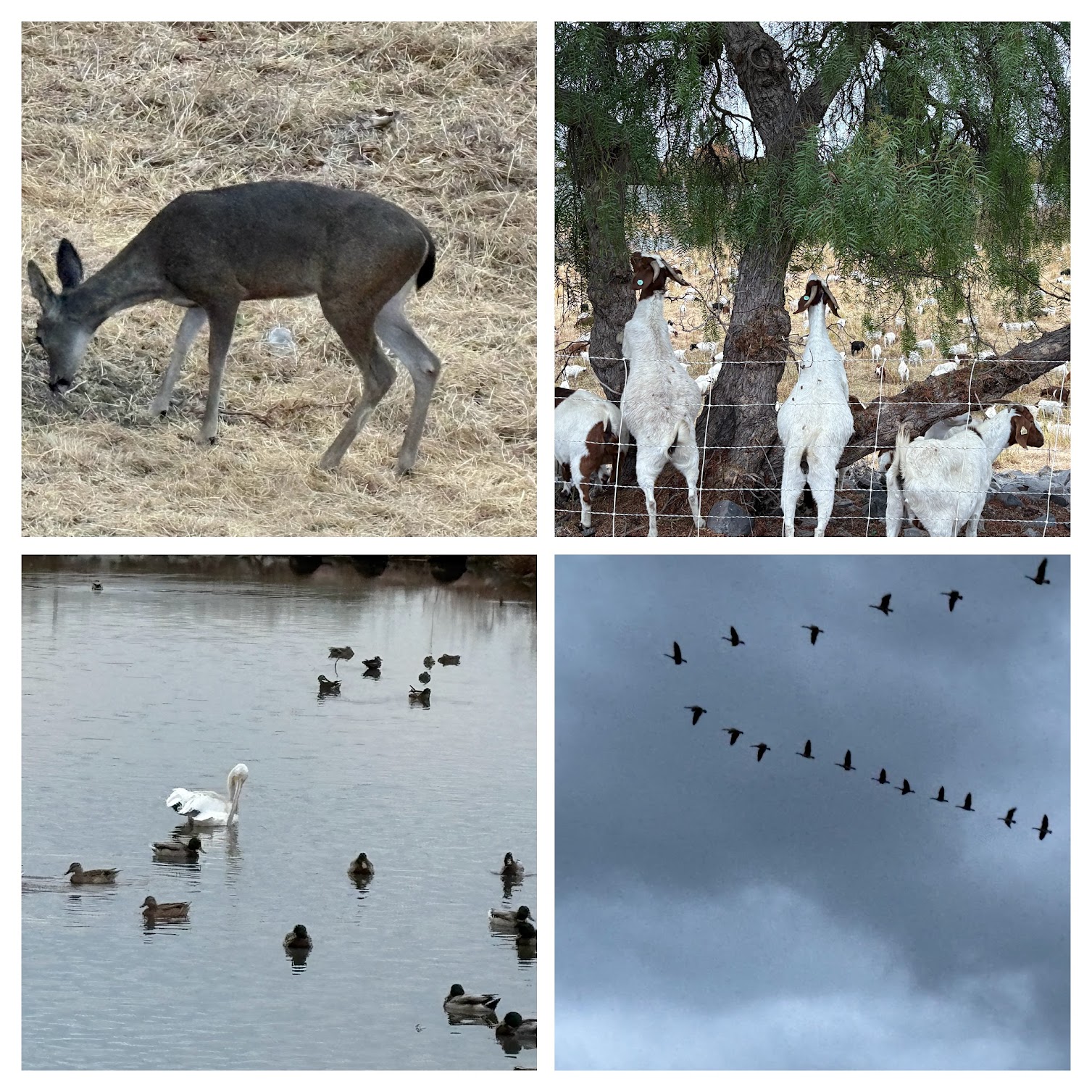
It was nearing dusk, and the birds had started their journeys home. I stopped every now and then to take pictures of beautiful sights that took my fancy. Deer and goats grazing, a hare (I couldn’t get a picture) running so quickly it startled me, pelicans lifting their incredible frames into the air with grace and ease (They did not eat puliodare over the week-end, but even so), kestrels soaring, squirrels daring themselves to see if they can make it across the bike path (I swear these little rascals wait till the last minute to scuttle across – a thrilling game for them for sure, but enough to scare rice-sodden slower-than-normal reflexes bike riders), the small birds (finches, blackbirds, wrens – all making a racket as they prepared for downtime). It had been a particularly hot week too, and I could see the relief of the cooling temperatures in my fellow beings.
The AT-CG Creation Dance
It was as I stopped to gulp some cool water – deep and slow, that I noticed the deer gazing at me. I have written about the gaze of a deer before. I shall write again. All the poets and writers when they write about unending universes in eyes, this is what they mean. It is possible to gaze deep into those big, round eyes. The goats eyes have a different quality to them – their pupils being rectangular appeals to the human mind differently altogether from a round, large pupil shape. Could that be social conditioning too?
It made me think about our genetic makeup, evolution, and all the creation myths. I could understand why every ancient culture and civilization had creation myths. I wonder whether whales have their version of creation myths in their repertoire. If they do, I’d love to hear it.
I stood there warmed by the deer’s gaze, the bird sound, and the gentle breeze around me. How was it possible that all these marvelous creatures I had seen today were variants of adenine, thymine, cytosine, and guanine?
We need a nice simple beautiful creation story with AT-CG that can round out the beautiful repertoire we have the world over. A goddess seated on a lotus from the AT-CG DNA, a multi-headed god whose genetic composition had mutated differently and went on to use that mutation to create a whole planet of marvelous creatures.
Full of beautiful images of nature, man-made images of golu decor, and a head refreshed, I pedaled back to the house. The pink skies were turning purple and grey, and it would soon turn dark. Another phenomenon that gave rise to so many legends till we understood Earth, and our miniscule place in the Universe.
I heaved a grateful sigh, breathing in the fresh air, and taking a gulp of fresh water before heading inside.
 Nourish-n-Cherish