The Significance of Full Moon Names

Mooning About

“Come on! You need a light jacket, but we aren’t going very far.”

“I know we are going to see the moon! But can’t we just for a few minutes and then we can see it from here? Instead of going around the bend, and behind the trees, and through the gap in the houses on that lane?” 

“Yes I know. But if you wait a bit, you’ll see the silver moon, if you come now and dance through everything you just said, we’ll see a golden moon!” I shivered a bit at what was waiting for us at the end of the street. Even though I had just seen it.

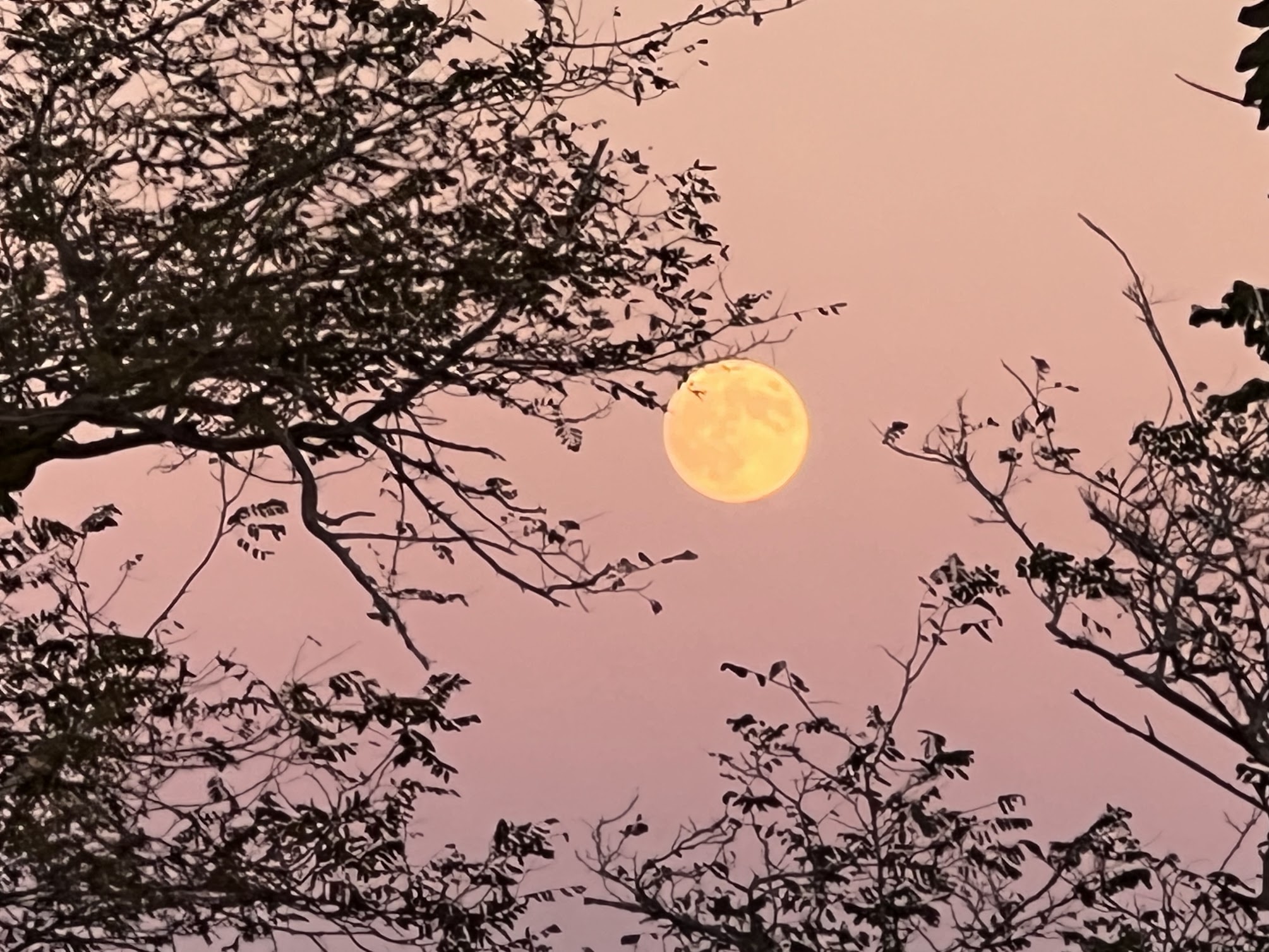
“Oh wow!” the words were yanked out of the son’s mouth before he could stop himself. I understood that feeling. A golden full moon on a cool summer evening is truly mesmerizing. 

We stood there for a few moments just drinking in the magic from the golden moonlight. “Want to go for a short walk just looking at the moon?” I asked, and he nodded, not willing to pull his gaze away from the mystical golden orb. So, we meandered through the streets, our necks upturned towards the magic of the skies instead of looking where we were going. 

We entered the house, shining like full moons ourselves, a few minutes later,  flushed with the cool air and the luminous light of the full moon.

“We’ve been mooning about outside. Get it? Get it?” I said to the husband who had a slightly exasperated look on his face.

Oooo wwww ooooo!

“Oooo wwww ooooo!” Werewolf! Full moon tonight!” I said, and the pair of them rolled their eyes.

But that got me thinking, why was the January full moon called the Wolf Moon and the July full moon called the Buck Moon?

It turns out Gemini is just the thing to ask. So, here you go, fellow selenophiles!

Full Moon Trivia

  • January: Wolf Moon, named for the howling of wolves often heard during this cold month.
  • February: Snow Moon, reflecting the heavy snowfall often associated with this month. 
  • March: Worm Moon, named for the earthworms that emerge as the ground thaws.
  • April: Pink Moon, named for the pink wildflowers that bloom in North America.
  • May: Flower Moon, celebrating the blooming of flowers. 
  • June: Strawberry Moon, marking the time of strawberry harvest. 
  • July: Buck Moon, named for the new antlers that begin to grow on male deer. 
  • August: Sturgeon Moon, named for the sturgeon fish that are most readily caught in the Great Lakes. 
  • September: Corn Moon or Harvest Moon, marking the time of corn harvest and the start of the fall harvest season. 
  • October: Hunter’s Moon, a time for hunting before winter sets in. 
  • November: Beaver Moon, when beavers begin to prepare for winter by building dams.
  • December: Cold Moon, reflecting the cold winter temperatures.

Nilgiris: Nature’s Abundance on an Early Drive

“We need to leave by 4:30 a.m. if we are to beat the traffic!” the brother said. 

There were enthusiastic nods. I kept the alarm for 3:30 a.m, confident in our abilities to get going that early in the morning. After all, there is nothing as pleasant as a drive up to the Nilgiris from Bangalore. 

The route passes through two beautiful national forest reserve areas – Bandipur and Mudhumalai. The hills are usually green and welcoming at this time of year. Early summer in the Nilgiris is a joy – there are flowers blooming everywhere, the rivers and streams are flowing with healthy levels of water, and all of life seems like it should be: Full of beauty and abundance. 

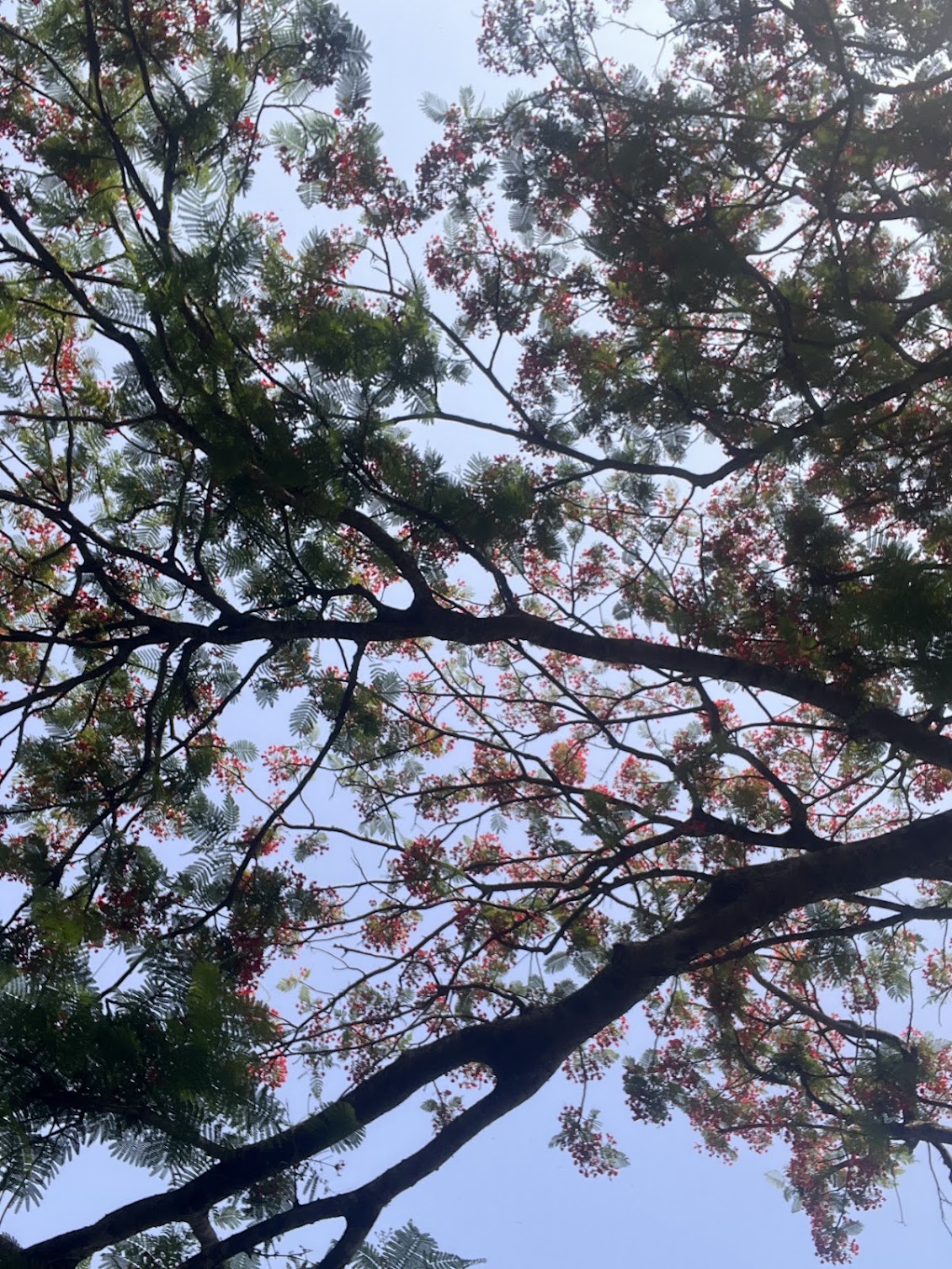
I had quite forgotten the true splendor of a gulmohar tree in full bloom, but oh! What a joy to see these resplendent looking trees! 

You can spend all day gazing up at the branches – all the different ways in which the light dances and trickles through the very orange blossoms, all the different shapes the branches have spread themselves – no two trees the same, yet distinctive enough that they cannot be misunderstood for another tree.

The brother who is always in his element when he is driving anywhere other than city roads, shook his head as he saw me bouncing in my seat. He pulled over by a side road, and if you were to ask me the previous evening to imagine this road, I would not have been able to do it justice. I grew up in the Nilgiris, and have visited many times in the past two decades, but every time the hills surprise me (mostly good ways, but the increasing population and traffic snarls contribute to the bad ways) 

I tumbled out of the car, my heart bursting with song. Luckily it was just my heart that was singing, for who wants to frighten a bunch of elephants taking a calm dip in the Moyar River? 

The peacocks cooing in the distance provided a musical backdrop.

As we headed back to the winding road of 36 hairpin bends, all of the forest seemed to have risen. There were peacocks, sambar deer and spotted deer, iguana-like creatures, monkeys, langurs, and elephants. I cannot think of another experience where the soul feels as nourished or sated. 

By the time we had passed through the forests, we had been filled with the beautiful imagery of flora and fauna of the Nilgiri Hills. It is always so humbling to call this marvelous place home along with the thousands of creatures who live more unobtrusively in these parts.

The cheeky road signs only added to the allure of the morning forest scenes.

“Watch for deer crossing the road, remember the road is crossing their home!”

“Attention: Crocodiles in the River – do not swim. Survivors will be prosecuted.”

The Fullness of a Bare Winter Scene

The past few weeks in California have been a pluviophile’s heaven. The atmospheric rivers bringing moisture to a state hardened by drought is very welcome.

I spent hours listening to the music of the rain, enjoying the gurgle of the water-butts, and the suction-like sound of the rain waters receding into the drains. We made paper boats and watched them gently sway along with the waters, we released driftwood stuck near drains, we empathized with fauna and realized what fragile creatures we are. These are the images of a happy childhood, and they warmed my soul as I shared these pleasures with the son.

rainriver

Out on a walk in the pouring rain one day, I felt at peace with the Earth around me. There were scarcely any humans about, and this in itself was refreshing. Without the banter of words, the language of Earth was so soothing. 

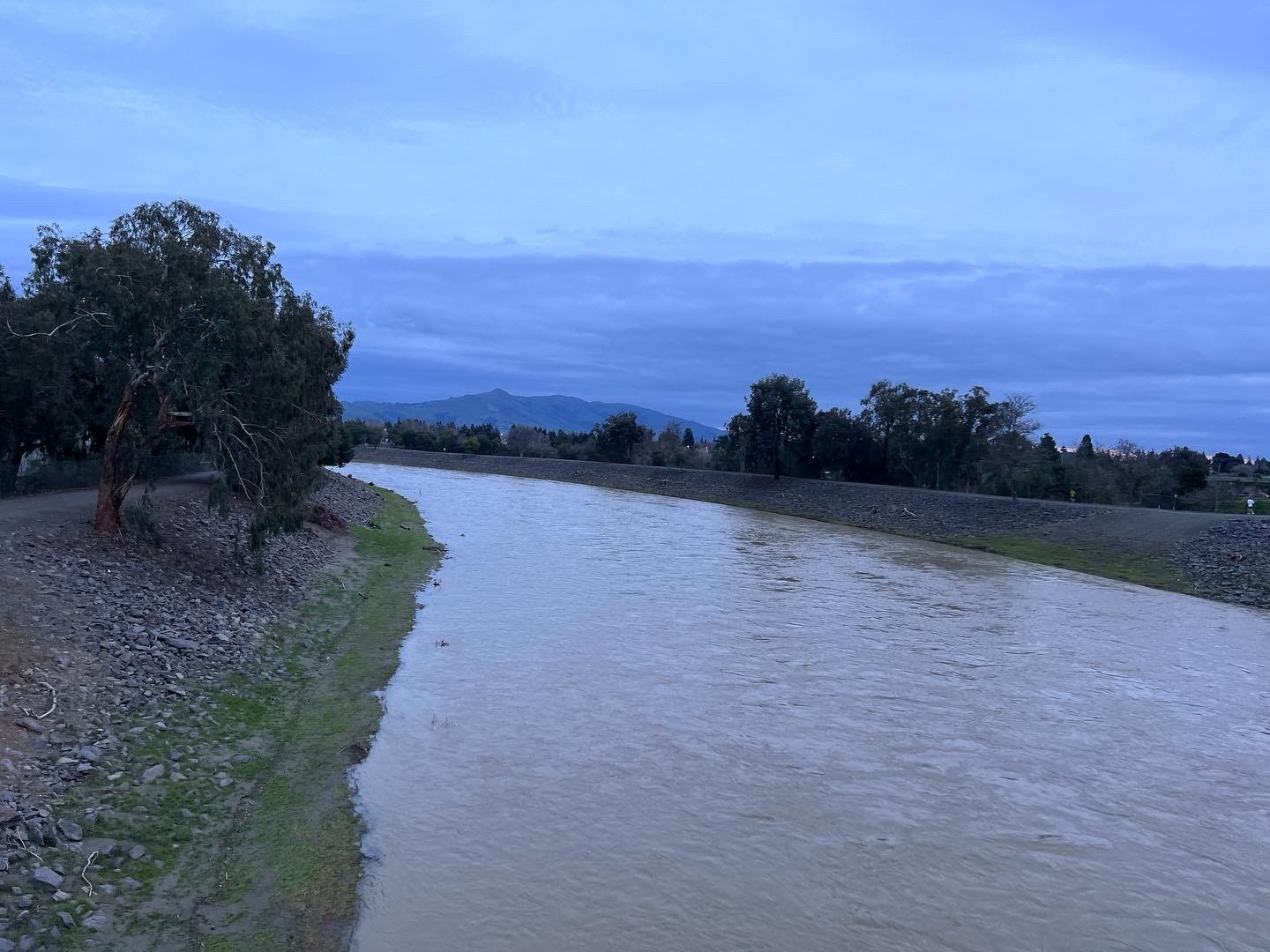
The river near our home has a name that invites teasing given the amount of water that usually flows in there. It is called the Niles river.

When one nears its banks, there is a sign warning folks against swimming, diving and fishing in the river. Only for almost the entire time we have been acquainted with the river, it has hardly boasted a flow enough to sustain more than a few paddling ducks and geese. Mostly the deer graze inside the riverbed, and its bed is home to many creatures: foxes, raccoons, deer, cats, water rats, squirrels and of course a whole multitude of birds: geese, avocets, gulls, grebes, ducks, herons, egrets. The trees nearby are home to California bluejays, thrushes, blackbirds, woodpeckers, hawks, owls and turkey vultures. 

I love our gentle stream that calls itself a river. But the past few weeks thanks to an uncharacteristic atmospheric river that bears moisture into the dry state of California, it had swollen into a respectable river and I found myself standing and gazing longingly at the waters moving towards the bay. The ducks seem to be enjoying themselves getting in with the drifts and floating along swiftly and then flying back several feet just to be able to do it all over again.

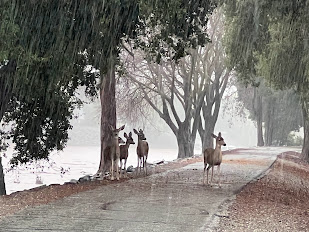
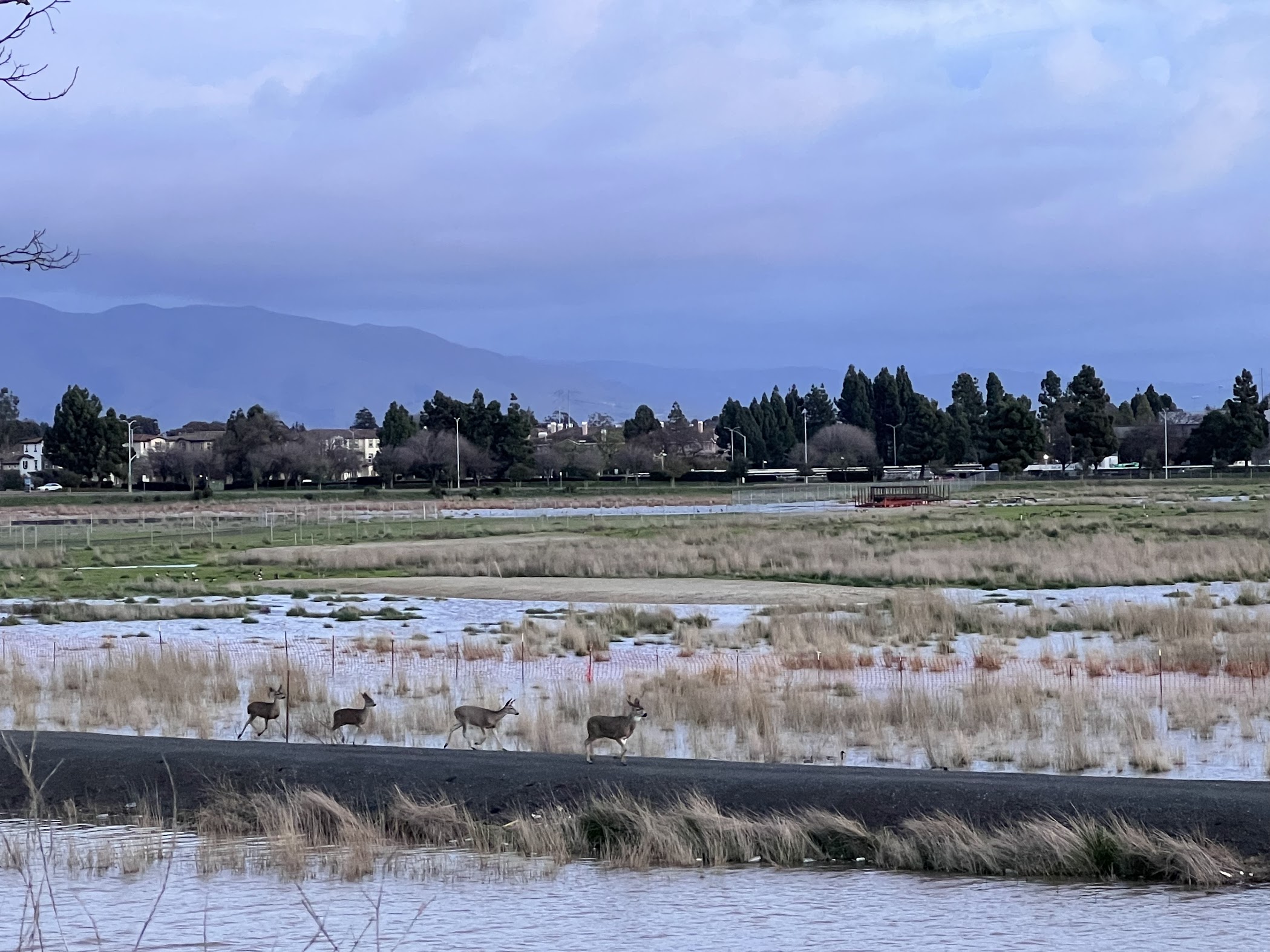
The deer seemed to be having a tougher time of it all. They are the ones who enjoyed the river-bed the most, and the swollen waters meant that their natural feeding grounds were no longer available for them. That afternoon in the pouring rain, the deer were on the trail since the riverbed they usually take refuge in was filled with water, and my heart went out to them. Luckily for them, the trail that is usually filed with humans was near empty. Like the children say, not everyone is kook-enough to walk in this storm. Slowly, but purposefully, I gave them the space on the trail so they may go towards a patch of greens nearby. The pouring rains did not seem to bother the creatures as much as it bothered us humans. 

deer_in_rain

All this musing brought back into sharp focus what nitpicking creatures we are. We are scared to step out without umbrellas, raincoats, shoes and socks. We need our body temperatures just within this particular narrow range (97 F (36.1 C) and 99 F (37.2 C) ). We need our food prepared just so, and our lives orchestrated just so, and in spite of it all, have managed to create lives that are just so-so. (It has been so long since I used this term) 

The trees around us with their bare branches (abscission as shedding leaves is known) still remind us that the wintering season is not over. This is still the time to rejuvenate ourselves and trim down our commitments so we may sprout forth in glory during spring. But human beings seem to march to a different rhythm – a rhythm driven by financial earnings reports, calendars, the vague baying drum of stock market indices that demand more, a sadistic and almost schadenfeudic clamoring for layoffs, incessant profits etc. 

A month into the new year, the world has marched on from one grim news to another.

My mind harked back to the statue in Athens. The busy man statue in Athens, created by artist Costas Varotsos , it is a fitting statue for our times.

Screen Shot 2023-01-28 at 10.48.51 AM

Our lives have become more like the running man depicted in Athens. Despite all the world philosophers practically giving the secret to happy living away for free (Buddha, Plato, Socrates) , we manage to avoid the difficult work of being at peace with ourselves and choose the easy world of busy work(including yours truly).

A rain droplet trickled on to my nose. I came back to the fullness of a bare winter surrounding me and I took in a deep gasp of air to savor these moments. 

deer_trail