The Light of Ikigai

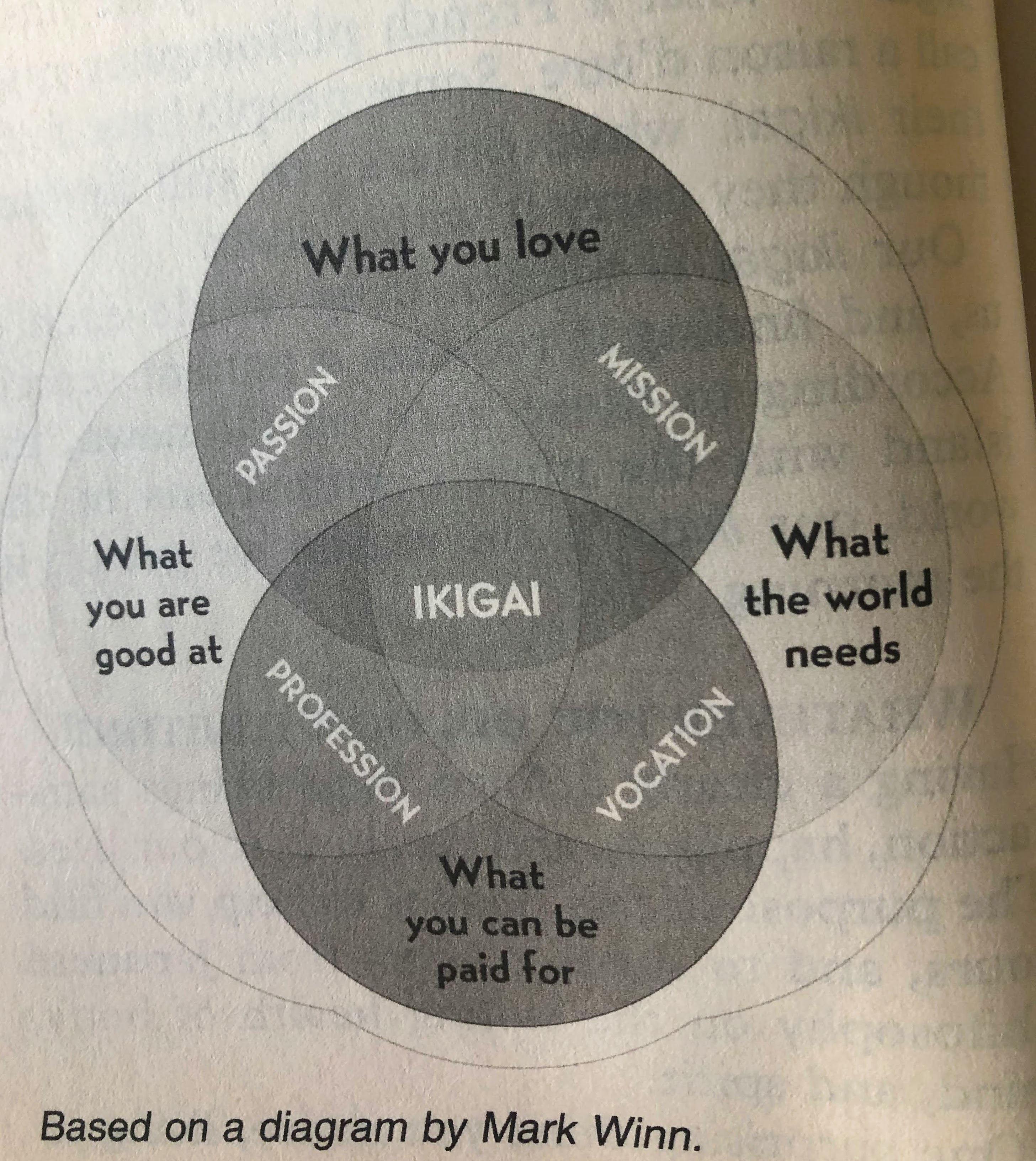
I have been reading a book titled Ikigai – the Japanese Secret to a Long and Happy Life – By Hector Garcia & Francesc Miralles. The concepts mentioned in the book are varied, for it takes many factors to constitute a happy, meaningful life.
I am not sure if Prof Rukmini read about Ikigai, but it is abundantly clear to those who knew her, that she practiced it whole-heartedly. Of course, if ever there was a lady who could’ve curiously read up on concepts new to her, and taken to practicing the good in them, it is Professor Rukmini. She may well have been teaching Ikigai all her life. Kunja Athai as we referred to her, was a diminutive figure physically and a stalwart intellectually.  She adored learning about new ideas, and she loved those in her life with equal fervor. These will always be things I remember about her. 

There are a few people whose life story you grow up with. Kunja Athais was one. 

She was married after 8th Grade. Her life though was a tumultuous one: she was widowed shortly thereafter with a 2 year old daughter in tow. She came back to live with her elder brother and sister. Her brothers, intellectuals themselves, wondered whether a regressive society would kill her too. So, they urged her to study again. She wrote her SSLC exams with private tutoring and then went on to study Physics at Presidency College in Madras. 

She was bright, hard-working and wanted to be economically independent. Fate delivered a particularly terrible, and a somewhat vindictive blow to the beleaguered soul again. She had written 5 out of the 6 Physics honors papers. A few days before she was to write her 6th paper, her only daughter, aged about 8 or 9 passed away. I cannot imagine how it must’ve been for her. One of her professors who knew about her plight, told her to come and sit the exam – she needn’t even write anything, he told her. (For her performance in the remaining papers would ensure she got her degree). So, poor kunja athai went to the examination hall. 

Every action is a choice. 

Once there, she decided to take her mind off the terrible events in her life just then, and write the examination anyway. 

A moment that turned out to be a momentous one in her long life.

Kunja Athai graduated with Honors from Presidency College in Madras in the 1950’s. A rare feat in India at the time. I wish I knew the statistics of the number of female vs male graduates, or the economic statuses behind their fates. But none, I am sure had her particular set of circumstances. She had lost her young husband a few years ago, her only child a few days ago. Yet, she persevered. 
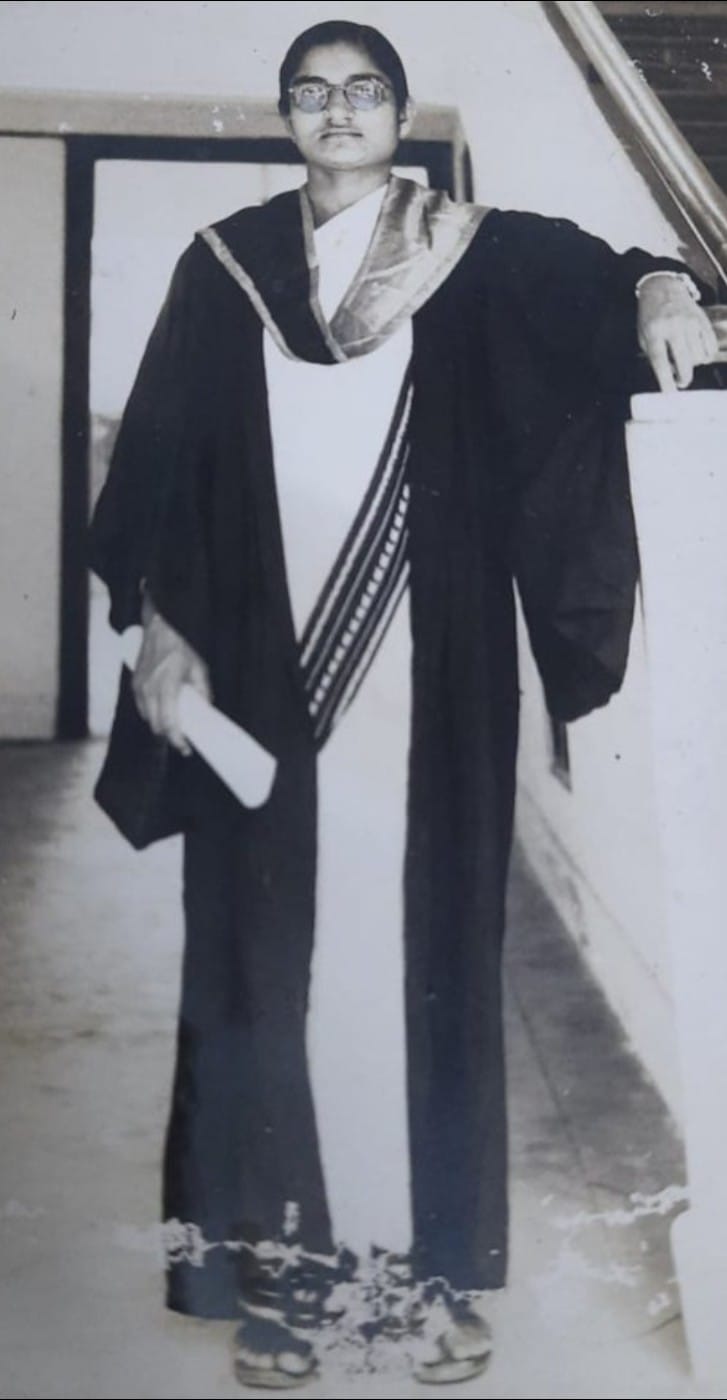
She became a Physics Professor at Ethiraj College in Madras, and went on to inspire hundreds of girls as she urged them towards a degree.

The authors of the Ikigai book interviewed the elderly people  of Okinawa in Japan(the place with the highest concentration of the longest living individuals), and gleaned some key concepts that contributed to their healthy, happy lifestyles. Some of them are : Communal life, Never Stop Learning, Finding the Flow in your tasks, Humans as Ritualistic Beings, and Enjoying Nature.

Kunja Athai seemed to have practiced all of these things.

One of my early memories of the grand old lady was at twilight in a small garden patch in Tambaram. I was staying at my aunt’s place for the night. My mother’s eldest sister, her husband and his sister, kunja athai. I pottered around the garden patch with her – probably chattering, as I was known to display considerable prowess in that department.

Kunja Athai let me smell the star jasmines, feel the gourds, grind the hibiscus leaves between my fingers, and pluck a few of the hearty hibiscus blossoms for her idols inside.

I loved tracing the shapes of leaves as a child. I would collect leaves from everywhere as I played or went on walks, and trip back home to trace them out in my notebooks. I told her about this pastime of mine, and she approved with a twinkle in her eyes. When we went back into the house, she took down a book that she thought I might like, and pointed to pages in the book. The leaves from the book came alive. Her eyes shone with bright interest. That is the image I will always have of the legendary kunja athai.

Kunja Athai passed away last week. While I sat there thinking of the marvelous life of Kunja Athai, I realized there were ever so many things and angles from which one could approach her life. I could write about she was a Professor of Physics in Ethiraj College for Women inspiring thousands of girls to get themselves an education, and acquire an inquiring mind that would serve them well through life. Or I could write about her struggles in early life, and how she not just found a way of going on, but of building something marvelous out of it.

I realized that Kunja Athai seems to have learned and consciously imbibed all the tenets of a meaningful life from the philosophers who came before her. Her Ikigai was well in practice. She was determined that her life should be one in which she spreads love and fosters a love for learning.

Every soul traces their own path. Some souls we are lucky to have benefited from: they are the suns who shine, give, and illumine all those around them. Kunja Athai’s light of Ikigai shall shine on in every life she helped nurture and guide by example. 
Eudaimonia – Human Flourishing

Somewhere in the forest of my rough notes nestled this little piece. I had evidently written it with a view to tying the pursuit of happiness to the happiness of pursuit and all that. 

A couple of the son’s friends had come over and without wasting a moment, they started a vigorous game of I-honestly-don’t-know-what. I could hear loud giggling by the couch as they jumped from the sofa to somewhere else and back on. After an hour of this, I asked them the point of the game. They exchanged quizzical shrugs. 

* Was there a point in the jumping game? 

* Was there a point in jumping? 

* Was there a point in a sofa or the cushions below? 

I laughed at their loss of words, and let them go back to their game. They were kind enough to ask if I wanted to join. Detecting a distinct take-pity-on-me vibe from the frazzled, frayed sofa, I gallantly told the children to proceed without me. They looked relieved and continued happily.

I looked at their flushed faces and saw that the point of the whole thing was that they were happy. Happiness as a concept has the philosophers stumped. Philosophers who deal with heavy themes such as meaning of life and so on, spend a considerable amount of time pondering the meaning of happiness, the importance of the pursuit of it all, among other things. 

I am listening to a lecture series on the Meaning of Life.  Professor Drone (lookup the name later) talks about pursuit of happiness among other things when he is explaining Aristotelian Ethics. Honor, Wealth, Excellence are all worthy pursuits in our lives, but it can all be towards something else: Happiness. Underlying our quest for Honor, W & E is a desire to be happy, he says. 

Unfortunately, as we grow, the little drops of sunshine that so easily caused mirth and joy tend to fade.

But as I read the little note above, I also felt a little pang – for it showed me what the children were missing now. The camaraderie of classroom replaced with the tiny tiles of an online meeting, the wholehearted enjoyment of jumping replaced by online games.  I had spent the whole day in one meeting after another. Meeting fatigued days such as this one tended to blend into one another, especially when the daylight faded out so quickly that only darkness remained, with a cold wind to keep one company. Wondering what my son was upto, I rose – my joints creaking like the wooden floor below to see if he needed company. 

Just as I was feeling dangerously sentimental about social distancing, its long term effects on the young minds, and all that sort of thing, I heard peals of laughter and the familiar sounds of jumping up and down. There was a FaceTime call in session, and the little fellows were re-enacting a scene from an online game they were playing together. The brawlers, as they called themselves, were making themselves real-life Brawl Stars. The video call was propped up on the globe in the middle of the table, and the swinging adventurers flew in and out of view of the camera. Judging by the sounds of it, the children had adapted with their customary cheer. 

the_world_playground

“The measure of intelligence is the ability to change.” Albert Einstein

“Hi ma! Want to join us? We are just ummm just umm brawling!”  

I looked at the little fellows’ pals squealing and leaping off the sofas in their screens, and I declined the kind offer much to their relief.  I headed into the kitchen with a smile on my lips, a tune in my heart, and hope in my being.

Eudaimonia, also spelled eudaemonia, in Aristotelian ethics, is the condition of human flourishing or of living well. Ask Professor Drone to play with children and learn a lesson or two. Happiness lectures indeed!

The Paradox of Philosophy

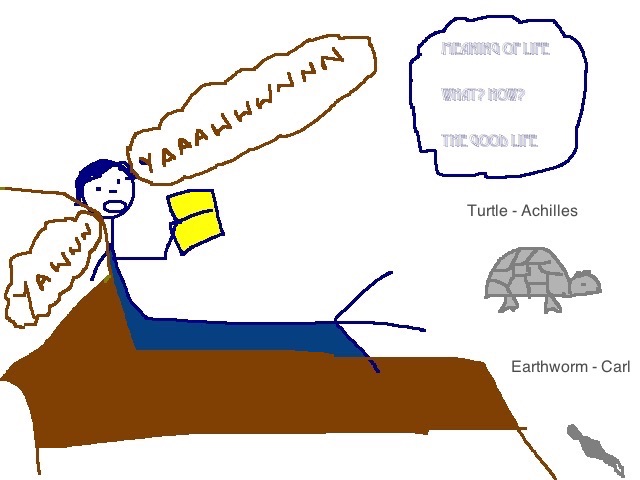
One evening, the husband was yawning loudly. The kind of yawns where after a few of these, you worry for your loved one’s jaws. The children and I exchanged knowing smiles. “He must be reading that Philosophy Book of his!” we said in unison, and started laughing.

The husband decided that to uplift himself, he must invest in a book of Philosophy. If ever there is a soporific cure for insomnia, that seems to be it, looking at the effect it has on the husband. The Philosophy book has him floored regardless of time of day. Whether at 9 am or 10 pm, within minutes the man is snoring much like the philosophers say the man with a good life should. (Only he hasn’t got to that part yet).

meaning_philosophy.jpg

In an attempt to retain enthusiasm in the text, he has taken to explaining things to us. It hasn’t gone well so far, for we scent his Philosophy lessons from a mile away, and scuttle like that turtle Achilles is supposed to catch up with. According to Zeno, Achilles would never be able to catch up with the Tortoise since the Tortoise would always be ahead of Achilles albeit by a smaller margin.

Achilles & The tortoise
Zeno’s paradox of motion

The husband has evolved and now solicits our attention on walks and hikes. Zeno would have either been proud of us during these evening walks, or been utterly shocked at the frivolous way in which we were treating his treatise on paradoxes. Known as Zeno’s Paradox, old Zeno does not seem to be a guy known for this love of exercise. He preferred to spout philosophies on how it must be quite impossible to get to one place from another. (Hence the paradox, since we all know that we can get to one place from another in a finite amount of time).

Zeno might have been offended, but not the husband. No Sir! He ran after us trying to explain Zeno’s paradox, while we ran even faster – “See, this is why Zeno’s Paradox doesn’t work. We are running faster than you, and unless we slow down or you speed up, which seeing the state of your dinner plate is not possible, you cannot catch up with us!” we said panting. The somewhat heavy dinner protested inside us – “Hey!Hey! You said mild walks to calm the system down. This is not a mild walk. This stroll is a Paradox is what it is!”

To be fair to old Zeno, his philosophies were laid out about 2000 years before Calculus was invented.

Of course if old Zeno were to be around today, he would be shown the following you-tube video
The Essence of Calculus – (3blue 1 brown)

To which the old fellow would have said with good humor and grace, “This is so cool!” and he could go back to come up with other interesting questions in life

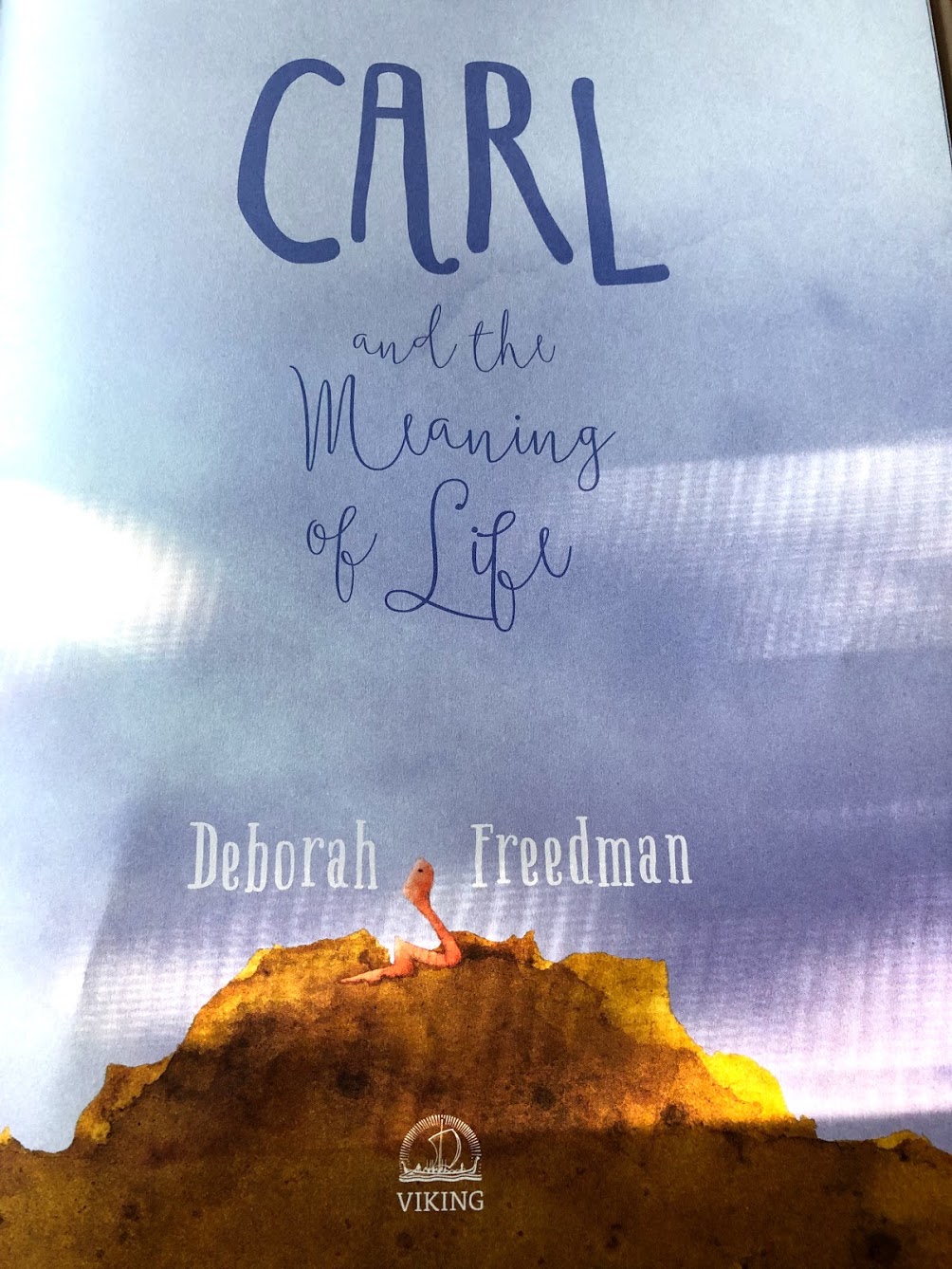
It is indeed refreshing to find hours of lectures, the huge books written by all and sundry summarized in a children’s book, Carl and the Meaning of Life.

carl_life.jpg

Carl, the Earthworm spends his time underground, digging, tilling and keeping the soil soft and fluffy. When asked about his purpose in life, Carl is unsure and sets out on a quest to find out his purpose in life.

Sadly he returns to where he started from after finding no answers to his purpose of being and finds that the ground has become hard and dry. Vegetation has dried up, and the rabbits are moving elsewhere in search of greener pastures. It is one of the most joyous things for the poor earthworm – he realizes then what his purpose is. He burrows underground and spends months, raking the soil and turning it upside down.The flowers start to bloom, the rabbits linger on and therefore, so do the foxes, and all of life thrives again.

I read the book out to the husband one day to save his jaws and his guffaws sent the earthworms in our backyard scuttling back to work. He flung his Philosophy book, and leapt out of bed and said his purpose just then was to not fall asleep and watch 2 hours of television in which he hoped to finish 10 different movies.

I laughed. Maybe the meaning of life comes to those of us who do not think too much, but do.