Apollo 11 & Artemis II : Selenophilia

Selenophilia

I moped around one evening. The thing is, as much as I love cloudy days and rainy days, I don’t like them to intersect with full-moon days. It feels like the waxing-full-moon is meant to bathe all of the Earth in its glow, and encourage mooning-about. It is not meant for sighing and trying to see if the moon can finally peek out of the clouds.
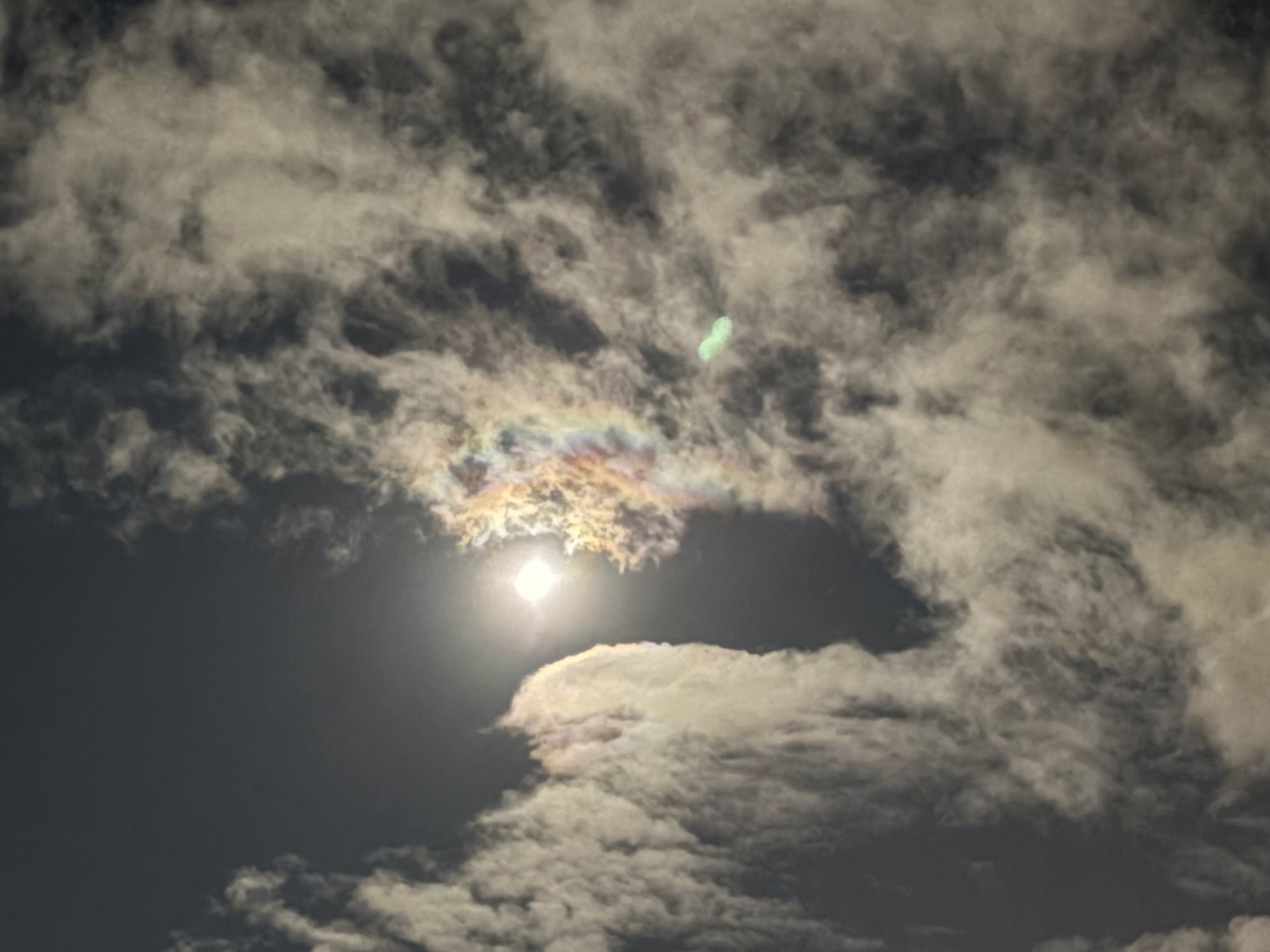
I had not quite realized the thing that was keeping me up that night. I blamed it on the ill-timed coffee, but it could not have been that. Not when I fell asleep moments after the near-full-moon peeked out of the clouds, and I sighed happily at it.

The day after, the moon looked full in the sky, bathing the Earth with its luminous glow. The clouds flitted, but never enough to hide the moon. I took off – after the eternally present tasks that even robots and AI-based beings do not consider worth doing: clearing up and the cleaning up.

“Where’re you going?” “Out!” I said, and ignored the chuckle that followed me out. The golden moon was waiting, and I wanted nothing more than to gaze at it. The word unblemished came to mind, but that does not quite describe the moon, does it? The pockmarks and craters on the moon looked plenty blemished, yet the feeling it invokes in one is unblemished.
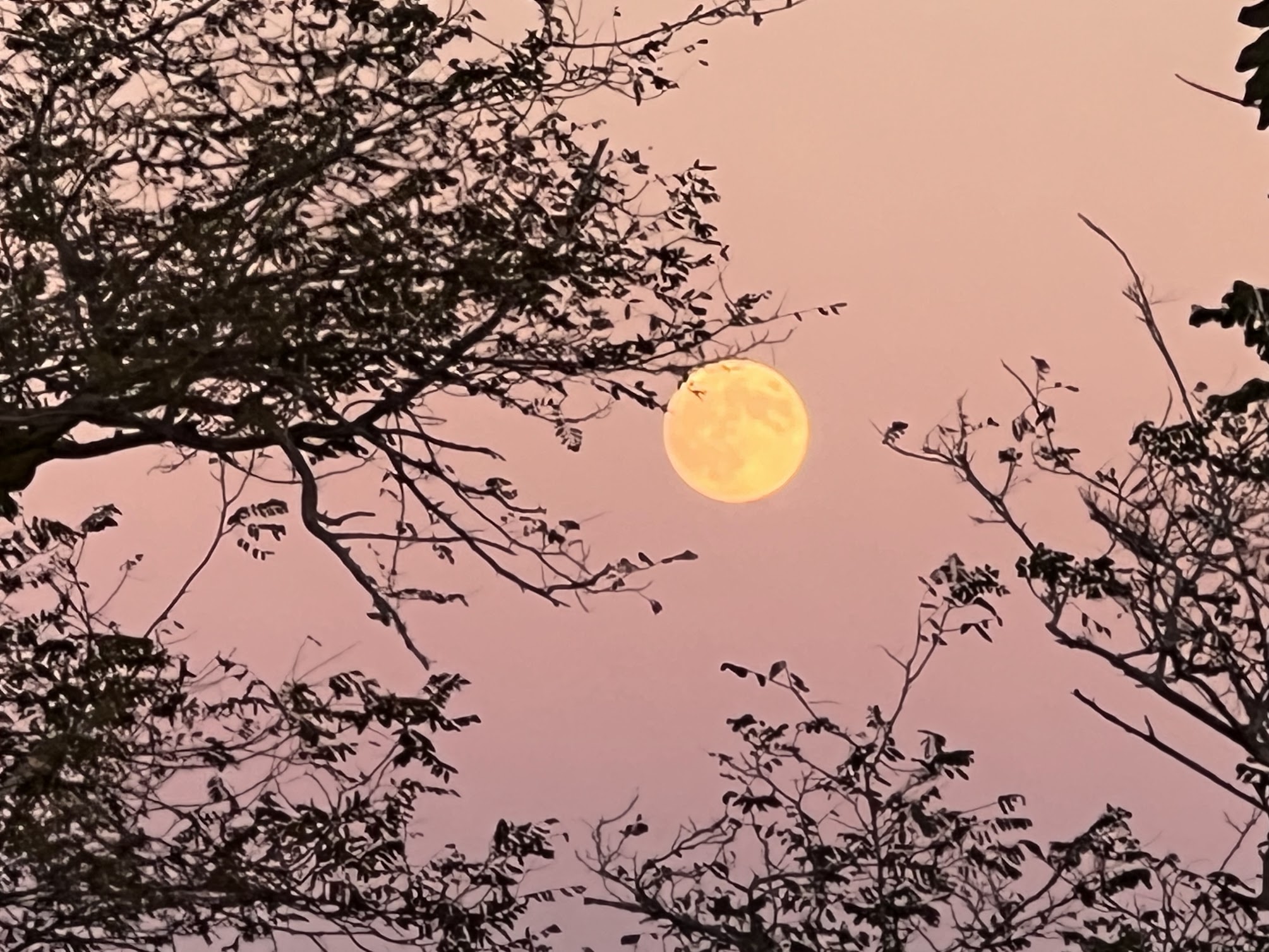
This fascination for our celestial neighbor, Selenophilia, is a beautiful term that is derived from the Greek language, denoting a love of the moon. Meaning for centuries, folks have finished up their chores and headed out to the admire the moon. Hopefully, for centuries more, they will continue to do so.

Apollo & Artemis

The previous day, Artemis II had taken flight into the skies with 3 astronauts aboard: to the other side of the moon. I was in an elementary school classroom introducing books about space travel that day, and I remembered the excitement the discussion about Artemis II had generated. The class sent all the astronauts a fond good luck as they listened to the brief loss in communication with the spaceship. 

That night as I sat gazing at the moon, I thought of the planet watching and praying: united in its excitement as Artemis II left the Earth. Did the Artemis II crew ( Reid WisemanVictor Glover, and Christina Koch, along with Canadian Space Agency astronaut Jeremy Hansen) feel the good vibes? I hope they did. 

Then, I thought of Apollo 11.  The astronauts: Neil Armstrong, Buzz Aldrin, and Michael Collins making the trip almost 3 decades ago. The entire planet fascinated, and enthralled.  Did they feel the companionship of the planet even as they left? The moon itself was in its waxing moon phase that day, and thousands must’ve gazed up that day abuzz with excitement.

Magic of the Moon

There are a few things that humanize us, and the magic of the moon is, I believe firmly, one of them. Something that can evoke wonder, awe, a yearning to attempt great things, set difficult targets, and above all, work together to achieve it, is Magic, isn’t it? 
What Would You Miss Most from Earth If You Went to Space?

Claustrophobia & Agoraphobia

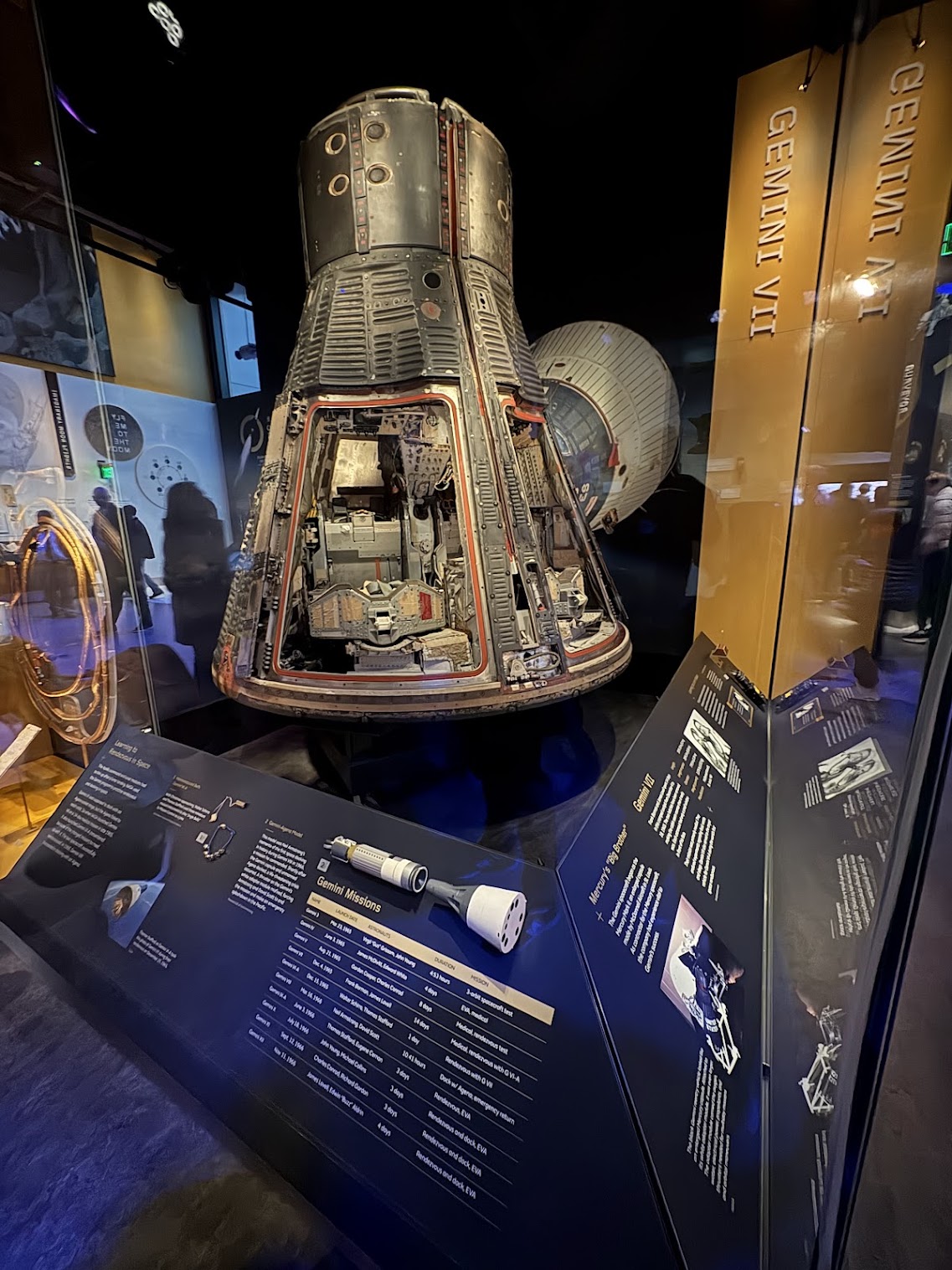
The Smithsonian National Air & Space museum in Washington D C had us wrapped in its wings. The son was thrilled. We’d started off at the original model of Wright brothers’ air glider, and then steadily moved on from one exhibit to another. When finally, we stood in the moon (‘Destination Moon’) exhibit, I glanced over at the son to see that familiar look of awe in his face – it had been flitting in and out at almost every section in the museum. 

I peered into the Apollo 11 Mission Control capsule on display and wondered yet again, how is it that astronauts deal with the immensely crushing feeling of cramped space in a space capsule. It seems alright, manageable even for a short day or two. But nothing these astronauts undertake seems to be in days – they all seem to stretch on and on. Weeks, months, years – when everything you want to get to, is measured in light years, how can we hope for short travels? Peering into the capsule again, it seems like it could give the most robust of us, claustrophobia.

Then again, I peeked out into the simulated views from the spacecraft. Light years of nothingness with little sparkling diamonds interspersing the views for miles and miles. Charming and beautiful as it looks. After a few days, weeks, months, years, it is enough to give the most optimistic of us agoraphobia.

How must their psyche work with this constant tidal forces of agoraphobia and claustrophobia pushing and pulling all the time?

The Orbital Sunrise – By John Green

I was reminded of the essay, The Orbital Sunrise by John Green in the book,  The Anthropocene Reviewed. It really is a wonderful collection of essays by a nimble, curious mind on a wide range of topics.

He writes of astronaut Scott Kelly’s 342 days spent in space where he experienced approximately 11,000 sunrises. The International Space Station orbits the Earth every 90 minutes. Even in the famous book by Antoine Saint de Exupery, The Little Prince, the imaginary soul occupant of the planet he came from, only enjoyed 44 sunrises a day. Take that, Little Prince!

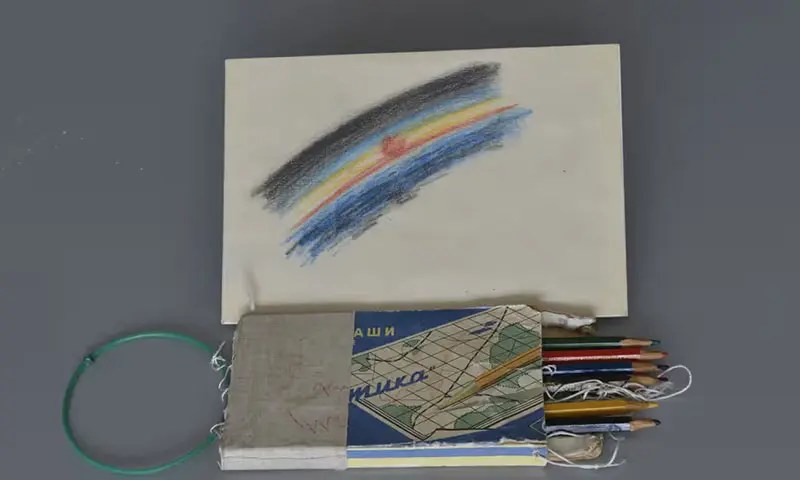
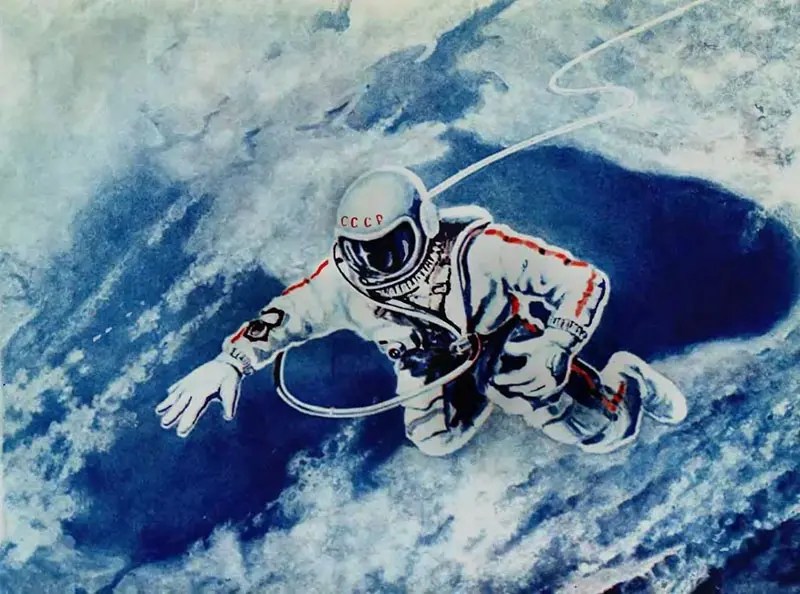
In the same essay he goes onto tell us a little about the misfortunes and luck that enabled us to view the first works of art from space. Alexie Leonov’s space mission aboard the Voskhov 2 holds the record for the first space walk in 1965. The mission itself went woefully wrong, and in a desperate attempt to calm himself, he drew some simple images as they overwhelmed him in space. They can be viewed here.

https://www.lindahall.org/about/news/scientist-of-the-day/alexei-leonov/

“Sunrise” sketched by Alexei Leonov on the Voskhod 2 mission, Mar. 18, 1965, the first work of art made in space, Museum of the Yuri Gagarin Cosmonaut Training Center, Moscow Oblast, Russia, exhibited, with the original pencils used by Leonov, at the Science Museum, London, 2015-16 (theguardian.com)

The sunrise looks like a child’s drawing – a rainbow of colors sandwiched between layers of space’s black, and that right there, for me is the beauty of the piece. Even in that moment of awe, a person with an art pedigree, tapped into his childlike sense of wonder and drew something that miraculously survived a desperate landing that nearly destroyed the space capsule and the astronauts in it.

What would you miss on Earth?

“What would you miss most on this Earth, if you were to leave Earth and live elsewhere?” The son asked me, bringing me back to the Earth, as I mused on this and that. I saw him peering up at the question flashing in front of him as he gazed up at the question on the screen in the Air & Space museum. “My family & friends first, followed by nature itself, I think. But I suppose there will be a different sense of nature on whichever planet we go to.” I said.

“Over the Black Sea,” painting by Alexei Leonov, date and present location unknown (thestatussymbol.com)

He nodded. “Yes – looks like the majority feel that way too.”, he said pointing to the survey results on the screen.

“What about you?” I asked him.

He took his time answering. Then he said, “I think I would like to take you all with me. Then, I will miss Earth’s nature.” I smiled at this response. I distinctly remember the feeling of wanting to take my family & friends if I went very far away, so I wouldn’t miss them. Life did not always work out like our childish wishes, does it?

I knew too that there would be no orbital sunrises in my lifetime for me witness. “I am past the age of astronaut training to go to space and all that. “, I laughed, “But if you do get to see it, remember me for a moment, and I will have the satisfaction of seeing it too.”

He smiled indulgently. “No you won’t! But okay – I’ll think of you.”

With that, we meandered through the exhibit, each wrapped in our own fantasies and thought capsules. How beautiful and marvelous an experience to go to a museum far away and glimpse at a spacecraft that first enabled humankind to fly, and then took mankind to space?

I pondered on the question a lot more. I realized agoraphobia and claustrophobia of space travel aside,  there is so much more to life on this Earth that I would miss:

Art, music, dance, literature, math, science, history, geography, philosophy
Friendship, the exalting and exasperating aspects of the human spirit
Oceans, rivers, lakes, streams
Creatures large and small – manta rays, lions, giraffes, geese, ducks, woodpeckers, wrens, deer
Forests, trees, flowers, vegetables, fruits, canyons, volcanoes 

Most of all: Laughter, Love and all that makes up Life itself.

What about you? What would you miss most about Earth?