Our Invisible World Made Visible

I pulled Atlas of the Invisible from the library shelves looking pleased. Here was another book straight from the dream shelf. As I thumbed through the pages, I felt a familiar flutter of anticipation. I could already visualize the happy hours spent looking into the different maps and visualizations to help understand the world around us better. 

Many of us have heard of the map Dr John Snow drew up of the cholera epidemic in London as he went about his duties as a doctor. With the aid of his map, he was able to isolate and identify the contaminated water pump from which the water-borne disease was spreading. 127 people died in 3 days and over 600 people died within a month. Here was a groundbreaking example of multiple skill sets coming together to identify and problem solve. 

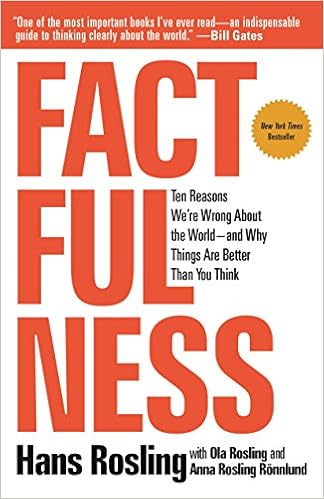
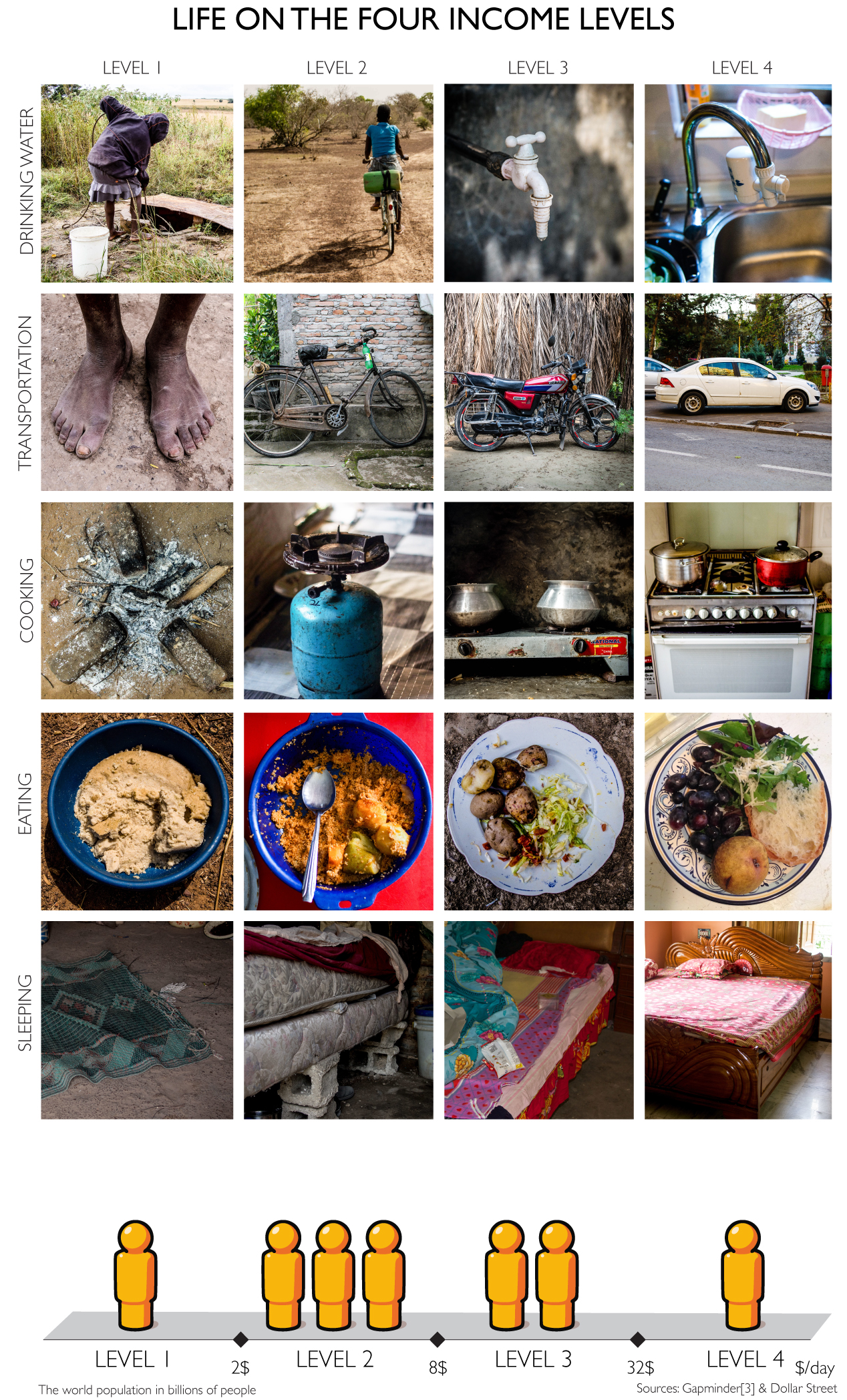
Of course, data and its importance has only increased in the intervening century and a half since. In Dr Hans Rosling, Anna Rosling & Ola Rosling’s book, Factfulness: Ten Reasons We’re Wrong About the World–and Why Things Are Better Than You Think , examples of data collection, sampling, analysis and visualizations help us think of the world in eye-opening ways. The progression of populations from under-developed to developing to developing is fascinating and gives hope for a future that has solved many of mankind’s problems. 

life-on-4-levels

<Infographic from Factfulness book mentioned above.>

Now, several leading newspapers such as the New York Times commission data analysts to present their findings and even have visualization teams to help with the most succinct presentation of data. 

Atlas of the Invisible – By James Cheshire and Oliver Uberti is a treat for those who enjoy analytics. 

atlas_invisible

Example charts – to see if you like the book:
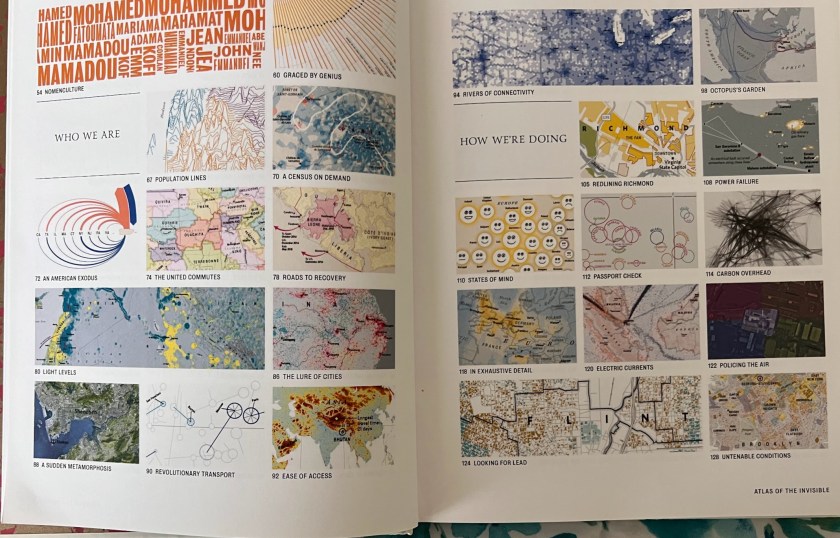
IMG_8034

We are all data points in this world. I chuckled as I read about the folks who revealed a high security defense location in the middle of the desert simply by turning on Strava to keep track of their daily activities. A good reminder that like many of our inventions, this penchant for data tracking and analysis too will bite us in unexpected ways.

I hope you enjoy the books as much as I did.

Recommended Reading on this subject:

Factfulness

I am glad I read How to Understand the World by Hans Rosling, and then picked up Factfulness. I could more fully appreciate the journey and the person who became the man and found his purpose beyond being a doctor (in itself a marvelous profession). His young aspirations based on the world view in a developed country shifted and enhanced his life in so many ways. He knew when he was interacting with young doctors in Bangalore, India in the 1970’s that the society he had in mind was very different from the world. The world was changing, and yet our worldview had not

He was to see this trend in varying degrees across different countries, professions and even in erudite halls where world leaders came together, and should’ve known better such as the UN or the World Bank. 

It is still this way in varying degrees, although the internet and entertainment options have accelerated the understanding of different cultures in different ways. But Hans Rosling’s work along with his son and daughter-in-law, Ola Rosling & Anna Rosling Roddmund has helped the world understand the areas in which we are doing well as a species, and as a planet. This factfulness enables us to concentrate our powers of doing to the right causes and people.


Instead of Developed Vs Developing Countries, he instead splits societies into 4 levels on the development graph. (Source: Gapminder.org)

  • Level 1
  • Level 2
  • Level 3
  • Level 4

Perhaps the most telling graphs in gap minder are those showing how countries shifted from Level 1 towards Level 4 over 2-3 generations, and how this is what we can hope and work towards for those countries stuck in Level 1 and Level 2 today.  Please watch his bubble chart from the Late 1800’s to 2018 to see the world view progress and change.

Bubble Chart for Level 1- Level 4 countries over time

He writes, for instance, of a Sweden during his grandparents time – a view that closely resonates with Level 1 or early Level 2 countries of today.

  • Large families, patriarchal mindsets limiting progress, faulty drainage, lack of access to good hospitals and medicines etc.
  • Then, in his mother’s lifetime, she was able to get treated for tuberculosis in a hospital for free, have fewer children than her mother did, gain access to some automation such as a washing machine – thus freeing her up to take her children to the library, and spend more quality time with them.
  • In his own generation, he was able to get free healthcare, a state sponsored medical education, ability to raise his children in good schools, and so much more. 

The book talks about the most common ways in which our worldview are shaped, and how to work against each of these biases while understanding the world around us. But really, these tenets are useful for decision-making in general, not just for the world-view.

  • Negativity Instinct – we assume things are far worse than they really are, and this clouds our decision making process
  • Straight Line Instinct  – not all trends are linear even if they start out that way. Population growth for instance. It is estimated that by 2100, we would have leveled out around 11 billion – not a linear projection as predicted by doomsayers a few years ago. Largely due to education, family planning etc.
  • Fear Instinct – decisions made irrationally based on fear.
  • Size Instinct
  • Generalization Instinct
  • Destiny Instinct – Fighting against a predetermined fate helps us shape the decisions we’d like.
  • Single Perspective Instinct
  • Blame Instinct
  • Urgency Instinct – Anyone who has bought a car would know this one: Today, and today only deals – that we all know is

The book finishes with an excellent essay on Factfulness in practice. Progress is happening and it is heartening – 🌏

References:

  • How I Learned to Understand the World – Hans Rosling with Ola Rosling & Anna Rosling Rönnlund
  • Factfulness – Hans Rosling with Ola Rosling & Anna Rosling Rönnlund
  • Gapminder.org – Designed by Ola Rosling & Anna Rosling Rönnlund