Barnard’s Star & Jupiter Dancing

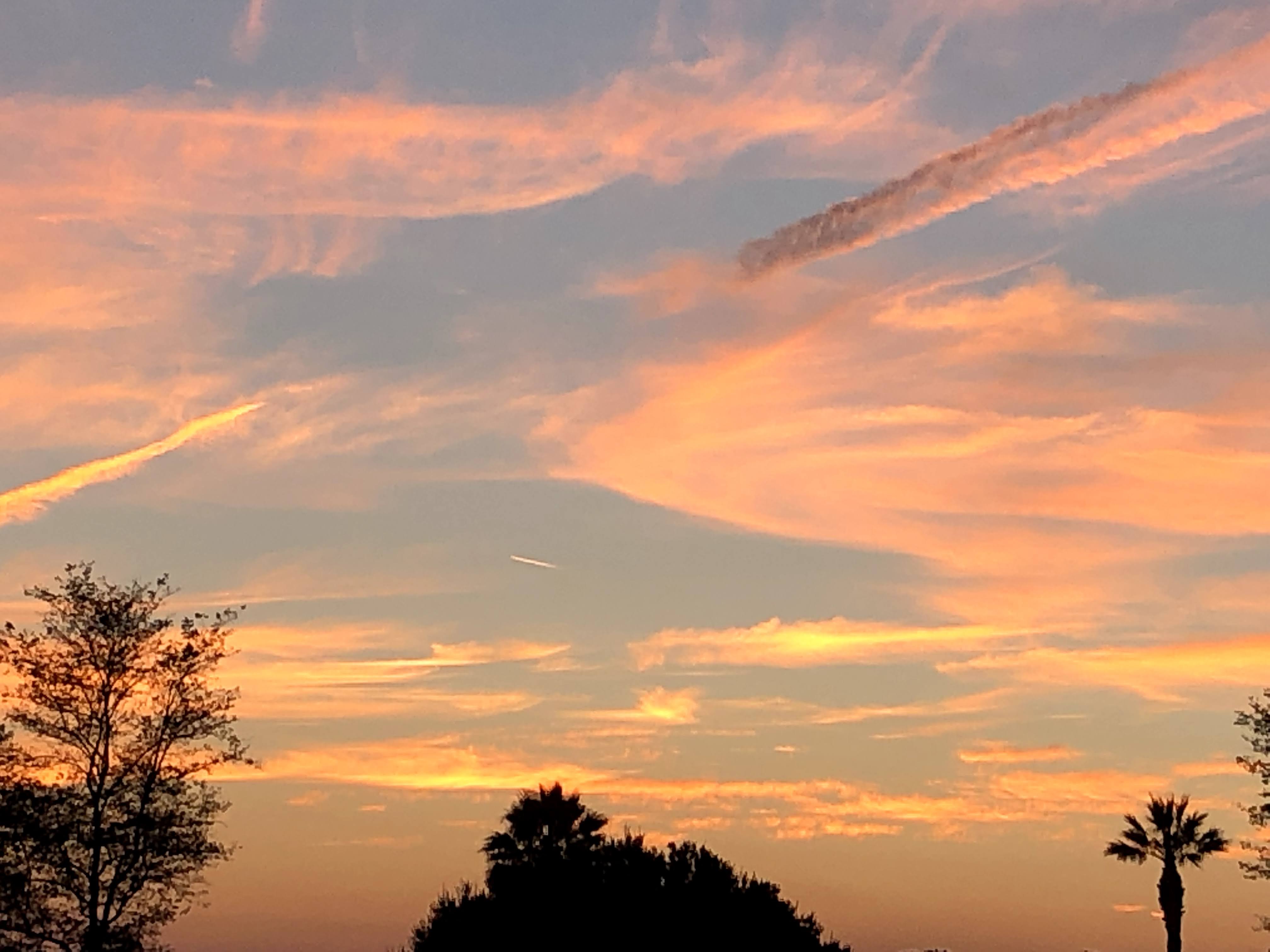
Jupiter and Venus were both illuminating the evening skies. Dusk was creeping in. The sight of our familiar planetary companions is always a welcome one. The first ones to illumine the skies, and visible long before the stars can be seen, these wanderers are a delight. The red atmosphere of Venus, the thunderous black ones on Jupiter, and the beautiful bluish velvet earthly skies make for a magical time.

Later that night, after loads of laundry, dishwashing and cleaning were done, I sat on a park bench nearby and gazed up. Jupiter looked brighter than all the other stars, and I found my thoughts drifting. I read somewhere that the red spot on Jupiter depicting its great raging storm looks fiercer than ever. I could see none of that from my park bench millions of miles away of course. That night, the reflected light from the sun was just soothing, and in some ways alluring.  The great mighty giant with its storm raging for 3-4 centuries spinning, quietly keeping the solar system in balance, and dealing with its own destiny is strangely fascinating. Are there extremophiles on its surface? Any micro-organisms that only thrive in the storms? Maybe we would know one day.

https://www.nationalgeographic.org/activity/jupiter-s-great-red-spot/family/

As I went to say good night to the son, we fell to discussing the skies (one of our favorite topics as regular readers know). I told him that I read about Jupiter’s storms being stronger this year,

“Ha! Our global warming affecting the storms on Jupiter? “ he said and the pair of us chuckled at the joke. 

“Did you know if you put 90 Jupiters together, you still won’t have a star?”

“Yeah?! How many would you need?”

“ A hundred.”

“Let me guess – Kurzegesagt?” I said, and he nodded. 

That channel has some of the most amazing content, and the son gets excited when a new video is released.

“If 100 Jupiters came together, we could get a star like the Barnard’s star. We cannot see, but it will be a star. ” . I had not heard of Barnard’s star, but there it was capable of going on as a red dwarf star for the next 10 trillion years. He charmingly said 1-0-0-0-0-0-0-0-0-0-0-0-0-0 of course, and I was wondering what the number is – fogged after a hard days’ work, this child’s 1-0-0-…-0 can be a bit much. 

So, there was another close neighbor to the Earth – a star that was not as visible as Alpha Centauri, but there nevertheless, 6 light years away. This red dwarf has made its way into science fiction with the possibility of harboring life in the planets around it. The dwarf star is too cold, and though the planets orbit at an optimal distance, it is too cold for life as we know it. But human imagination, while marvelous, is also limited in some respects.

Imagination will often carry us to worlds that never were. But without it we go nowhere.

Carl Sagan

Apparently, the Barnard’s Star is known as one of the fastest moving stars – a little dancer in the skies, moving slowly regally among Jupiter & Venus in the evening skies. This one’s movements are not as visible in one lifetime, but is visible over a century. To marvel at this kind of generational wisdom being passed down always makes me grateful for the little part we all play in this mighty universe.

Life_On_Earth

As we sat in our pajamas talking about the stars and their planets, I thought about the beautiful marvelous gift of star-gazing.

I don’t know what the future holds for mankind, but I hope gazing at the stars is one that is always possible. A source of dreams, conjectures, possibilities, and solace. That is my wish for all sentient beings,

Back from the Brink – 2

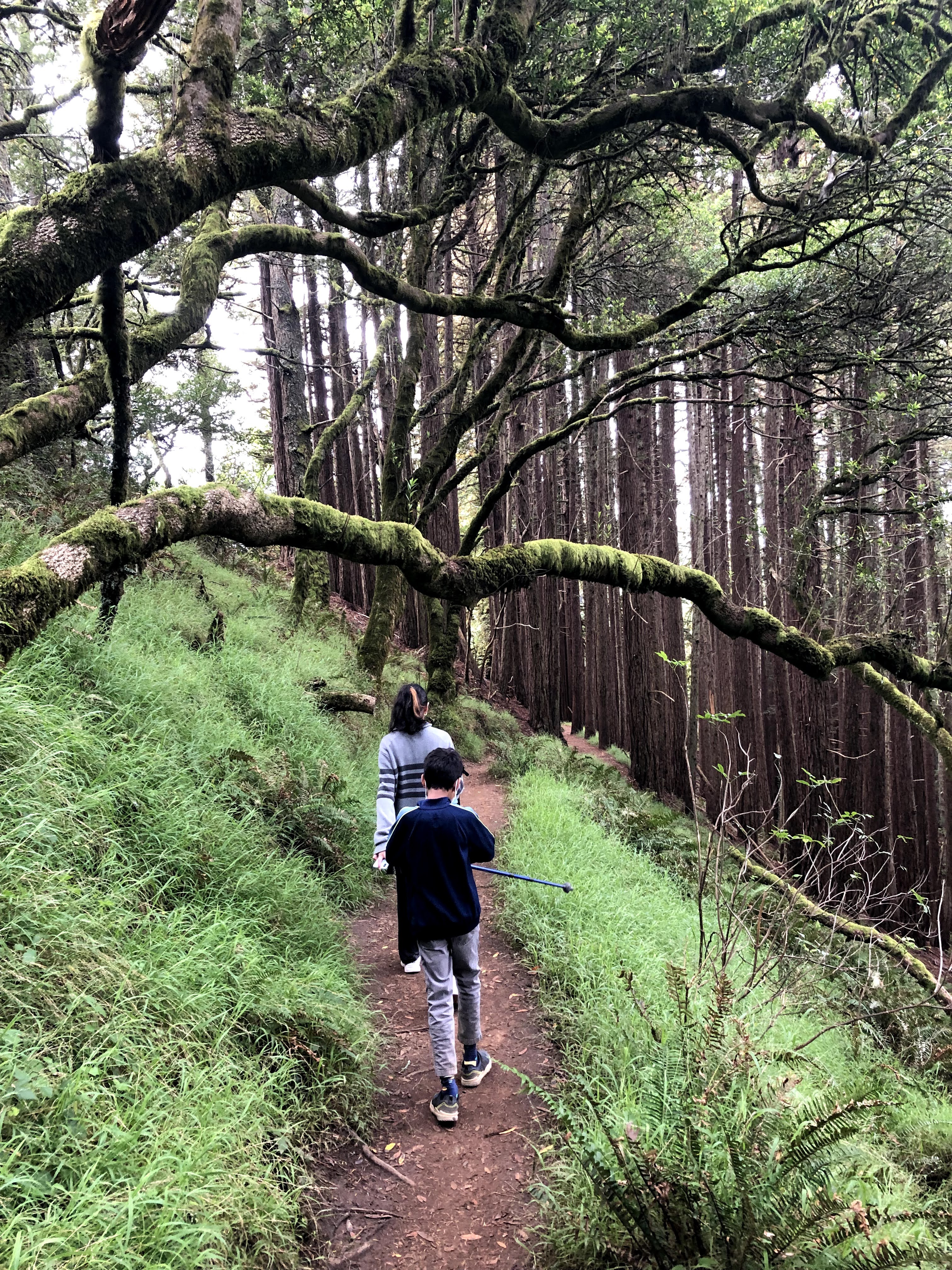
The first conscious thought that gray morning was that we would be amidst giants. The truest, wisest, most resilient of all. We had planned a hike in the coastal redwoods of California near Muir Woods for the husband’s birthday. As we entered Cathedral Grove (a better name I cannot think of, for spirituality shines through the branches of the tall old trees), I pointed to a sign that said , “Be seen not heard!”. 

“Yes….that is for you!” Said we all pointing to one another. 

“Quiet Coyote!” We agreed and off we went, quieter than our usual selves. There is a natural sanctity, a lasting feeling of peace, and a humbling of self in these groves. 

Many of the trees in Muir Woods are over half a millennia old. These trees had put down roots long before the Spanish conquistadors came to the United States, or the Gold Rush had started. California would not be the same after these events. Silicon Valley was centuries away, when these marvelous giants had started reaching up up and above towards the skies. But here, inside the redwood forests, none of that seems relevant. 

After several feet of hiking up, we were able to gasp for breath, inhaling the lovely scent of the woods, and conversation started up again. A few miles into the hike, there were fewer people, and the children opened up. Talk turned to Beautiful Earth, a popular classic in the nourish-n-cherish household. The son told us about the disappearing monarch butterflies. I remember visiting Butterfly Grove a few years ago. It was easy to mistake the butterflies for leaves. There were thousands of them plastered together on the branches, hanging everywhere, looking beautiful. Millions of them made the journey every year up and and down the coast, and they made a beautiful sight. Who doesn’t stop to admire a flitting butterfly? This year, less than 2000 monarch butterflies were counted. The species is dying. A world without butterflies sent a shiver down my spine.

What have we done to this planet if butterflies are no longer in our midst? 

The daughter piped in, “You know monarch butterflies are corner species – meaning they indicate the state of the ecosystem in general. For instance, if monarchs go away, then birds find out that painted ladies aren’t problematic either and soon we start losing species that look like them as well.” Apparently, the monarch butterflies are toxic to birds and they leave them alone. Seeing a little evolutionary wormhole there, other species like the painted lady butterflies evolved with the same color scheme, but they aren’t poisonous to birds. How long before birds figure this out?

“But how did this happen?” In the decade since we went to see the butterfly grove, how did 99% of the species manage to be destroyed

“Milkweed!” This ubiquitous plant that thrived along roadsides, freeways and everywhere is fast disappearing due to increased use of fertilizers. Toxic to other animals, the milkweed is apparently a major source of nectar for the monarch butterflies. Could we bring these butterflies back from the brink? It seemed like a miracle would be required.

A world without butterflies is not one I wish for our grandchildren. I shuddered in the grove, and sent a little prayer up towards the towering redwoods. What will these trees witness in another 500 years? They are already enduring more frequent wildfires, and though, redwoods generally hold up very well against wildfires, the frequency with which they have been occurring in the past few years is not comforting.  

Back home, my eyelids holding the short-term memory of the redwoods in them, I closed them, instantly transported to a world in their midst. Forest bathing. Those of us who still have the magic of trees in us are blessed indeed. Those of us who stop to see flitting butterflies need to pray that future generations have the magic of butterflies around them.

Wise Generous Trees

“Unless someone like you cares a whole awful lot,
Nothing is going to get better. It’s not.”

 Dr. Seuss, The Lorax

The Polar Bears Seem Fine Sans Alarm Clocks

There are days when one wishes the night went on for just a little longer. Would the sleep doctor approve of that spot of sleep? Did the seconds and minutes really tick off at the right pace?  (Or did they gallop through the night like restless fanciful ponies eager to catch the sunrise?) 

Sometimes the answer to all of the above is yes. The sun has risen, the birds are chirping, the grass is dewy,  and the world outside is brighter than it should be when the clouds of sleep are still gathering in this manner around one’s eyes. The Earth continues spinning its tale with the lives and destinies of all its living creatures. 

The previous evening, the son and I went on a bike ride around the time of sunset. We stopped here and there, and there again. The child has tried restricting me to 3 pictures of the sunset everyday, asking me to thumb through previous pictures of sunsets before gorging on some more pictures, all to no avail. The heart wants what it wants, even if the phone storage doesn’t. 

I moaned and thought of the crane flying overhead the previous day at sunset. I could not get a picture of the flying crane, but the mind’s eye had it captured well enough. He or she must be up looking for their morning spot of nourishment, the little spry red fox that I have spotted in the river marshes must be up and about too. The birds – do they ever sleep in?

After all our stops, the skies started darkening really quickly and we pedalled back home trying to play a game of Is-that-a-tree-or-a-person? September has started, and the closer we get to the autumnal equinox, the sooner the sun seems to set. The quality of rushed days seems to wrap up quickly with the fiery, hurried sunsets (Forest fires in California make for smog ridden skies but beautiful sunsets)

The earth continues on with its tilt, hurtling through the expanse, and our consciousness. Meanwhile, the alarm’s snooze went off again reminding me that another day was here, and meetings and invites wait for none. Would it help being a polar bear? Does a polar bear feel groggy after a winter’s sleep? With all this global warming, does it irk the polar bear that it cannot sleep as much as it would like to?

The nature of time will perplex, and one can only yearn for the days prior to alarm clocks, and reminders. I am sure the polar bears get along just fine sans alarm clocks, and yet here we are.

The alarm said : Rise and Shine

Rise and Shine indeed! YOU rise and shine! I want to flop and sleep. I am sure Nanu (the polar bear in the book, Ice Walker – A Polar Bear’s Journey Through the Fragile Arctic) would agree.

Books:

Ice Walker – By James Raffan

Ice Walker: A Polar Bear's Journey through the Fragile Arctic
Ice Walker – A Polar Bear’s Journey Through the Fragile Arctic – James Raffan

Snail Tales

When R K Narayan said, writing is like a yoga, I suppose he didn’t quite envision the exact pose in which inspiration would strike. For me, it seems to be in the Shavasana(sleeping or corpse) pose. Take Saturday night for instance. I had mooned about the hills early in the am. Happy  cows, and cheeky turkeys hobnobbed with nervous cows and pesky humans to great delight in the misty dews of the morning. 

A morning out in nature is usually balm enough to get the old inspiration going. I spent the whole day with wisps of little sentences floating in and out of the brain. Sentences that would make amazing epiphanies, little witticisms that I yearn for when trying bite-size nuggets of wisdom, they all paid a visit.

Throughout the day, inspiration seemed to come along just when I was slicing the onions, or grumbling about the crumbs with the old vacuum cleaner in hand. I had no access to put some of these words to paper. Then, early evening came, and I sat down to write, when the beautiful full moon rose – hanging like a large golden orb over the Earth. Poets swooned, artists swelled, and writers bloomed. I rushed in, opened my laptop, and had one of the dullest writing sessions possible. 

I teased and pleaded – trying to gather the wisps into a cotton ball of candy, but nothing happened. I wrote the dullest set of sentences conceivable and decided to not fight the muse anymore, and headed to bed. 

I opened , Over Seventy, by P G Wodehouse, (his autobiography) and there was a section written by P G Wodehouse on how he would hesitate to use snails as subjects.

“As a writer I have always rather kept off snails, feeling that they lacked sustained dramatic interest,. With a snail, nothing much ever happens, and of course, there is no sex angle. An informant I can rely says they are ‘sexless or at least ambivalent… Obviously, the snail-meets-snail, snail-loses-snail, snail-gets-snail formula will not help you and this discourages writers from the start.”

Over Seventy – P G Wodehouse – Essay on Bridges, Snails and Meteorites

Well, what do you think this innocuous paragraph did? It started the brain off on a most interesting snail trail. I harked back to the book, Birds, Beasts & Relatives, by Gerald Durrell, where he dedicates a good portion of his musings on myrtle forests to snails, and what an interesting love subject it proved to be.

He writes with such obvious rapture on the mating ritual of snails, that I wonder why entire sonnets aren’t dedicated to this marvelous endeavor. He had the good fortune of finding the slow blisters stirred into action after a freak thunderstorm got them going. 

Sure enough, on a myrtle branch there were two fat, honey- and amber-coloured snails gliding smoothly towards each other, their horns waving provocatively.

… This freak storm had obviously awakened them and made them feel gay and romantic. 

So, there they were, side by side attached to each other by the two little white cords. And there they sat like two curious sailing ships roped together. This was amazing enough, but stranger things were to follow. The cords gradually appeared to get shorter and shorter and drew the two snails together. They stayed rapturously side by side for some fifteen minutes and then, without so much as a nod or a thank you, they glided away in opposite directions, neither one displaying any signs of darts or ropes, or indeed any sign of enthusiasm at having culminated their love affair successfully.”

Birds, Beasts, and Relatives – By Gerald Durrell – Essay on Myrtle Forests

I closed the book, and an image from the early evening, with the skies pink in the setting sun arose. I had just watered the plants. The children and I had squealed at the moisture at the end of the hot day, and stood there enjoying the little rainbows created by the water sprays, when I spotted a snail clinging to the succulents, and making a slow but hard climb towards the lavender patch. The children gathered around to see the beautiful creature too. Was the snail’s sentience relishing the sunset skies too?

Sluggish thoughts indeed, but rather the best for a drift into sleep. Where old P.G.Wodehouse was stumped with the snail-as-dramatic-love-interest angle, old Gerald Durrell had spun a yarn with the very angle. I yawned one of those jaw-breaking ones, and resolved to write about snails instead. So, here we are.

The Statues of Liberty

I have had the luxury of traveling and reading the past few days. I read and watched the following in one glorious spurt:

I preferred the books and movies with animals & the magic of our thriving universe in them over the ones with just humans in this lot though.

  • Forgotten Beasts  – by Matt Sewell 
  • 100 animals to see before they die
  • Ice Walker – A Polar Bear’s Journey through Fragile Arctic – James Raffan
  • Birds, Beasts & Relatives – by Gerald Durrell
  • The One & Only Ivan – by Katherine Applegate
  • The Seven Husbands of Evelyn Hugo – By Taylor Jenkins Reid
  • Back from the Brink – Documentary at the Boston Science Museum
  • Moons: Worlds of Mystery – Documentary at the Boston Science Museum
  • Kung Fu Panda – 2 – Dreamworks Animated Movie

Granted that the 7 Hs of Evelyn H was a fast read. The narrative style pulled us along with just a hint of intrigue keeping us going till the very end. The story itself appeals because it is a story of someone trapped in the endless trap of fame and glory, and the constant insecurity of ratings and popularity. It is, though, a reminder of the things valued by plenty of humankind, and the reminder of love in a tumultuous world. The interest in another’s life, is a never-ending case of human interest, and the story does justice to that indeed. There are several well-written lines in there on human nature. I must say I have never been enamored by the Kardashian-type of celebrity life shows, so my review is somewhat lukewarm for this one.

The heart-lifting tale of The One & Only Ivan was up next – the gorilla who saves his little elephant friend Ruby, after making a promise to an older elephant friend, Stella. Based on a true story, this is the kind of story that tugs at heart strings. Katherine Applegate’s writing is a class apart. I have been a fan ever since I read The Tale of Despereaux. 

I wonder, sometimes with a tinge of envy I admit, about how animals, birds, and marine creatures live without the trappings of economics and finances, and social influences and so on. They navigate by the cosmos as much as we do – In Ice Walker, the author, James Raffan follows the life of a polar bear, Nanu, as she grows, hunts, mates, and raises her young in the polar ice caps. How surely she knows the changing seasons, and the direction in which to lead her cubs for food and sustenance, is beautifully written and portrayed. The bright stars that we peek at, is so much more for these creatures. How far we have come as humans, and how much more left to go? Nanu is killed by humans, and her surviving cub is forlorn. 

On the way to view the Statue of Liberty, we stopped and watched plenty of statues of liberty along the way. Boston Public Gardens hosts the marvelously made statue of Make Way for the Ducklings by Robert McCluskey. 

New York’s Central Park hosts many statues : Alice in Wonderland & Hans Christiaan Andersen with a swan are marvelous reminders of life and the marvelous influences of imagination. I wonder how many people worried about the economics and finances of the economies, their lives, and their jobs stopped to take deep breaths and believe in magic once again as they make their way past these statues of liberty.

It seems only fitting to finish this marvelous post on the different things that sustain human minds and lives with a Seussism or two.

And Always Remember

And will you succeed?

Yes! You will, indeed!

(98  and 3/4 percent guaranteed) 

KID, YOU’LL MOVE MOUNTAINS 

Oh the Places You’ll Go – Dr Seuss

Or this one?

Expand Your Horizon

The more that you read, 

The more things you will know,

The more that you learn,

The more places you’ll go

– I Can Read With My Eyes Shut – Dr Seuss

Back from the Brink

Matt Sewell’s, book, Forgotten Beasts: Amazing creatures that once roamed the Earth is a highly captivating book of animals that once roamed the Earth. Beautifully illustrated, this book is a marvel. Every time, I marvel at how life managed to thrive, sustain, and regenerate in all its fantastic forms. As I thumbed through the pages, admiring the defense mechanisms of each animal, the unique ways in which they thrived and survived, an obvious question flickered through the brain : how many of our current organisms are having the same sort of trouble?

Starting with prehistoric animals, the book slowly walks through the animals through the ages, and finally arrives at the timeline in which human-beings appeared. 

The next book was the obvious pair to Matt Sewell’s book of extinct animals. It is: 100 animals to see before they die – By Nick Garbutt & Mike Unwin. 

Reading these two, along with Birds, Beasts & Relatives by Gerald Durrell, made for an interesting time in the old head. Gerald Durrell is a naturalist and his obvious enchantment with the fauna he finds around him, led to create the Durrell Foundation for Conservation of Animals.

Birds, Beasts and Relatives (The Corfu Trilogy Book 2) by [Gerald Durrell]


So, it was a surprise indeed to be able to watch the excellent documentary, Back to the Brink at the Boston Science Museum. 

We charged and weaved through traffic to make it to Back from the Brink. The documentary was playing in the Boston Science Museum for which the son & I were going. This was going to be our special afternoon, and we had made any number of snafus with the tickets, the cab to get there etc. But we were there at the right time, and the pair of us took a few deep breaths. 

How often we find ourselves mired myopically into our own lives? It is at moments like these, that books, museums, and documentaries do their bit I suppose. We sat there, as the camera zoomed and picked us along for the ride. We were there to watch the exhilarating recovery of 3 animals who had made it off the endangered list. 

As I sat there watching nature’s survival unfold before us on the high ceilinged dome, I remember thinking of Gerald Durrell’s book, Mockery Bird, and the sense of awe when I learned that Charles Darwin predicted a particular kind of species- a long proboscis, he said, should be there, given that there were flowers with a long tubular structure. A decade later, they did find the hawkmoth capable of pollinating the star orchids. How thrilling is must be, to be able to figure out things like that?

In Back from the Brink, the documentary walks us through 3 different scenarios in which man-made decisions led to the near extinction of certain species, and how man-made efforts also brought them back from the brink of extinction. 

  • The first one was about the foxes in Catalina Island, off the coast of California
  • The second one was on golden monkeys in China
  • The third were the red crabs in an island near Australia 

Each species has a different story arc – the foxes in Catalina Island were the result of DDT spray affecting the eggs laid by the bald eagles near the island. This led to a mass dying / migration of bald eagles. Once the bald eagles were no longer there, the golden eagles swooped in, and for them, these tiny foxes were prey. How the team of naturalists figured this piece out, and how they went about trapping foxes, bald eagles, and golden eagles, and then nurtured and relocated them till they could thrive again, is a marvelous journey.

The golden monkeys were a simple case of stopping poaching, but a hard fight indeed to get the poachers to act as guardians in these snowy terrains. 

The red crabs had an army to fight and thrive against. The yellow crazy ants who accidentally came off the ships years ago, had ran amuck, and the crabs were being inched out of their own homes. This one, had a unique solution too. The naturalists introduced another species(knowing fully well out how much havoc such an act could cause). After much deliberation, they did so. The yellow ant population came down, and the crabs could thrive again. 

The Boston Science Museum is a marvelous place for the curious and the uninterested alike. 

Moons : Worlds of Mystery

“Aah…..see…see the moon!” I said. The moon had risen alongside our flight wing on the way to Boston, and the son and I were enamored by it. We usually are. The daughter ensconced on a different row from us on the flight gave me a carefully controlled eye-roll. Love for her mother tussled against the desire to show that the crazy moon lady was her mother, and she went in for a I-may-know-her-vaguely-as-an-acquaintance stance. I beamed and smiled as only a mother could. Luckily, the mask hid the genuine full-moon nature of the smile for the time-being.

The moon has long fascinated all creatures I think. I take long walks by the river and lake in our hometown during the waxing moon season, and wonder about how the beautiful creatures of the land perceive it. The deer, coyotes, water-rats, pelicans, fish, manta-rays, octopi, geese, ravens and hawks. Do they notice and set their little rituals by it, or is it something human-beings rave over?

It wasn’t till the pandemic that I noticed the timing of the moon rising and setting. The waxing season giving us unexpectedly delightful glances of our lovely sole cosmic neighbor, while the waning cycle going for days without seeing our delightful companion. No wonder, songs have been written about, the magic of moon-drops milked by fantastical thinkers, and lovers for centuries gazing and strolling in the moonlight.

The next day, I was pointing to the pale gibbous moon that was visible between the towering buildings of Boston downtown. 

“Ma! Would you stop it with the moon? The moon comes everyday, and is the same!” Said the teenaged daughter, who despite (or may be because of) my nature-kookiness remains cautiously apathetic to it. Could have been Toni Morrison’s best pal the way she ignores the phenomenon. 

“How many ways can you describe the sky and the moon?” —Toni Morrison

The son, like me, though, raves and pulsates with the cosmos – the moon, stars and planets excite him to no end. The next day, the husband had a surprise in store for him. We had planned a day at the Boston Science Museum, but the crowning glory came with the planetarium show focusing on the Moons of the Solar System – Moons – Worlds of Mystery

The show was spectacular. Starting with our very own Moon, it goes on to explore the moons of Jupiter, Saturn, Mars and Pluto. How every planets close cosmic neighbors were formed to the exciting possibility that some of them could harbor life in its watery oceans, and icy surfaces, it was a show that appealed to his every being. If ever a being was made of stars, there he was! When the camera plunged into Enceladus and Titan, he quavered, and the seat shook.

The pair of us headed out after the show, subconsciously scanning the skies for the near full-moon over the Bostonian skies, while the daughter conceded the magic of the moon and its strange pull on us. If it was a tonic to us, then so be it.

Books:

  • The Girl Who Drank the Moon – By Kelly Barnhill
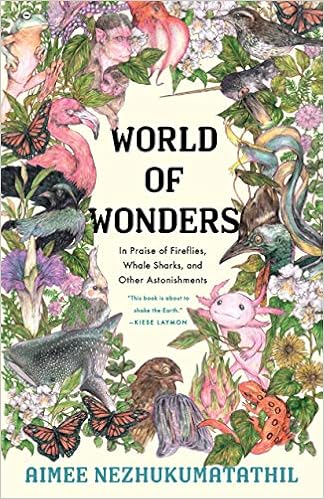
  • The Edge of the Sea – by Rachel Carson
  • Cosmos – shows by Neil DeGrasse Tyson & Carl Sagan

To See The World

I remember the first excitement at seeing the bubble maps of population vs GDP for countries around the world, and how they changed across a span of a century. If one could have their mind blown, that chart was it. Then, a few years on, I saw the TED Talk by Hans Rosling in which he explained Large Families/Low GDP Vs Small Families/High GDP, and this time the wonder grew.

In the intervening years, the power of big data and visualization grew by leaps and bounds, and there never was a dearth of graphs, or data analysis. Causal analysis, correlations, search engine optimizations, ad targeting, and numerous other concepts entered the lingo of the normal person. As early as 2012, Target could predict when a woman was expecting a baby even before her family knew.

Daniel Kahneman & Amos Tversky changed our perceptions by introducing the world to a whole new world of Behavioral Economics.

The Undoing Project: A Friendship That Changed Our Minds by [Michael Lewis]

So, when I picked up the book, How I Learned to Understand the World, I thought I would find about more interesting statistics about the world, but I was in for a pleasant surprise.

In the book, How I Learned to Understand the World, written by Hans Rosling and his daughter-in-law, Anna Rosling, it is Dr Hans Rosling’s journey that is written. The book isn’t written in the style of can’t-put-it-down. Instead of a compelling narrative that is keeping one’s interest, it is the genuine interest in the human being who was instrumental in changing the way we think of global health and economies. His journey to help humankind starts off with being a doctor in a impoverished nation, but moves on to much more than that. This is an inspiring sketch of what is possible when we think outside the box. That varied interests and knowledge-seeking is never wasted: they truly do come together in myriad ways.

The book starts as most biographies do, with a character sketch of the good doctor’s parents, grandparents, and his modest upbringing in Uppsala in Sweden.

He goes on to study medicine, and then travels to lesser developed countries hoping to do good work. His perception of developing countries such as India undergoes a transformation as he studies and travels there. It is here that he gets an appreciation for public health. The Indian Government at the time was battling one of the largest public health initiatives of the time ( possibly polio vaccinations – I forget). It is a humbling experience for him. He realizes, for instance, that medical facilities were not as backward as he assumed, medical knowledge was quite on par, or better, where it was available. The true problems were scale, population and outreach. 

After his return to Uppsala in Sweden, he goes on to begin work as a doctor in Impala. Where is Impala? Nacala? The joy of studying a map for these places is half the joy.

Here, in the coastal region of Nacala, he settles into his work as a doctor with his wife and children. Faced with less than ideal facilities, low budgets, and even less trained people to work with, he slowly learns the areas in which he can make a difference. He learns the importance of cultural awareness, and his humility for people’s knowledge and way of living, helps him reach the people he is attempting to serve. Without this realization he might never have been able to understand the devastating Konzo (‘Konzo’ means tied leg referring to the paralytic symptoms) disease that was paralyzing children in rural areas.

His work in Nacala, and his researches around the paralytic disease, konzo, led him to a life in research after his medical practicing days. The cassava plant is a staple diet in these areas. The cassava root is treated to a long, and arduous process of preparation before being made fit for human consumption. For example, the cassava is dried in direct sunlight for more than 8 weeks, to remove bitterness coming from a cyanide like substance that causes partial paralysis in human-beings (The long process is usually sufficient to remove the amounts of cyanide, but during times of drought, the plant produces more of this chemical content). Dr Rosling was the person to identify this link between the food process and the paralysis in his patients, and it was because he made the effort to understand the way of life in these areas. In times of food crises, the cassava plants are the only source of nutrition, and the results are devastating for those affected: their disability spiraling them further into poverty.

His ability to reach dictators, elected officials, and private industry for the sake of public health is remarkable.

His book, Factfulness, is the next one on my list to be read. In this one, he outlines the state of the world in terms of actual numbers. Is our world as bad as we think it is, or are we progressing better than we give ourselves credit for? I am waiting to read this one.

Factfulness: Ten Reasons We're Wrong About the World--and Why Things Are Better Than You Think by [Hans Rosling, Anna Rosling Rönnlund, Ola Rosling]

A Dip into another Dimension

The July 4th long week-end is always a special one. It comes panting along after the first half of the year has whizzed past in a blur of life. The northern hemisphere goes on as it always has with winter transforming into glorious spring that gradually melts into summer haze.

School finishes with a flurry for the children and their long, luxurious summer holidays are there to stay, while those of who belong to the sterner corporate world have no such long, idle, ideal, vacations to look forward to. But the infectious joy of doing nothing is catching, and by the time this long week-end rolls around in the summer, there is an itch for the magical that is too strong to ignore.

So, we gave in. Going in to the long week-end, I took a long resolute sigh to not work over the weekend, and what was more, I kept my word. I only worried about the deadlines, and the nagging problems  a few times. For instance, I firmly pushed away worries about work when I was trying to be an otter, when I was gazing marvelously at the anchovies swimming beautifully in the forests of kelp, and while taking a long deep sigh at the deer grazing by a pod of pelicans in a lake nearby. 

We started the week-end to a marvelous romp to the library in which I picked out books like a hungry child at the candy store. I sat that evening looking contented and happy after a long-ish bath and read one children’s book after another. I admired Maya Lin’s Vietnam War Memorial, I sat up and had a couple of mind-blowing life’s lessons from Seussisms by Dr Seuss, while admiring the grit and tenacity of Helen Keller and her marvelous life with her teacher, Anne Sullivan. 

Helen Keller’s writings about absorbing the life around her was truly fascinating.

The next day, we set off to peek into another dimension altogether. It has been almost 2 years since we visited the Monterey Bay Aquarium thanks to the pandemic. But this week-end, in our resolve to make it magical, we went over there. You do have to get an appointment slot now, but once inside, all of the old magic stirs in your heart, and you feel lost without fins and scales.

I remember harking back to the book, Flatland by Edwin Abbott. Technically, watching the sea creatures in an aquarium setting does not constitute traveling to another dimension, but it feels like it. Every time. The tentacles of the octopus, the slow mesmerizing motion of the jellyfish, the all-encompassing tales of the ocean whisper and roar with every peek.

One instant, I remember looking at the manta-rays and the hammer-head sharks scattering the schools of fish as they lazed around their huge tank, and wondering where the turtles were, when a large one swept past me. Turtles aren’t particularly fast, but the wonder and excitement of seeing one swimming that close is enough to get your adventurous heart all a-swishing. 

Reading the assorted jumble of books this week-end, combined with the therapeutic effect of a peek into oceanic life, constitutes a dip into another dimension in my book, and I wish it with all my heart for all of you.

For as Helen Keller says:

The best and most beautiful things in the world cannot be seen or even touched – they must be felt with the heart.

Helen Keller

Books:

Moving Tales : Home Truths

The past few months have been a blur. We moved into a new nest, shaking years of closet accumulation and shocking spiders into action. As I sat surveying empty spaces, I was left with a vague feeling of unease and harking back quite unnecessarily to the times of our distant forebears of hunter gatherer times. Imagine uprooting everything every few months to find greener pastures, food and water sources, not to mention the task of building and setting up homes each time.

The movers came in, and I remember thinking how 3 of them could move a whole house within the promised time, and do we really need such a large truck?! 

Trust providence to teach me humility.

* The three men did a marvelous job. Boxes that I thought were difficult to budge, they inserted a lever like object under them and lifted them up and down the stairs in no time at all. What was it that Aristotle said? Give me a large enough lever and I can move the world, or something to that effect?

I just looked it up, it wasn’t Aristotle but Archimedes apparently. It all adds up now – taking baths and measuring displacement, using levers to move the earth. 

Give me a lever long enough and a fulcrum on which to place it, and I shall move the world.

Archimedes

Well, that seemed to be the motto for these 3 people. Had I passed them on the streets I certainly would not have estimated them capable of moving 100’s of pounds of books, clothes, utensils, furniture, knick-knacks etc this efficiently. The previous night, the husband and I had tried moving an old couch out of the way. By the time we were done, some bones seemed unhinged, we had fought prettily on how to align the direction of the offending item, placed the top of the couch on a toe while the husband’s grazed his fingers against the wall, and we had put on a free show for the neighbors who gathered outside to watch, and helpfully give us directions.

So, I prepared myself to be doing just that.You know? Standing around helpfully, and shouting out directions on how to move things efficiently. I felt I would do very well, on such things.  

The men arrived and I asked them if I can help with this and that. They looked at each other, shrugged as if to humor a child, and sent a silent plea to the English speaking member of their crew, who took charge admirably. He told me that they can manage, and if I could let them know which areas needed to be moved, and to specify the order of things, that would help. I beamed and showed him everything while the other two set to work. 

I must say, this strategy worked very well. For I had planned to tell them to start with the kitchen and work their way upwards. While I was showing the E.speaking man the kitchen, the men thumped upstairs, and came down bearing such a large consignment of boxes that I clutched the passing trolley for support. 

Well, a hint is a hint. I took mine, and took to watching the move with wonder rising.  I stood twiddling my thumbs feeling a child being given crayons to help pass the time. 

* Did we need such a large truck?

I remember playing one of those carnival games where you win a stuffed doll, or a box of marbles for estimating this and that. I once won a spongy duck at this, and that gave me a confidence not entirely rooted in ability. As it turned out, that truck was not just full, but I ended up making a baker’s dozen worth of trips in my minivan type of vehicle for days afterward to fetch the remaining things. This, in spite of the fact that we got rid of most of the old furniture. 

Now, our hunter gatherer forebears had neither trucks, nor fancy gear. Could you imagine moving every season? I shuddered at the thought, blessed the accumulated wisdom of mankind over the ages and blessed the generations that learned how to work the land, and converted our lifestyles. I did not so much bless the generation that figured out mass production, for it was clear I was reeling from the effects of that one. All in all, I think sapiens have come a long way.

I will always look on a lever with reverence from here on. That night when I soaked in a bath I smiled at the brilliance of the man who figured out how to calculate the displacement from such a simple act almost 2500 years ago. In the 10,000 years of homo-sapiens, how many simple acts, and flashes of brilliance are we benefiting from?