Moonbeams in the Morning

The morning alarm trinkled: Dawn’s misty summons. I got up, wondering why the nights passed so quickly, hoping for a little more precious sleep in the mornings. I stepped out of my bed and gingerly peeked out the window. Dawn was doing the same thing – trying to sleep in a little more, while the moon shone high above the tree tops, bathing the surrounding clouds in a magical shroud of moonbeams. The dew drops on the trees glistened in the same benign light. I stood there shivering a little for the night temperatures had dipped, and there had been a mild drizzle.

IMG_3869

The moon is there every night, the sun rises every morning, and yet the moments of quietly standing there before the hustle and bustle of our days started made me appreciate everything a little more sharply. When the son woke up, I held a finger to my lips not ready to start talking just yet, and made him peek out at the fine moon too. His eyes widened a little at the beauty of the morning, dew drops, trees, clouds and the moon. He chattered in his bright tones that sent the waves of sleep flying from him, “Did you know? We may not be able to enjoy the view of the moon for very much longer?”

“Why?” I asked in spite of myself.

“Well… we are already working on building colonies on the moon. Soon, the moon will be full of houses just like ours, and then who knows how the moon will look from here?”

“Who told you that?”

“No one!”

“Okay….where did you read that?” So much for quiet mornings bathed in contemplation.

“In the Time for Kids magazine. It seems we are already planning on moving there.” he said a tinge worried that I hadn’t received his original memo in my sleep addled state.

“Well…for all the things we have built on Earth, from outer space, it still looks beautiful you know? Maybe it will be the same for the moon. Although, I am not sure I am happy with the idea of looking in on someone’s home like that. Wouldn’t it be creepy?!”

He laughed.

I was reminded of the essay by Oliver Sacks in the book, Everything in its Place: Who Else Is Out There?

everything_place

In it, he starts with his thoughts on the book, First Man on the Moon by H.G.Wells.
Anybody Out There?- Oliver Sacks essay
One of the first books I read as a boy was H.G.Wells First Man on the Moon. The two men, Cavon & Bedford lie in an apparently barren and lifeless crater just before the lunar dawn. Then as the sun rises, they realize there is an atmosphere – they spot small pools and eddies of water, and then little round objects scattered on the ground. One of these , as it is warmed by the sun, bursts open and reveals a sliver of green.’A seed! “says Cavor, and then, very softly, says ‘Life!”.They light a piece of paper and throw it into the surface of the moon. It glows and sends up a thread of smoke indicating that there is oxygen.
This was how Wells conceived the prerequisites of life: water, sunlight (a source of energy), and oxygen. “A Lunar Morning” was my first introduction to astrobiology.

While it is interesting for us to dream of conquering alien worlds and expanding our footprint with habitable planets, such as K2-18b circling a red star called M Dwarf; it is also highly interesting to see that even on Earth that is our original home, we require a very specific set of circumstances for our life to thrive. We need our oxygen levels to be exactly right, our carbon dioxide levels to not rise too much, we need our microbiomes to be in a particular state of harmony with the larger ecosystem.

Read: Good Food Mood

Take for instance, this excerpt from cosmonaut Alexei Leonov – the first man to walk in space for 12 minutes. Excerpt :
“I decided to drop the pressure inside the suit … knowing all the while that I would reach the threshold of nitrogen boiling in my blood, but I had no choice” Leonov said

I enjoyed Oliver Sacks’ footnote, for in one sentence, it reconciled both the resilience and delicate nature of our entire species.

“If Wells envisaged the beginning of life in the The First Man on the Moon, he envisaged its ending in The War of the Worlds. where the Martians, confronting increasing desiccation an loss of atmosphere on their own planet, make a desperate bid to take over the Earth (only to perish from infection by terrestrial bacteria). Wells, who had trained as a biologist, was very aware of the both the toughness and the vulnerability of life.”

How many species have left behind their fleeting impressions on the cosmic playground? Our own are laughably recent. Will the Quod-liop-tukutuk-sfaunusaurus call us by the same name when they dig up our remnants millennia from now?

Books:
The First Man on the Moon : H.G.Wells
War of the Worlds : H.G.Wells
Astronaut Alexei Leonov: First Man to Space Walk
Everything in its Place : Oliver Sacks

The Animals Within


The evening was a beautiful one. The children played looking like little angels in the glowing sun, and I threw affectionate glances at the noise in the playground.

I was mooning about the streets admiring the shabby looks of late summer. The same hills that looked brown and uninviting in the distance during the day, now looked ravishing bathed in sunset’s golden glow. Little specks of clouds in the sky were blushing to different degrees. The purple, red, orange and pinks poufs flicked about looking snippy and sharp. The oleander trees and the crepe hyacinths lining the streets looked prettier than ever before.

The approaching week-end seemed inviting, promising in its possibilities: my outlook was cheerful; my spirits soaring with the multi-colored clouds up there; and no must-dos competed for attention in the old brain.

T’was after a little growl came from within that I stopped to wonder what was amiss. I had completely missed the making-dinner task at hand, and the growl was reminding me, that I had not just 1 growl from my stomach to contend with, but the whole family’s as well. The husband trundled in, the children trooped in to say hi, and I whisked them all off for a dinner outside.

‘Forgot to cook?!’ cackled the teenaged daughter, looking indulgent and proud that I was not being the conscientious cook, and filling her plate with healthy muck. “Didn’t the sunset fill you up?”

“It filled me spiritually my dear. I could not be fuller!”, said I patting my heart, “but the stomach still asks for its due, Alas! “ I said remembering a poem my mother-in-law often references about what an irascible taskmaster the stomach is. I always smile at the wisdom of the poem. Loosely translated, it means
“Oh stomach!
What an irascible creature you are!
I ask you to eat a lot at one meal, and you rebel, and push back saying you are full.
So, then I ask you to skip a meal, but that too wouldn’t do for you.
What a slave to your demands have I become?
It is very difficult to live with you!”

So, off we went to a Chinese restaurant in various states of hunger.

This is one of those places that believes in keeping you engaged while they prepare the food for you. In front of each was a sheet of paper containing the Chinese Zodiac Animals and their characteristics. We started off in typical fashion:
You are a monkey!
Really? A snake – ha!
How could you be a tiger?
I don’t want to be a pig!

For those who moon about on Friday evenings without considering the demands of the stomach, here is a tip: Don’t! Friday evenings beckon all mooners-about, and restaurants find themselves busier than usual that day. As we sat around with hunger gnawing at the insides, the sheet of paper telling us about our characters based on the year we were born in looked inviting. Soon, we started tabulating and cross-referencing the listed characteristics against the personalities in the family.

It is an interesting exercise, and really makes everyone stop and pause and think about oneself. There are characteristics that the whole family gave a miss to. There were some that we hoped we did not have, but found we did. There were others we hoped to have in a higher degree. The tabulations were derailed every now and then with questions such as “Why are hippos not there in the Chinese calendar?”, After going into habitats and biomes with glaring holes of knowledge, seeing as none of us had ever to China, we got the animals back on track.

The resulting diagnoses has us giggling uncontrollably:
“You are most like a rabbit, but also have the tongue of a dragon, and the heart of a pig!”
“Snake hissing and pouting maybe, while galloping like a horse, and snoring like an ox.”

It turned out that we churned out more fantastical creatures in that half hour than a whole mythological genre could in a book. “Imagine if these creatures were sitting in us, wouldn’t that be something?” I said.

inyo_20q

Humanity’s capacity to imagine strange and wonderful creatures has always been remarkable, though there are precious few creatures left for us to imagine. No one is bringing another Clara to our midst any time soon.

Clara the rhinoceros, was brought to Europe on a tour in the 18th century. No one had yet seen any of the creatures of the East, and had not even heard of such an animal. Clara became an instant darling of the masses – her gentle demeanor, her love of oranges and her sheer size endeared her to all those who had the privilege of seeing her. I can well imagine the wonder and curiosity such a creature brought to human society, and the number of children in whom the wonders of the natural world was rekindled. How many Gerald Durrells, who imagined the beautiful world of their family and other animals?

500px-Clara_1749_Oudry.jpg
Image title
Rhinoceros Clara
Author
Jean-Baptiste Oudry
Copyright holder
PD

Today, we silently add more and more creatures to the endangered species list, watch in alarm as forest cover disappears and wait for magic to happen in our lives. Anthropologically, will we hear the news of a Middle Earth tucked away somewhere with hundreds of majestic creatures again?

Maybe one day, our space explorations will yield something. Till that day, we shall have to content ourselves with imagining the various creatures and creature traits within us.

Books:

Clara the Hippopotamus – By Emily Arnold McCully

My Family & Other Animals – By Gerald Durrell

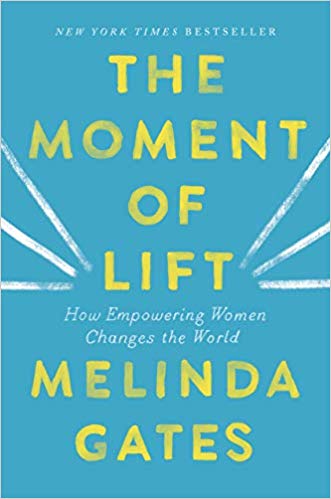
The Moment of Lift – By Melinda Gates

About a decade ago, a couple of colleagues and I were having a lunch time conversation that veered towards those you will like to emulate and meet in your lifetime. As expected the list was full of celebrities, billionaires, eminent scientists and some folks, I had not heard of before. Some of them wanted to meet someone already dead if possible, and others chose people whose fields I found interesting.

When it came to my turn, I said, “Melinda Gates!” without hesitation as if the answer had been there all along just waiting to be asked. I was somewhat taken aback at how sure I was of the answer. After all, I had not given much thought to the question before, and I admired many people from different walks of life. The work of Bill & Melinda Gates through their foundation – understanding societal issues with an empathy and energy that shot them to the top of their fields in Business, is a real-life fairy tale that we are blessed to see unfold in our lifetimes. But there was more: I was inspired by her. It must not be easy being the wife of a world renowned personality and still hold her own, working to invest their considerable time and energy to making the world a better place. This, along with raising 3 children of their own.

Over the following years, my admiration for the couple has only increased. Like many others, I look forward to their annual newsletter, I watch amazed as other billionaires follow their path of philanthropy, and I certainly look forward to their book suggestions.

When I saw Moment of Lift by Melinda Gates, therefore, it was a no-brainer to read the book. I was prepared to be inspired, but the book did more than that. I was humbled, inspired, encouraged, heart-broken, and hopeful – all within the 300 odd pages of her book.

The introductory chapter had me with the simple line, “Sometimes all it takes to lift women up, is to stop pulling them down.” – Melinda Gates

moment_of_lift

The book is peppered with the story of brave women across the world; heart-breaking tales of poverty and misogyny; and inspirational NGO’s that have helped make their lot better.

Whether it was the story of Malala that we have all heard of, or the stories of people like Ruchi, Sister Sudha Varghese, Kakenya, Mama Rosa or Hans Rosling, every one’s journey that has been included, I am sure, speaks for hundreds of others with similar backgrounds.

The empathetic and analytical nature of the Author shines through in the words, and I must say, I could not help feeling a Moment of Lift as I saw hope pierce through the pages, as she makes the effort to include marginalized people.

Albert Einstein wrote, No problem can be solved from the same level of consciousness that created it.

Melinda Gates’ book increases our level of awareness on several fronts. How her journey morphed from decreasing infant mortality rates to one of women empowerment; enabling family planning, access to health care and education is a powerful one, and I am very glad she decided to pen her growth and journey as a Philanthropist.

Classical Whale Symphony

Soft instrumental music was lilting in the background, and the sun’s watery rays were streaking in through the recently rain-washed window-panes. It was a beautiful week-end morning, and the kitchen was bursting with activity. The children were helping by putting away the dishes as noisily as possible. I was making a mess of things by changing the menu nimbly depending on what my refrigerator had. (Grocery shopping had taken a backseat the past few days and rations were thin on the ground)

The children were giggling about something when the teenage daughter said to hearty nods from her little brother. “By the way, what is this blasted toing-toing music you are listening to?”

“Melodious and uplifting for the soul, my dears. Classical Instrumental Music. Changes the way neurons interact.”

She shook her head, “Changes the way my nerves react!”and changed it to something that made my eardrums pick up the dishes and bang them viciously inside my head, while she chatted. Teenagers, I tell you!

“Whales like Classical Music.” , I said weakly.

“Well, I’m not a whale am I?” said she giving me a fish-like look- not the fishy look, the glassy gleam. I saw the piscean divergence in the gene and agreed. Though she could be, given her favorite doodles are themes under the sea

Art work by the Daughter:

Ever since I read in Carl Sagan’s Cosmos about Whale Songs, I have been enamored with the language of music, and the myths of the whales.

Quote from Cosmos by Carl Sagan on the Humpback Whale songs:
These vocalizations are complex. If the songs of the humpback whale are enunciated as a tonal language, the total information content, the number of bits of information in such songs, is some 10 to the power of 6 bits, about the same as the information content of the Iliad or the Odyssey.

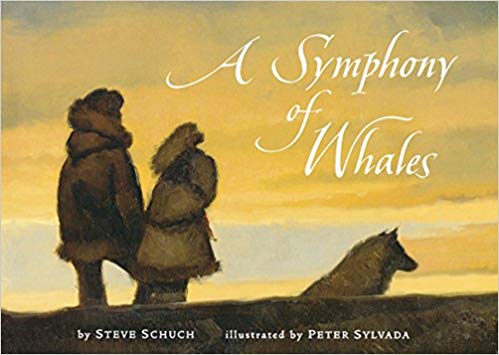
I was naturally was attracted to the book, The Symphony of Whales by Steve Shuch. It is based on a true story in a village near the Arctic circle. The onset of Winter had been swift, and a pod of whales found themselves iced in near Siberia. Unable to get out in time, the whole pod faced death in the iced-in waters.

symphony_of_whales

According to the book, a child, Glashka, who had always been blessed with the ability to hear Whale song heard them over the sound of the snowy storm. That night, they came to her in her dreams, and she knew they must be in trouble.

The next morning her father gathered the villagers and off they went to a sound over 30 miles away by dog sleigh looking for the pod of whales. It was true. The whales were in trouble. The pod had not anticipated the icing in of the waters so quickly, and were facing death. The villagers from all the neighboring villages started chipping at the ice to cut through the blocks of ice, so that the whales could surface and breathe.

“Look!”, said Glashka’s grandmother. “See how the whales are taking turns, how they give the younger ones extra time for air.”

The village elders had also radioed for help. A ship, an icebreaker, Moskva, was on its way to help.

The story, is based on a real incident that happened in the narrow Senyavina Straits of Siberia. Over 3000 beluga whales had been trapped by the rapidly freezing waters in 1984-1985. For seven weeks, the people of the Chukchi peninsula, and the crew of the Moskva risked their lives to save the whales.

The story does not end there. Once Moskva had cleared the way, the whales had to follow the ship out into the open seas, but they were reluctant to do so. The crew tried playing whale song to lure them. While they reacted to the music, they were not assured of human intent, and were still scared of the engine sound. They lurked in the waters.  Then they tried Classical Instrumental Music.

“The crew found some classical music. First, the sweet sounds of violin and violas, next the deeper notes of the cellos and, deepest of all, the string basses…and way up high, a solo violin…
Everyone fell silent as the music carried over the waters.”

That had done the trick. The ship’s engines started and the whales slowly followed the icebreaker out into the open ocean.

Would this heartwarming episode make it into Whale Song? That humans can be helpful too? I don’t know, but I do hope it makes it into our myths – maybe as one embracing a humane side to humans.

Dum inter homines sumus, colamus humanitatem – Seneca

As long as we are human, let us be humane

Read also:

Cosmic Nature of Living

Weaving The Sequins of Time

New York Times Archived Article on the Incident

Philosophers & Tinkerers

I picked up the book Black Hole Blues by Janna Levin partly because I was intrigued by the poetic title, and partly because I like reading about our dear Cosmos, and its many mysteries. The skies have given me endless joy, peace and continue to do so, even though light pollution in our suburban areas mean that we cannot see the stars, planets and stars as clearly.

black_hole_blues

Excuse me for a while, while I meander to a black hole of my own for a moment: I was appalled to note that a Russian startup intends to sell advertisements that can only be visible in the night sky. Are our products so important that we have to dwarf the shows the Cosmos puts up every night to sell toothpaste and whatever gawd-awful thing we contrive in our numerous factories? (I have a post clamoring and rattling in the brain waiting to get out on the number of contraptions that folks felt I must have, or I myself felt I must have, and now occupy valuable shelf-space in the home somewhere.)

Climbing out of the black hole then, the cosmos has given me endless joy and I indulge in dipping into its mysteries every now and then. What surprised me about detecting gravitational waves is the immensity of human endeavors. Theorizing and coming up with the supporting Mathematics to validate the concept is in itself a phenomenal achievement, but conceptualizing an experiment of such magnitude as to detect a stirring as faint as gravitational waves emanating when two black holes collide millions of light years away is astonishing.

As Janna Levin says, it is a project to fulfill a fool’s ambition.

“An idea sparked in the 1960s, a thought experiment, an amusing haiku, is now a thing of metal and glass.”
― Janna Levin, Black Hole Blues and Other Songs from Outer Space

The LIGO (Laser Interferometer Gravitational-Wave Observatory ) is astronomical in scope and dimensions. Janna Levin’s book takes us into the human dramas and the corridors of Caltech and MIT where much of this played out. While I did feel the flow and structure of the book could have been more crisp, and less about the human politics that plague undertakings such as these, it was nevertheless interesting.

As I read, I was amused at how humans unfailingly bring drama into our existence. At the altar of Science, many have sacrificed their egos, had their egos bruised, and have propelled or obstructed the flow of Science, but like a river it flows on and hopefully propels our understanding forward, not always cognizant of the applications of Science (One of my favorite sayings of Ursula K Le Guin:

When you light a candle, you also cast a shadow).

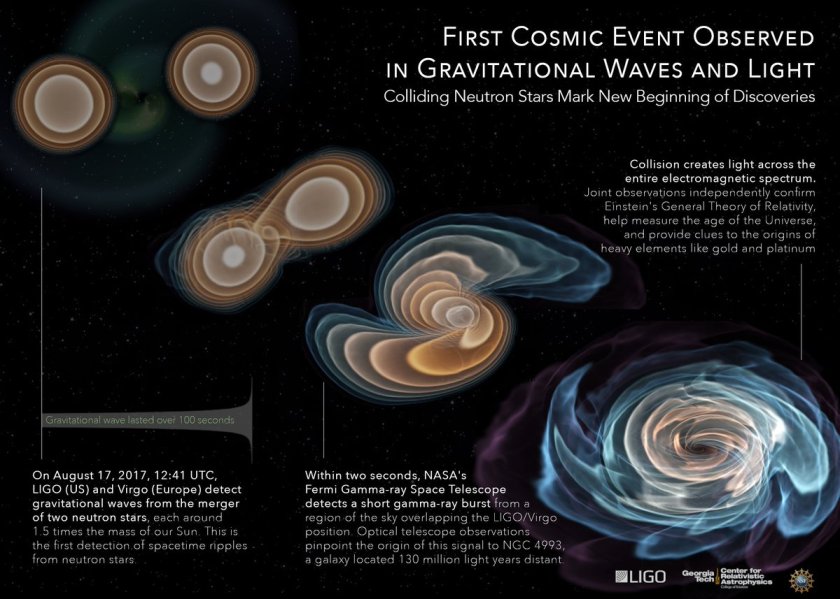
After the monumental setbacks and roadblocks along the way, it is a satisfying end to the book that the experiment finally paid off. Twice, it detected Gravitational waves as they passed through the Earth from the collision of two massive black holes millions of light years away.

ligo.jpeg
(Image tweeted by @LIGO)

We do not yet know how this will change our understanding of the Universe, and its applications, but we can be rest assured that both are underway. We have come a long way from the Sun God riding the sky every morning on his chariot, though I am reading a fascinating book on this very myth at the moment.

Human-beings are philosophers and tinkerers at the very core, are we not?

Also read: Cranes of Hope (Essay of the Value of Science by Richard Feynman with A Thousand Paper Cranes by Eleanor Coerr).

The Degree of Shoshin

I wonder sometimes how the brain works. I mean, some references make us link to something else across the bridges of time and space where no ostensible link exists. Was astronomy the link? But that seems weak given that I ogle at the stars every opportunity I get. Could the 12 degree landing of Insight be the link? But the slopes that my mind linked to were at a 11 degree incline. And we were very proud that our little corner of the world could provide just the right 11 degree slope too – that is why I remember the incline so clearly.

Ignorant men raise questions that wise men answered a thousand years ago. Johann Wolfgang von Goethe

Maybe it was something to do with the specific angle at which the Insight can land on Mars that brought back memories of a trip to the Radio astronomy center in Mutthorai in Nilgiris – who knows?  The radio astronomy telescope on the slopes of the Nilgiris was magnificent and awe-inspiring. It still is. I remember hearing that the Tata Institute for Fundamental Research (TIFR) had scoured plenty of slopes in India and this humble village was deemed just the right one to capture radio waves. It had the right level of incline(11 degrees), minimum light pollution at nights, and we were proud of our unassuming Nilgiri hills for providing such a marvelous slope.

By Own work – Ooty Radio Telescope, CC BY 3.0, https://commons.wikimedia.org/w/index.php?curid=7463023


I remember going to visit the center with the father one rainy afternoon during the monsoon season. We often piled onto his scooter that the kids had lovingly nick-named Street Hawk given it tore through the streets with a ear shattering noise, even if we could run beside it. (I often wonder how it must feel for someone who goes to India for the first time from a country like the US or Canada, and sees a family precariously making their hazardous way through the haphazard traffic – obviously uncomfortable, but looking joyous and confident. Even cars here seem so cranky – “departing lane, departing lane” it goes on like a parrot on caffeine. Fine – relax! Talk about sticking to the straight and narrow path – sheesh kababs.)

Anyway that is how we toured the Nilgiris during our school holidays. We would start out on a supposedly clear day, the brother standing in front, his feet making sure not to come under the brakes foot pedal, the sister on the pillion seat, and self squashed between the driver’s seat and the pillion seat, my face turning a ninety degree angle to make sure I could breathe, and off we would go on our adventures. Sometimes, our Street Hawk could not quite pull up the intense slopes of the Nilgiris such as the Katteri falls, and we would all good-naturedly pile off, let the pater go up the slope on 1st gear, trudge up there, and pile on again. What was life without these little pleasures?

street_hawk

Invariably midway through our trips somewhere, the skies would attempt a volte-face: the sun would dip behind the clouds, a brisk wind would start around us, and the first raindrops would start. Sometimes, if the downpour got heavy, we would shelter at a random farm or village and nibble into the ample snacks packed for the trip, and head out again after the fierce downpour stopped. The dubious weather reports then were listened to with the amusing attitude of one indulging a child, and if it all went towards building the weather reporters’ confidence, it was time well spent was the general attitude. Ours was a forgotten corner of the world, and we loved it just the way it was. 

Off I went meandering around the countryside when I should have been sticking to the Radio astronomy tower as usual. The point is, I remember thinking as a child standing on that steep incline with the monsoon winds buffeting us from all directions, struggling to stay upright, and thinking for the first time how we must be standing at all. We are spinning on a very fast ball after all, gravity is all very well, but what would happen if Earth decided to just let us go for one instant? It was a terrifying thought, I clung a little harder to the pater’s solid hands and redoubled my wonder at how we exist at all. 

That is the beauty of space exploration isn’t it? It rekindles wonder. If retaining wonder in our day to day living is the mark of a meaningful existence to paraphrase the German philosopher, it is no wonder that we marvel childhood with its fresh perspectives, and its great capacity for wonder. The beauty of #Shoshin

“The highest goal that man can achieve is amazement.” ― Johann Wolfgang von Goethe

We Belong on Earth – Part 2

One sunny day, I felt a surge of happiness to find the latest book by Khaled Hosseini, Sea Prayer. I heard it was like none of his other books, but just as poignant. The moment of realization came a moment after the surge of happiness – how could I be happy to find the book that drove home the sad truth of refugees – of that child whose dead body floating in the sea inspired the book?

Child name: Alan Kurdi

sea_prayer

Was I really ready to have my heart wrung out as I am sure it will be when someone as competent as Khaled Hosseini wields their pen on the sad plight of refugees? I picked up the book late that night, long after the moonlight had transformed the late summer landscape into a luminous wondrous land.

I always hesitate to start a book of such deep issues, and for good reason. I was in a flight once, and delved into my book. I was about halfway in when tears started streaming down my face. A co-passenger asked me if everything was alright and I pointed to the book, feeling sheepish, but she replied that she had cried after reading that particular book too, and I felt like I had met a kindred spirit. Like P. G. Wodehouse said, “There is no surer foundation for a beautiful friendship than a mutual taste in literature. “ .

The book was In the Shadow of the Banyan, by Vaddey Ratner.

in_shadow_banyan

Vaddey Rattner writes of the child trapped in the horrendous events of the Khmer Rouge regime in Cambodia. I said it before and I shall say it again: There never is an upside to War. The worst affected are the children, and we have no excuse to maim their psyches thus. I read the book more than 5 years ago, and yet it stays in my mind. Vaddey Ratner draws you into the human experience through the suffering so beautifully that words fail me.

The book made me realize what it must have been like for an old colleague of mine.

I remember the shock with which I realized she was a refugee from Vietnam. We were both heavily pregnant with our first-borns and often traded tummy-tales. We were hallway buddies. I wished her a Happy Birthday, proud of myself to have remembered, and she gave me a rattling wholesome laugh in response. Then, with her characteristic good sense, she told me about how someone took a look at her and assigned her an age when she got off the boat. “They said I was 5 then. Looking back, I see I was given 3 years of my life to live again. “

I did not know what ‘got off the boat’ meant at the time. I looked at her quizzically for she said, “Oh, because I was pretty sure I was 8 then, but I did not know English, and I did not know that when they pointed at me, they were estimating my age and they gave me a birthday too. With the war I was malnourished, bones sticking out, and I am short too, so I suppose I could easily be mistaken for a 5 year old when I came here. I don’t really know my birthday, so I just celebrate this day that was given to me. “

Over the course of our pregnancies, she told me tidbits here and there about how she had escaped Vietnam as a refugee and came to the United States.

The fast flowing rivers of my consciousness, combined with the changing people-scapes around me, meant that I thought about her every now and then even though I lost touch. I am fairly sure that she must be enriching the world around her somewhere. For her, this life was too much of a gift to throw away and not live and contribute to the fullest.

Who was it who said, that we affect the world around us simply by being, or some such thing? Just thinking of her gave me the courage to read Sea Prayer. I opened the book and was transported to the town of Homs in Syria.

Sea Prayer is more of a poem in the form of a short letter written from father to son. A few words is all that is necessary for him to take you into a grandmother’s hut where the child played.
“We woke in the mornings
to the stirring of olive trees in the breeze,
to the bleating if your grandmothers goat,”

IMG_0456
A sample of the artwork by Dan Williams

A few strokes of the brush is all takes for the artist, Dan Williams to set the tone for ‘The skies spitting bombs. Starvation. Burials.”

It is a very short book, and not like Khaled Hosseini’s other works, but it is a book that reminds you to think of the human condition. The book finishes on this note.

”Sea Prayer was inspired by the story of Alan Kurdi, the three-year-old Syrian refugee who drowned in the Mediterranean Sea trying to reach safety in Europe in 2015.

“In the year after Alan’s death, 4,176 others died or went missing attempting that same journey.”

Where do we belong? To Earth surely.

Read also: Do We Belong On Earth?

Do We Belong On Earth?

I envy these people who can quote things in passing with confidence. I have not that kind of eidetic memory. But I remember reading somewhere a few years ago that one of those great philosophers of yore, Socrates or Plato or one of their ilk, said something to the effect of the worst thing humankind has ever thought of was the concept of countries. I heartily agree. For what is a country boundary if not a line in the sand?

I was in a taxi a few years ago heading from somewhere to somewhere in the madness of Bay Area’s evening traffic. The driver looked at me in the rear view mirror and asked me if I came from India or Pakistan.

He then went on to say that he had just dropped someone who came from Pakistan. He loved the Biriyanis in the Indian and Pakistani restaurants. What delightful spices, he said and the conversation moved towards the role of spices in the world economy. He taught Economics in a small college in Greece before the country collapsed and he managed to move to the United States and he now drove taxis for a living.

While there are multiple things to spin out from this little interaction, I would like to draw the attention to a little thing said almost in passing. He thought India and Pakistan were one and the same, and I have often experienced the same sentiment and kinship whenever far away from the Indian subcontinent.

IMG_0280
Image from The Night Diary – By Veera Hiranandani

It has always been something refreshing to note – especially given the continuing tensions in the region ever since the partition in 1947. It amuses me and gives me hope when I see how Pakistanis and Indians bond over a common culture, similar culinary traditions etc outside the Asian subcontinent, but within the sub continent the tensions continue to simmer.

A friend had recommended Veera Hiranandani’s book, the Night Diary. One of the largest human migrations in Human History at the time took place during the Indian independence from the British Raj. The India-Pakistan segregation is fraught with gore, bloodshed and the unfathomable rivalry that can be brought about by politically divisive acts.

night_diary

The book itself is lucidly narrated – a twelve year old introverted child, Nisha, writes in her diary to her late mother as often as she can. She is lovingly cared for by her father, their paternal grandmother who lives with them and the cook, Kazi, who has been with the family for a long time. Her best playmate is her twin brother Amil.The mother, who passed away when the children were young, was Muslim, and the father is Hindu. It is heart-rending to read the way, the twins Nisha and Amil puzzle over what would have been the case had their mother been alive. Would they have to leave her and go to the Indian side?

“I had never wondered about being safe before. I just thought I was.”
― Veera Hiranandani, The Night Diary

I thrust the book in my mother’s hands to read, for I knew she would appreciate how cooking forms the bond between Nisha and their cook, Kazi.

Image from Wikipedia on Indian Spices:

Spices_in_an_Indian_market
This image was originally posted to Flickr by judepics at https://www.flickr.com/photos/43546466@N00/409841087. It was reviewed on by FlickreviewR and was confirmed to be licensed under the terms of the cc-by-2.0.

The spices as they pass through the hands of Kazi and how Nisha derives a sense of creation and wholeness is captured as only one who loves the art of creation can. The feel of the dals and the peppers in the hands, the smell of the saffron in the rice and the whole time in the background a tension is brewing, a rift simmering when one night it is upon them – the pressure bursts, and the little family has to flee.

“I needed all the feelings to stop boiling like a pot of dal and be cool enough for me to taste them.”
― Veera Hiranandani, The Night Diary

Millions of people fleeing Pakistan, and millions making it into Pakistan in the opposite direction. Mobs ready to inflict violence at the slightest opportunity.

War is meaningless, and it is particularly unfair to the children.

14 million people were displaced in those few months of turmoil and over 2 million killed during the partition. One line in the sand that suddenly determined belonging or the lack of it.

One would think one learns from these events, but look at the numbers.

In the world today, there are currently more refugees than ever before. The rise of populism and nationalism means that the situation is deteriorating everyday. As of Jun 2018, an unprecedented 68.5 million people around the world had been forced from their homes. Among them are nearly 25.4 million refugees, over half of whom are under the age of 18. There are also 10 million stateless people who have been denied a nationality and access to basic rights such as education, healthcare, employment and freedom of movement.

Screen Shot 2018-09-28 at 10.41.49 AM
Screenshot from http://www.unhcr.org/en-us/figures-at-a-glance.html – Jun 2018 figures

Source: UN Refugee Agency

We belong on Earth, do we not?

Fiction Inspire Non-Fiction?

While reading a good piece of fiction, I often wonder about the inspiration behind the writing.  Dune, for example, is a book that immediately lets you know the author must be a personality of prodigious learning. The ecological angle, I was delighted to read in the note by his son, had its origins in Frank Herbert’s work for an an Op-Ed on the Shifting Sands in Oregon. The government was toying with the idea of planting grasses that could help with stopping the sands from shifting and collapsing onto roads and rivers. 

Dune-Frank_Herbert_(1965)_First_edition

Quote: 

In 1957, Dad flew to the Oregon coast to write a magazine article about a US department and Agriculture project there, in which the government had successfully planted poverty grasses on the crests of sand dunes, to keep them from inundating highways. He intended to call the article “They stopped the Moving Sands” but soon realized that he had much bigger story on his hands

Dune is a modern-day conglomeration of familiar myths, a tale in which great sandworts guard a precious treasure of melange, the geriatric spice that represent, among other things, the finite resource of oil. The planet Arrakis features immense, ferocious worms that are like dragons of lore, with “great teeth” and a “bellows breath of cinnamon”.

Planetology is a marvelous word for taking in the intricacies of a life sustaining planet (Dune makes reference to planetologists for figuring out survival strategies),  and the effects of our consumption of finite resources. 

I would love to study Planetology.We know that we are stretching the Earth’s resources – National Geographic came up with a simple number: we are currently using 1.71 times Earth’s resources every year and it is increasing. The effects are everywhere.

A friend and I were discussing the lack of tree cover in a country like Iceland for instance. Blessed with enormous natural beauty, the lack of tree cover is quite unnerving. Everywhere you turn is green because it rains a lot, but there are no trees. Apparently, excessive logging first got rid of them, and replanting did not take root as intended for sheep grazing ate away the saplings and the seedlings before they had a chance to sprout. 

horse

This too is not a new phenomenon. World over there are examples of over-grazing that edged out forest cover( Ireland, England, Mauritius are all examples of how our lifestyles has altered the ecosystem drastically). In the book Golden Bats & Pink Pigeons by Gerald Durrell, the author is on a mission to collect endangered species from Mauritius so he can bring them back to the Conservation Center for breeding and releasing into the wild. He writes about Round Island and how the simple act of introducing goats, sheep and rabbits into the ecosystem by humans has eroded the tree cover irreparably. 

IMG_0210
From Golden Bats & Pink Pigeons by Gerald Durrell – Round Island

While reading this book, I realized the inspiration behind his fiction book, Mockery Bird. This hilarious fiction book, Mockery Bird – was based on a story doing the rounds in Mauritius surrounding the Dodo bird and the loss of certain trees. The knowledge gave me immense pleasure. How lovely to see the inspirations behind good fiction.


Just as fiction draws its inspiration from reality, reality too can draw its inspiration from fiction.

In the Dune universe, the planetologist, Kynes, shares the visionary dreams for the planet Arrakis – a vision outlining a glorious self sustaining future for the planet that will take three or maybe four generations to come to fruition. We can derive our inspiration from fiction and set ourselves on a similar path working towards setting aside half the planet for forest cover to reverse global warming, sustenance etc. (News item : here)


A Planet of Wizards & Prophets

I was reading The Wizard & The Prophet by Charles E Mann on a crowded train one evening, and a pair of young girls shared the seat with me. The name of the book is a highly appealing one especially to little girls, and it piqued their interest too.

One of them was probably in the 1st or 2nd grade, and showed a precocious interest in my reading material. Her curly hair was made into numerous tiny plaits, and her eyes shone with a curiosity that would make her teacher’s heart sing. Her mother’s heart though, quailed. She said, “Now…now don’t bother the nice lady there, let her get on with it. “ I looked up at the mother, and told her that I love reading to children, and though this particular book sounds pedantic when read to children, I did it anyway. It taught me never to under-estimate children – the child soaked in everything, and asked the most engaging questions.

wiz_prop

I saw a certain amount of editing would need to be done if I were to sustain the interest of a 6 year old. The book is a non-fiction tome going strong at 678 pages – pages richly adorned with facts and figures, and life histories of all the people involved. I had already been through about 300 pages, so I knew the interesting bits, I knew the bits where a child’s wonder can be kindled. For the rest of the hour, I told her about wheat strains, water tables, and climate change.

The Wizard & The Prophet is a marvelous title because it encapsulates the polarity of our thinking so beautifully, and in this sense, they are both required for us to thrive. The Wizard in the book is Norman Borlaug, who is credited with leading the way for GMO strains of wheat production that along with stalwarts in the field such as Dr M.S. Swaminathan saved billions of people from hunger and starvation. 

William Vogt is the Prophet, who during his study in the Mexican coastal areas observed how we are stretching our natural resources and the effects it has on things as far-flung as bird migratory patterns and climate. In many ways, he is the one who set up the first bells of Global warming and Climate Change. He is the Prophet.

Do you believe in Climate Change? asked the girl wide-eyed.

I told her I did not need to believe Climate Change at all, and the experiments were here to show me how we are changing the air around us, and I showed her the pages outlining the experiment where humanity managed to pin down Carbon Dioxide as the problem-maker in the first place. 

I cannot deny that global warming and climate change has always intrigued me. Carbon Dioxide only accounts for 0.03 % of the atmospheric gases, a remarkably small proportion for it to be causing global warming on such a scale as to change weather patters and cause severe climatic catastrophes, is it not? 

In The Wizard & The Prophet, the author outlines the experiments used in determining that it is indeed carbon dioxide that is the culprit and how our industries are directly contributing to its increase. The correlation between carbon-dioxide levels increasing and global warming followed. I found it a fascinating experiment and one that school laboratories can demonstrate I hope. 

Keeling_Curve
By Scrippsnews [CC BY-SA 4.0  (https://creativecommons.org/licenses/by-sa/4.0)%5D, from Wikimedia Commons
https://en.wikipedia.org/wiki/Keeling_Curve

(During the spring, there are dips because the Arctic tundra sprouts plant life and plants absorb Carbon Dioxide from the atmosphere. )

Looking at the worried expression in the child’s face, I asked her, Did she know what we can do to reduce the carbon dioxide?

Trees? she said, and I nodded yes.

I went on to tell her about the excellent example set forth for us by the Kenyans in The Green Belt movement, and how a person called Dr Wangari Maathai helped the Kenyans plant millions of trees over the past 30 years.

Planting the Trees of Kenya, by Claire A Nivola, The Story of Wangari Maathai

Planting the trees of Kenya - Wangari Maathai
Planting the trees of Kenya – Wangari Maathai

She glowed at the simple solution thought of by Dr Wangari Maathai, but her stop had come, and she stepped off the train with her mother who was now listening to her daughter talk to her about The Wizard & The Prophet.

As I reflected on the chat with her, I realized that the narrative around Climate change and Global warming is quite confusing.  It is no wonder that the child framed her question as – “Do you believe in Climate Change?” The prophets in this case are doing their job, but the question of : “How does one realize when an extreme storm or flood is part of a natural occurrence and when it is a direct result of our tampering with the delicate balance of the climate?” is a vexing one.  

The Prophets have sounded the alarm bell often enough, and the Wizards have yet to think of a sustainable solution to it. But there is hope: I am glad to read that China proposes to plant and nurture a forest the size of Ireland to reduce carbon emissions and improve air quality. 

China to create new forests covering area size of Ireland

cropped-shasta_forest.jpg