Mooning About
“Come on! You need a light jacket, but we aren’t going very far.”
“I know we are going to see the moon! But can’t we just for a few minutes and then we can see it from here? Instead of going around the bend, and behind the trees, and through the gap in the houses on that lane?”
“Yes I know. But if you wait a bit, you’ll see the silver moon, if you come now and dance through everything you just said, we’ll see a golden moon!” I shivered a bit at what was waiting for us at the end of the street. Even though I had just seen it.
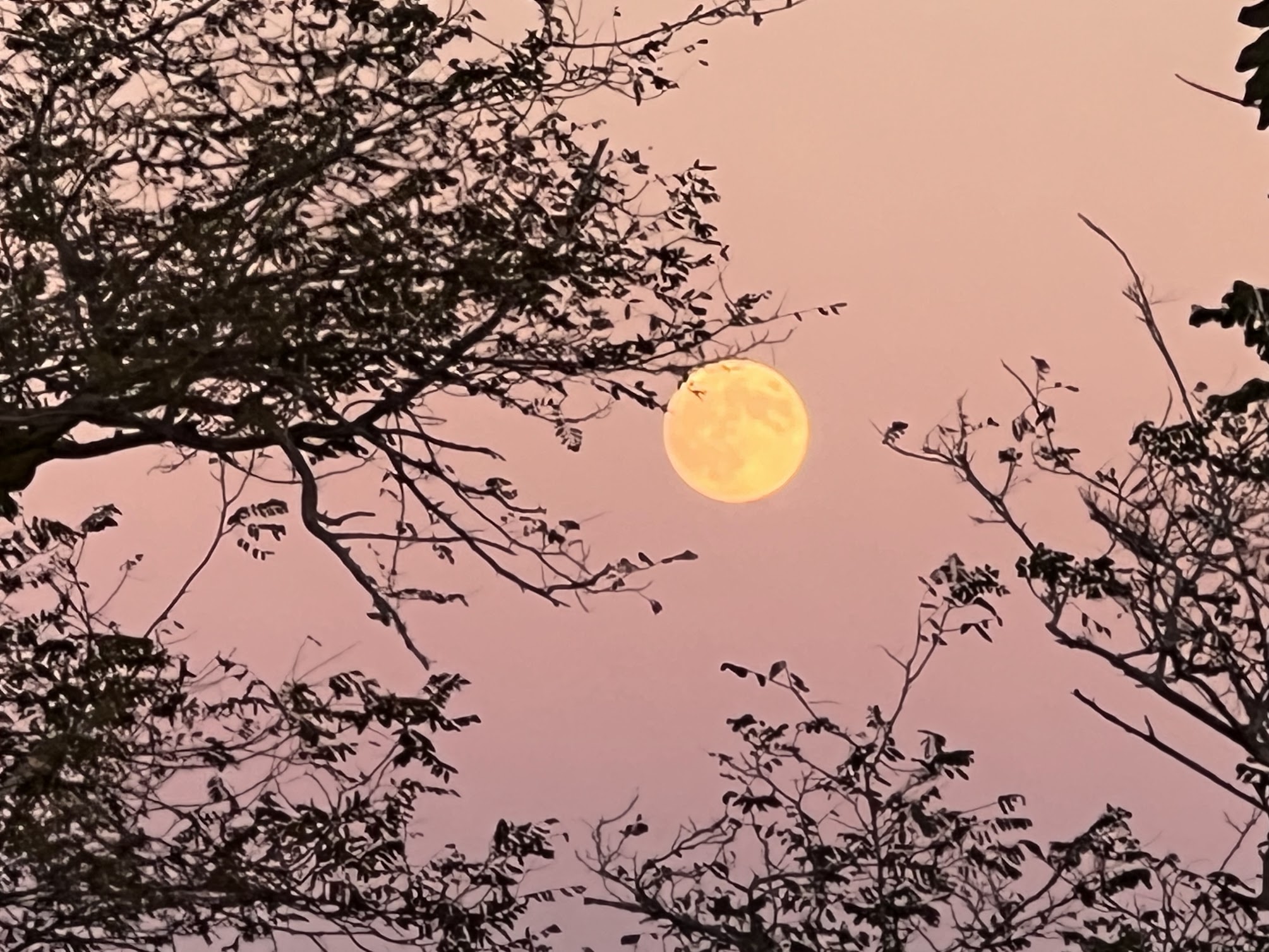
“Oh wow!” the words were yanked out of the son’s mouth before he could stop himself. I understood that feeling. A golden full moon on a cool summer evening is truly mesmerizing.
We stood there for a few moments just drinking in the magic from the golden moonlight. “Want to go for a short walk just looking at the moon?” I asked, and he nodded, not willing to pull his gaze away from the mystical golden orb. So, we meandered through the streets, our necks upturned towards the magic of the skies instead of looking where we were going.
We entered the house, shining like full moons ourselves, a few minutes later, flushed with the cool air and the luminous light of the full moon.
“We’ve been mooning about outside. Get it? Get it?” I said to the husband who had a slightly exasperated look on his face.
Oooo wwww ooooo!
“Oooo wwww ooooo!” Werewolf! Full moon tonight!” I said, and the pair of them rolled their eyes.
But that got me thinking, why was the January full moon called the Wolf Moon and the July full moon called the Buck Moon?
It turns out Gemini is just the thing to ask. So, here you go, fellow selenophiles!
Full Moon Trivia
- January: Wolf Moon, named for the howling of wolves often heard during this cold month.
- February: Snow Moon, reflecting the heavy snowfall often associated with this month.
- March: Worm Moon, named for the earthworms that emerge as the ground thaws.
- April: Pink Moon, named for the pink wildflowers that bloom in North America.
- May: Flower Moon, celebrating the blooming of flowers.
- June: Strawberry Moon, marking the time of strawberry harvest.
- July: Buck Moon, named for the new antlers that begin to grow on male deer.
- August: Sturgeon Moon, named for the sturgeon fish that are most readily caught in the Great Lakes.
- September: Corn Moon or Harvest Moon, marking the time of corn harvest and the start of the fall harvest season.
- October: Hunter’s Moon, a time for hunting before winter sets in.
- November: Beaver Moon, when beavers begin to prepare for winter by building dams.
- December: Cold Moon, reflecting the cold winter temperatures.


 Nourish-n-Cherish