A disruption of ducks

There is a curious rhythm to the days after our India trip. The usual things still occupy our time – school, work, projects, commutes, the changing landscapes of nature, and all the rest of it. Maybe it is the throes of a winter season, or the fact that after the intense ceremonies of the beginning of the month, the quiet is disconcerting, but we felt on edge.

Like the hedgehog, we found ourselves peeking out of our hidey holes to see if life is normal, and finding that it is, were somewhat taken aback. Do you mean to say that we must plan to prune the roses? 

Oh well, all right. If you insist, I suppose.

One morning, the son and I finding ourselves at a loose end decided to take a bike ride to dissipate some of this energy. img_9439

“Amma! Look – I just saw a hedgehog peep out.”

“Oh nice! It is close to February, so it must be checking.”

“I didn’t see if it saw its shadow though – we were going too fast!” said the son.

It was a lovely day – the feel of wind against our cheeks, the gentle cumulus clouds overhead, and the bay hosting a large variety of birds. We stood there taking in the beautiful sights when hundreds of birds took flight all at once, and then, as though nothing had happened, flocked back to their original place a few moments later. The son and I had a number of ideas as to what caused the disturbance, each more juvenile and silly than the next, but left us cackling all the same. 

No one could deny the beautiful shared experience of the disruption – the birds heaving in one smooth cacophony and the humans ashore fumbling quickly to capture the sudden movements and failing miserably. 

It reminded me of the book I was reading the previous day, On Duck Pond – By Jane Yolen Pictures by Bob Marstall.

on_duck_pond

As I walked by the old Duck Pond

Its stillness as the morning dawned

Was shattered by a raucous call:

A quack of ducks both large and small …
img_9453


An understanding quickly dawned:

We’d shared a shock, and now a bond

And I was feeling very fond,

Of everyone on old Duck Pond.
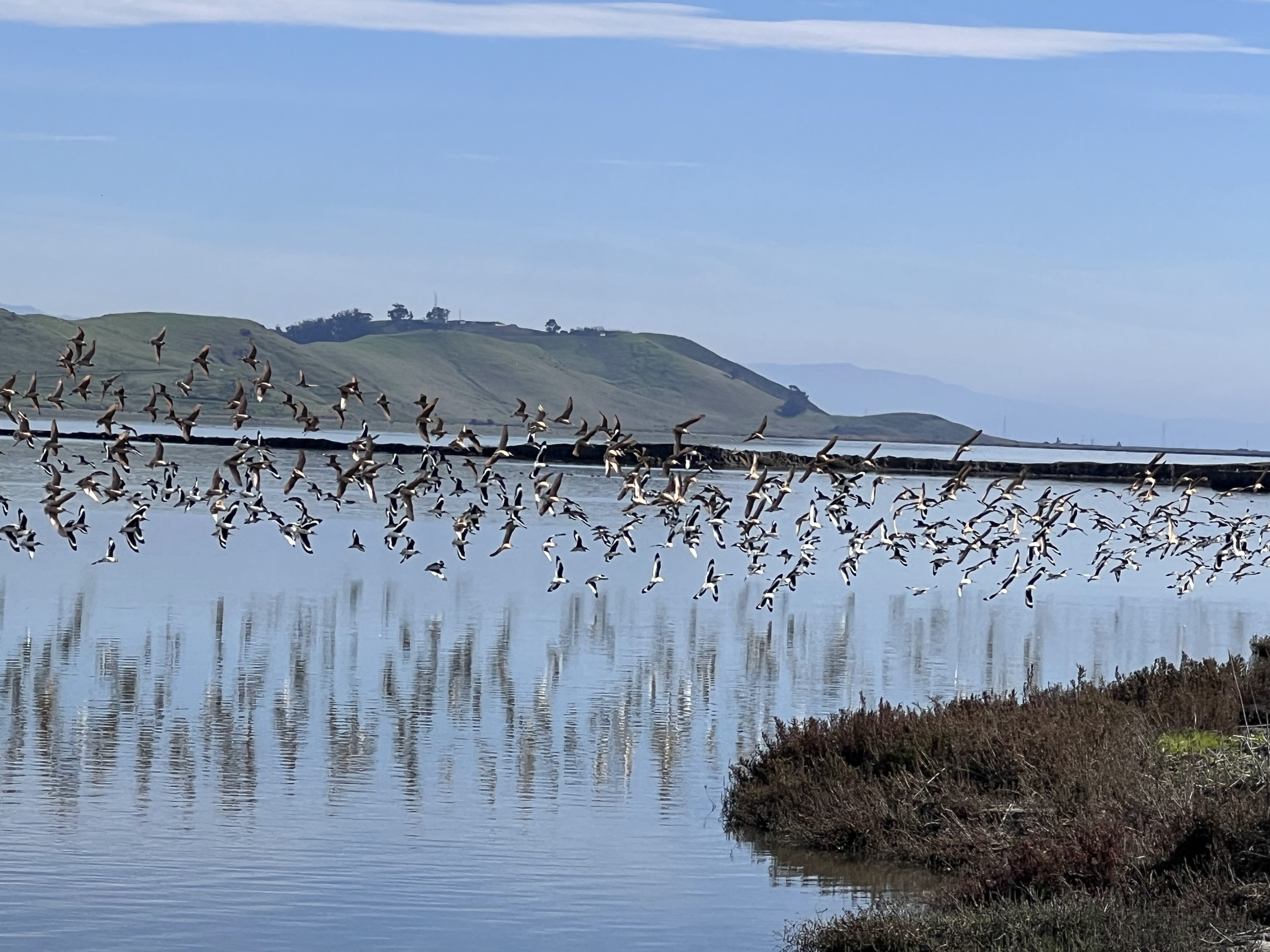
As always the day out in nature surrounded by the fabulous clouds, the sun’s rays, the beautiful lights of the ocean, the stories the son and I swapped on our ride, the birds, first signs of spring in the wildflowers by the bay, had weaved its magic, and we returned home refreshed in mind and spirits.

img_9442-effects

P.S: A group of ducks, as Jane Yolen mentions in her book, are known by a number of names:

A raft of ducks

A paddling of ducks

A badelynge of ducks

Also, bunch, grace, gang or team.

🐳 Whale Grandma or Toucan Grandma? 🦜

I showed the son a text message capturing a conversation between his cousin and his grandfather, Balu Thaatha. Balu Thaatha has the unique capacity to morph into a 5/10/20/60/80 year old depending on his audience’s mental acuities and potential for mischief making and taking.

“I found your Hero pen – therefore, I am a hero.”

“Thaatha! You are just a zero, not a hero!”

I felt for the old man.

“Serves Thaatha right!” said the son rolling his eyes. 

“Why?! Poor man is not a zero! Though without zero, civilization will be a zero.” I mused and the son laughed.

“True! True! I meant – serves him right to be at the receiving end of this. He thinks he is Dr Seuss amma. He told me the other day that if I eat jhangri, I will not be angry, as when you are hungry you get angry! What even is Jhangri?” said the fellow.

“Diabetes in squiggles!” I said and the pair of us guffawed. 

Later that day, we were going through the book, Grandude – by Paul McCartney. The Beatles star is quite obviously a fun and dedicated grand-father (grandude) and his book outlines the adventures he has with his grandchildren in their quest to find their grandmother, nan-dude.

We fell to discussing the son’s own wonderful grandfathers again: Raju Thaatha & Balu Thaatha. Both loving in their own ways, and exhibiting a pick-and-choose of characteristics between them: sincere, playful, caring, hearty, engaging, mischievous,  witty, booming, quiet, talkative, reserved, humourous, erudite, and so many more.

“You will be a wonderful grandma – like a pirate grandma or a nan-dude!”, the son assured me. 

I glowed – and said, “Really? Would I be a ninja grandma or a butterfly grandma?”

“Yes – and also a toucan grandma, and a whale grandma, and a tree grandma. You will be a fun grandma. Don’t worry – I have confidence in you. “ said the son. He was licking an ice cream with obvious relish, and no doubt the fact that he was allowed ice cream on a cold day by his indulgent mother colored his opinion of me. 

“Marvelous books, isn’t it? Really – I am glad there are books outlining the special grandparents-grandchildren bond. I wonder whether there are good songs, and dances showing that.”

“I am sure there are. Just need to look.” he said stoic as ever. 

We were discussing the books: 

Both books are such joys to thumb through. Light-hearted and joyous, they highlight the beautiful bonds between grandchildren and grandparents.

⌘ The Essence of Life ⌘

The Fabric of the Indian household

One of my half written posts from one of my earlier trips to India touches upon the heroines of the Indian upper middle-class  household – the cooks and maids. The fabric of the Indian household is maintained through a network of maids – 3 or 4 of them, who swish through the house at various points in time, professionally taking care of the household chores, and keeping a human touch to those who crave for it. I know the aged parents looked forward to a few words with them: a smile, a question, or a comment.

As much as I savored the solitude, and quiet of nature back home in the United States, I understood the tug and pull of humanity in the fast-paced life of the Indian subcontinent, as well. You were never truly alone, even for a few hours, in India. There were maids, delivery men, sweepers, cleaners, neighbors in close proximity, cooks, who were all as much part of one’s routine as the immediate family themselves. 

“Did Appa like the avial?” the cook would ask as she entered the house, to which the father-in-law would reply cheekily that it was nothing compared to his sister’s avial. We all know, there is no point talking when his sister’s avial is raised, and she does too. “Ask your sister to make it then – look at him!” she’ll say looking to the mother-in-law for support and she would jump in with glee.

Read also: The Simple Grocery List

MrKeshav- Open Page - Groceries

Picture Credit: Mr Keshav, The Hindu, Open Page, on the article, A Simple grocery list

The whole thing would last maybe a few minutes from start to finish but this sort of camaraderie punctuated the day at regular intervals, and it provided them with much needed human contact. 

A few days before he began losing consciousness, he pestered his wife to buy their maid (their maid from a few years ago)a cell-phone, as she had told him hers was broken, when she’d called to see how he was doing.  

The Essence of Life

He was not a perfect man, and yet he managed to get people to only remember his loving side, his gentle humor, and his willingness to help. I cannot find the exact quote now, but when asked how he produced such marvelous tales of Malgudi, the eminent writer, R K Narayan, said that he only needed to look out the window, or sit in his front-porch observing life, and they gave him all the material and inspiration he needed. 

As the cooks and maids cried uncontrollably at his funeral, and told us how much they would miss him I was reminded of that interview by R K Narayan on the nature of humanity, and their human foibles being the gentle essence of life itself.

After all, we are who we are, and never is that more apparent than in the small, everyday interactions.

Stimulus🧘🏼‍♀️ 🪷 Pause 🧘🏼‍♀️ 🪷Response

“Life in India is so fast and hectic, isn’t it? “ . We were discussing the fast and furious pace of India with friends. We were each reminiscing our respective trips to India – both made under difficult circumstances, and we were both glad to be back home in the United States.

I nodded fervently, and said wistfully, “Yes – at least during the time I was there, the concept of solitude was rarely acknowledged.”

“Solitude?” And we all laughed. It was true – the populace, and the ways of life make slowing down much harder than usual. It isn’t made any easier with the speed of communications and transportation in cities. The very essence of vibrance that is a huge advantage and a beauty to the civilization was also a disadvantage.

There are times when I have marveled at how the Indian way of life came up with practices such as meditation and yoga, but then I also realize that it was there that it could have developed, for it was required to build still pockets of serene moments into one’s life. in fact, the concepts are nothing short of brilliant. The pause between breaths is essential to be mindful of, when it may be all you can get in terms of mindfulness. The breath becomes the prana in very significant ways. The pause, when rarely taken, becomes harder to practice, and yet the pause becomes that tiny moment of choice in our agency of life.

There are so many aspects to the Philosophy of Being (I am amused it has such a strictly medical sounding name: Ontology)

Keeping ontological explanations aside, if The Nature of Being comes down to simple techniques of breath, fluidity and movement, it makes the simplicity behind it all brilliant.

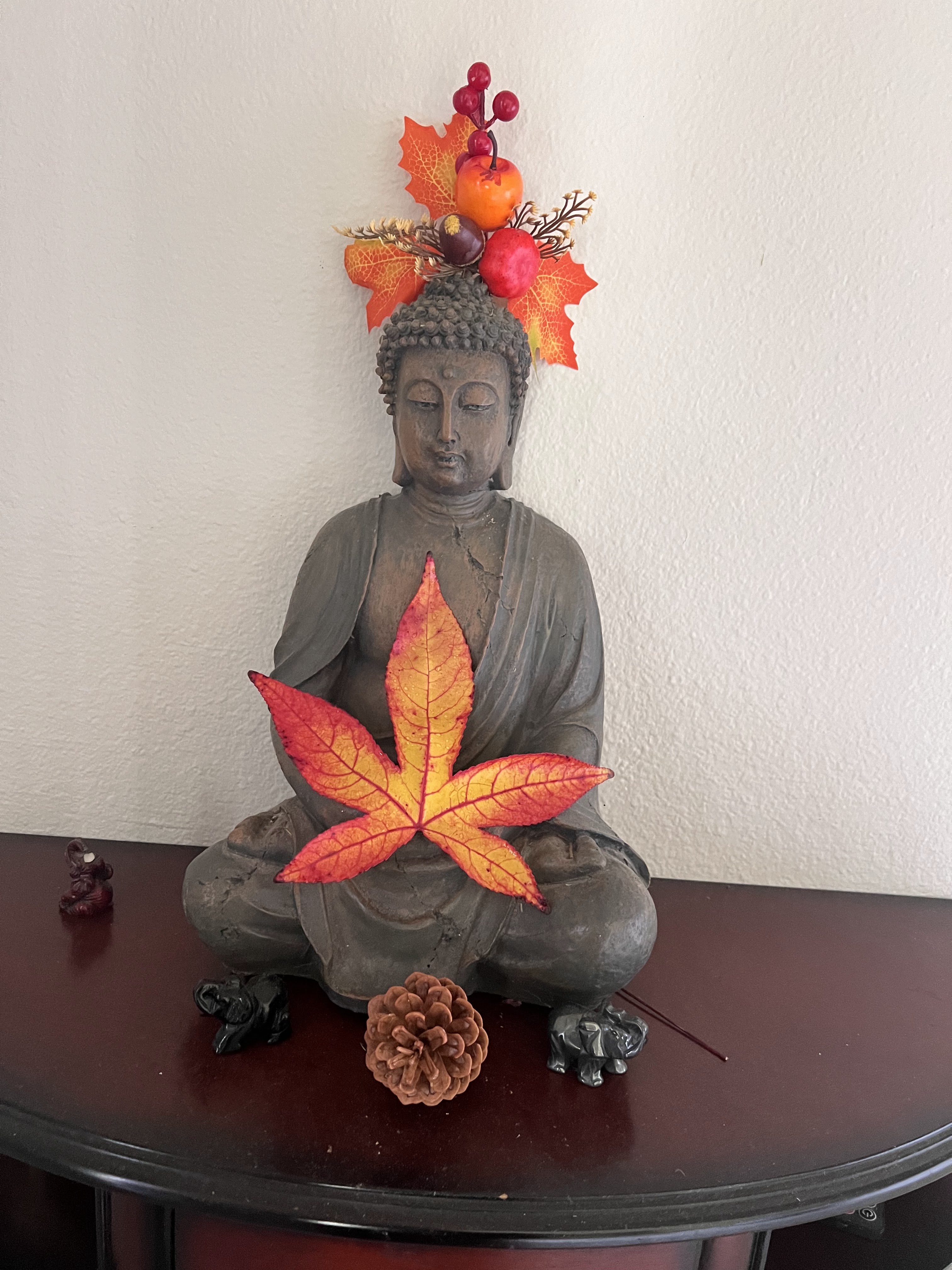
Buddha in Lotus?
Buddha in Lotus?

For many years I had thought of this quote, attributed to Victor Frankl in Man’s Search for Meaning:

“Between stimulus and response, there is a space. In that space lies our freedom and our power to choose our response. In our response lies our growth and our happiness.”

-Quote widely attributed to Viktor Frankl, Author of Man’s Search for Meaning, but not sure: Between Stimulus & Response

Back home, I savored the morning air, as I stepped out for a brisk walk embracing the nippy air. I felt like I could finally hear myself think, and I had a beautiful walk weighing and thinking of such topics as courage, resilience, choices, decision-making etc in the context of our work and personal lives. How one helps us evolve in another sphere, and how we are as human-beings are nothing more than the function of life’s ebbs and flows.

img_8958

The Sounds of Silence

After two weeks in India, the first walk I took by the lakeside was far more comforting than I thought. Nature has always been my solace. It has always been the thing I’ve been teased most about by the children.

But it is the one place, I can just be.

img_8778

I stood there for several minutes savoring the silence, listening to the swishing of wings as a bird took flight, or the winds rustled through the tree tops above.

The son put it best when we came back. “Shh!”

He said. “Can you hear that?”

“What?” The husband and I said cocking our heads to listen.

“Exactly! “ he said looking triumphant.

It was bliss.

“No other sound can match the healing power of the sounds of nature.”
― Michael Bassey Johnson, Song of a Nature Lover

The Whole 9 Yards

The whole 9 yards

We lost my father-in-law (henceforth referred to as Appa) earlier this month. He had a wonderful life, was loving and was loved by almost everyone who knew him.

When we reached home and awaited the body from the mortuary, bizarre things began happening. We were supposed to be sending the father-in-law’s soul to a different realm, but I found myself transported to a different realm instead.

Suddenly, one is surrounded by a society that morphs into layers of irrational. I was overpowered by a mob of conservatives who draped me in a 9 yards saree before I could breathe.

For reasons beyond me, the society of people I was born into, sets great store by a garment that is wholly undeserving of the praise bestowed on it. It is the 9 yards saree. I abhor the garment for several reasons: apart from the casteism it symbolizes, it is also an extremely uncomfortable garment.

The 9 yards saree makes one look like a roadroller, impedes motion, and rouses an instinct in all females who see you to ‘fix’ the saree. One thinks, the folding pleat behind the legs is too long, another thinks the tugging back is too long. So, they all attempt to fix it — all completely well-intentioned of course. Only this gives you a strange sense of being disrobed – for like one of these sailors knots, if you pull one place, the whole thing can unravel. One time, an aunt, tugged something while I was descending the stairs and I almost fell headlong down the stairs. After the initial flare of annoyance, I started to laugh trying to envision myself like a rolled up carpet at the bottom of the stairs, and all good hands trying to extricate me from a 9 yard mess.

I have never liked it – but as luck would have it, society is enamored by it.

As I moved numbly to see the mortal remains of my dear father-in-law, about 50 different women and 10 men told me that the important thing to remember is that I wear this particular 9 yards saree everyday – to be washed, dried and worn again for the next 13 days. “Remember – the same saree only.”

I stared at them too speechless to say anything. Could they not see I was grieving – why was this same-9-yard-everyday thing so important?

It made no sense – until you realized that religion loves giving dictums for everything starting from how a woman should dress to how she should grieve. This one was apparently to ensure that we did not accidentally attempt to feel good by dressing well.

I’ll let you all roll your eyes at that one.

Dear Appa

A few years ago, when we had moved into our new home, everyone was pressurizing me to wear a 9 yards saree for the house warming ceremony. I was sipping my tea looking glum one evening after another aunt insisted that it was a critical garment for the success of the ceremony. Appa asked me “Yenna ma?” (What is it, ma?) in his typical calm voice sensing my disquiet.

I told him that I didn’t like the 9 yards saree but everyone wanted me to wear it.

He looked at me and said, “Don’t wear it!”

I looked up, and saw him looking at me sincerely. He continued, “This ceremony is supposed to ensure that you are happy in your new home – wear something that you will be happy in!”

I didn’t wear a 9 yards saree that day. I wore something I was comfortable in.  When I came down the stairs, he saw me and gave me a glorious smile.

Dear Society, Can you change?

I thought of this little interaction every day that I was miserable in the 9 yards saree during his long drawn out death ceremonies that everyone insisted had to be done in 9 yards (for the departed soul you know?)

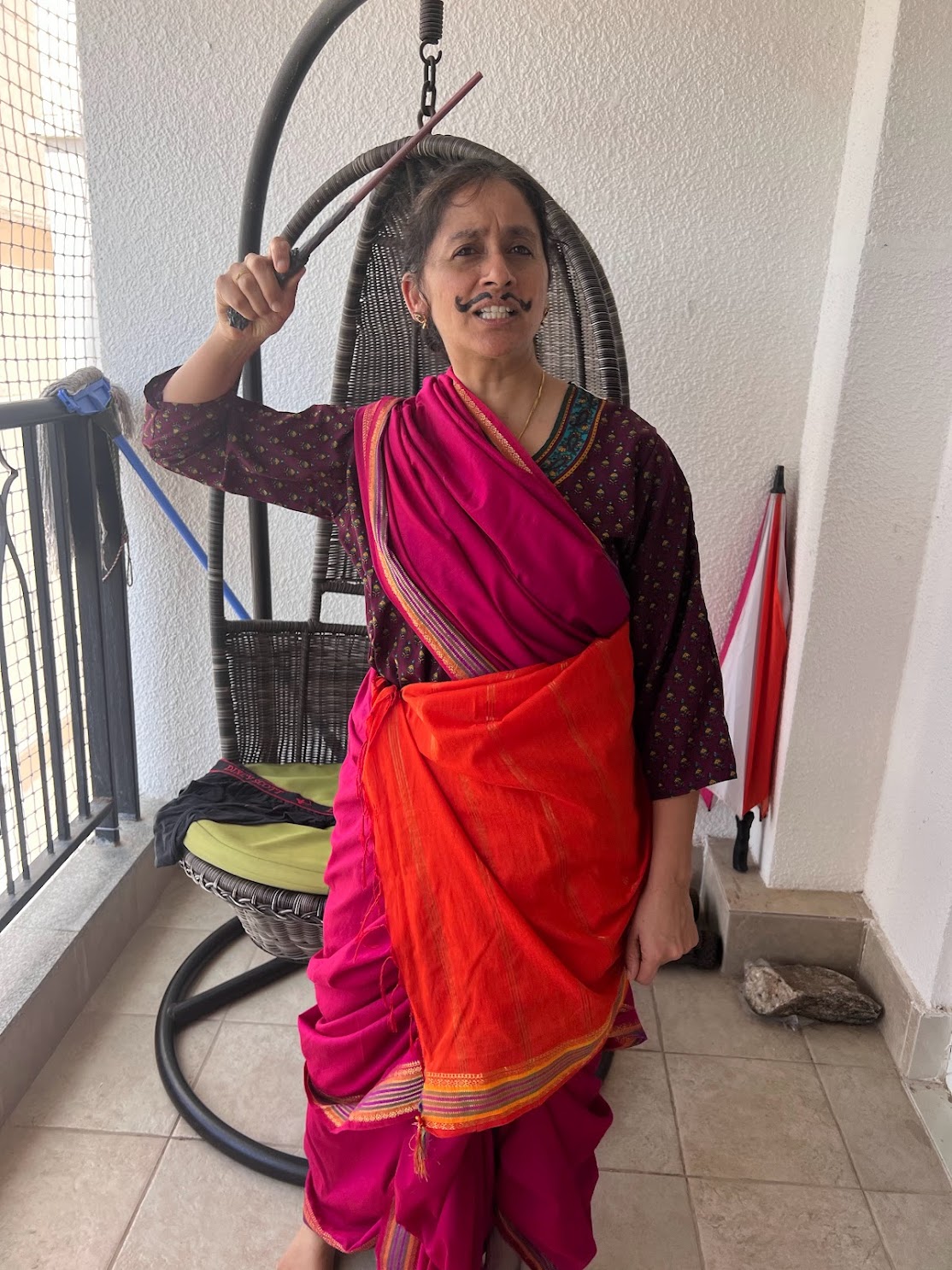
saree_potter

(Saree Potter – caption by the brother)

Actually, this seemed to be a theme through many of the ceremonies. There were a lot of things that I am sure Appa would not even have considered – but religion seemed to dictate it all necessary to his soul. There were hours of mantrams and ceremonies everyday that we little understood.

What I would have liked is for people to let us know the little and big ways in which he impacted them. For it was apparent, that he was loved by everyone who had the fortune of interacting with him. He was a dedicated brother, brother-in-law, husband, father, father-in-law, uncle, grandfather, and friend. As it was, there was precious time left for personal anecdotes and reflections after the long-drawn out ceremonies that Appa, when alive, had little patience for.

“Man is kind enough when he is not excited by religion.”

– Mark Twain

Appa, My Friend

Appa

Mine was an arranged marriage. The first people I met from the husband’s side of the family were his parents. The one who drew us all in with his quiet charm, shy smiles, simplicity and overall, just by being his authentic self was Appa. He knew how to make an uncomfortable situation comfortable. He must’ve sensed a girl with modern thinking not liking this ‘arranged marriage girl seeing thing’. So, he made it simple by removing the formality from the process: Let’s just chat like we are old friends.

Any new bride going in to a large, loud, slightly overwhelming family knows what it takes to make that first meal or that first cup of tea in an alien kitchen alone. She is intensely aware that all tongues out there are waiting to judge the taste of it, the consistency of it, the heat, and sugar, and the judgements are harsh and swift depending on the existing political climate between the folks in the room.  She also knows that her efficiency, charm, competency all hang on the hinge, even if one is an educated professional girl who should not set store by these things. Appa did the thing he does best. He followed me into the kitchen – quietly removing himself from the larger family, and giving a shy smile. He had come to help.

He gave me the necessary ingredients, a hint or two or how they like the water-milk proportion by making a small joke about it, and then as quietly as he had come, he left.He did not hover giving directions. Then, a few minutes later, as I was flailing around looking for the glasses, he was back again. He took the cups that everyone liked, quietly strained the tea, and left again.  I don’t think anyone noticed the head of the family nip out to the kitchen to help his daughter-in-law.

When the tea was served and everyone smiled happily, he gave me one of his trademark encouraging smiles, and that set the tone for our relationship: Appa was always there for me. He and I were going to be best friends, and I knew it then. He had your back, he was always, firmly in your corner.

Long before corporates came up with terms like inclusivity – Appa showed us how it is done. It is done by making people comfortable.

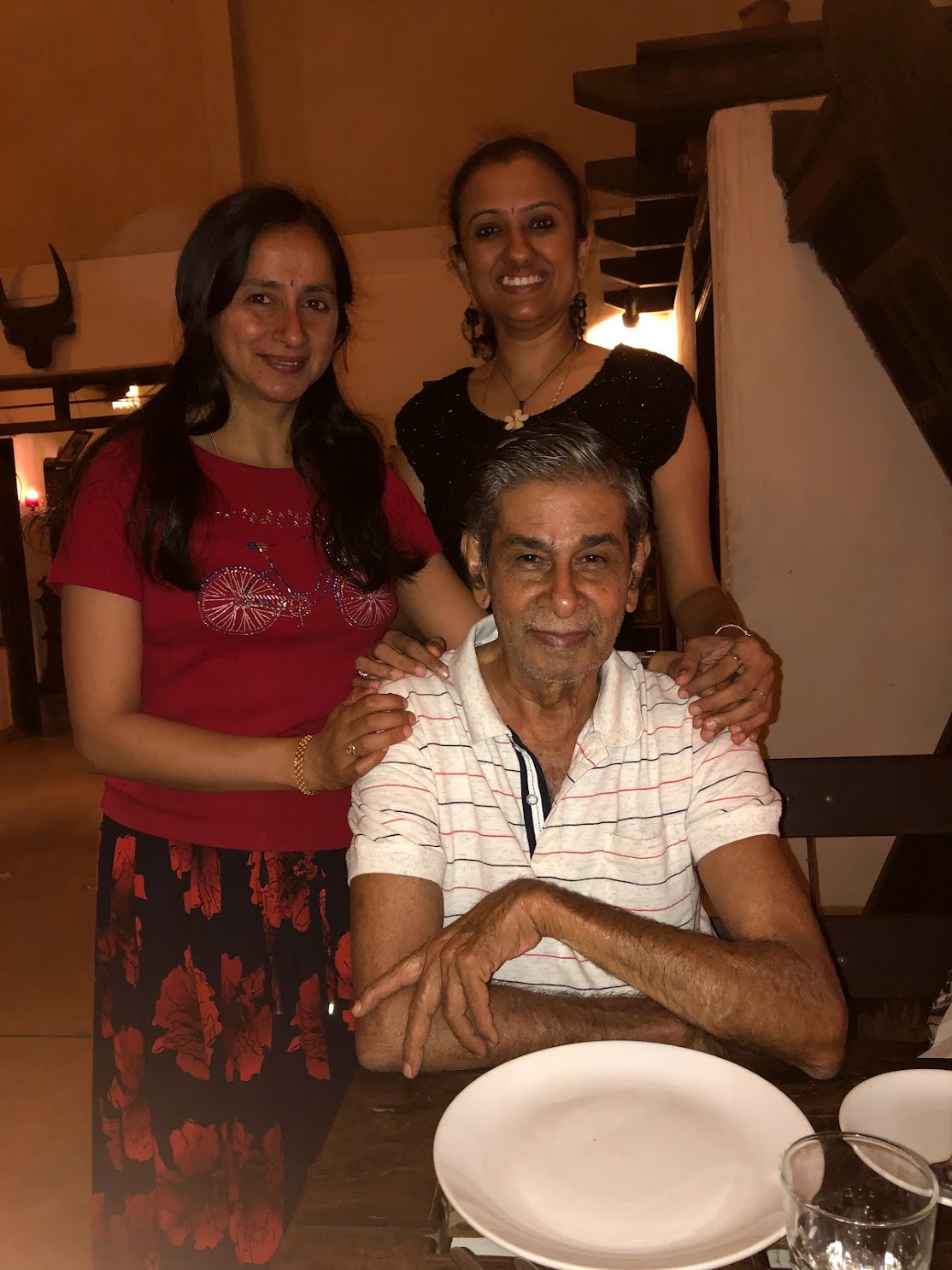
IMG_3183

Raju Thaatha

When children were born, he was there for them. He was there for us. Any grandchild who has had the privilege of being held by Raju Thaatha has been blessed by the cosmos multiple times over.  He would come to meet me every evening at the railway station with my baby in his hands so I could see her as soon as I came out of the train. Decades later, many fellow commuters have asked me how the baby and her loving grandfather are doing.

Fussing children, overactive children, rambunctious children, shy children, they all felt comfortable in Raju Thaatha’s hands. He could put children to sleep, get them to eat, and he never, ever in all the years I knew him raised his voice with them. They all behaved like perfect lambs because they loved him.

“You need Power only when you want to do something harmful; otherwise
Love is enough to get everything done.”

– Charlie Chaplin

That was Appa – he was not a powerful man, he was a loving man, and that was his greatest power. He loved you, wholly, and simply. We all wanted to do things for him, we all wanted him to be happy because he was such a pure, loving soul.

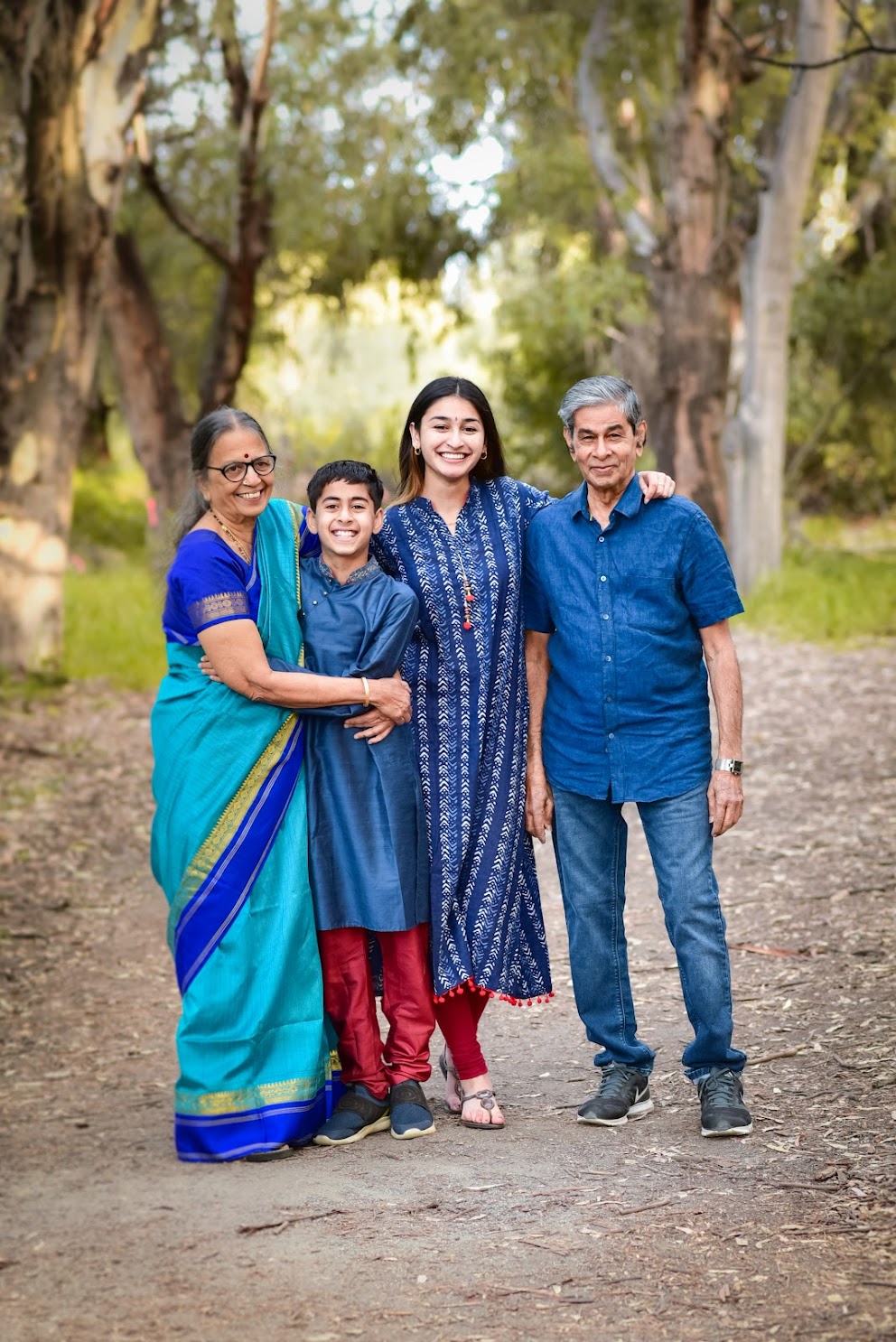
raju_thaatha

He never took sides in any conflict, but always knew who was aching and soothed everyone just by being him. When anyone was ill, Appa with that keen sense of empathy, knew when a fruit would be welcome, or when a glass of water was required. But he didn’t use words like empathy. He just did things for others – without show, without expectation, and with great competence.

Days after they left, after every visit, I would miss Appa. For he was the one who helped me the most. He was the one who helped me in the kitchen. He was the one who’d cut fruits and lay them on the table because he knew I liked fruit. He was the one who would know when to take a fussy infant from my aching arms. He was the one who went for quiet walks with me.

He was my friend.

When I spoke of my father-in-law like this, many folks were surprised that an Indian man of his generation was like this. But he was – he was supportive of everyone – through and through. He did not tell any of us how to behave, or what to do, he showed us. He would light up when I said “Good Morning Appa!” in the mornings, or when I said a tired ‘Hello Appa’ in the evenings. “Hello Saumya.” “Good morning ma!” , “Yenna ma?” (What is it ma?) – his quiet, friendly voice that surely guided us through life is ringing in my ears as I make the last journey to see his mortal remains.

It hurts me beyond measure to write of him in the past, his sort of love in the lingering type: like the sun, always shining, always nourishing. We are enormously blessed to have had him in our lives.

Thank you Appa – May you always be happy!